



New Delhi: India’s growing cardiovascular disease burden, rising life expectancy and continued under-diagnosis of heart valve disease are putting structural heart care at an important inflection point. With India estimated to account for around 20 per cent of the global heart valve disease burden, industry leaders say the next phase of cardiovascular care will depend not only on technology, but also on strengthening the broader ecosystem required to identify, refer and treat patients.
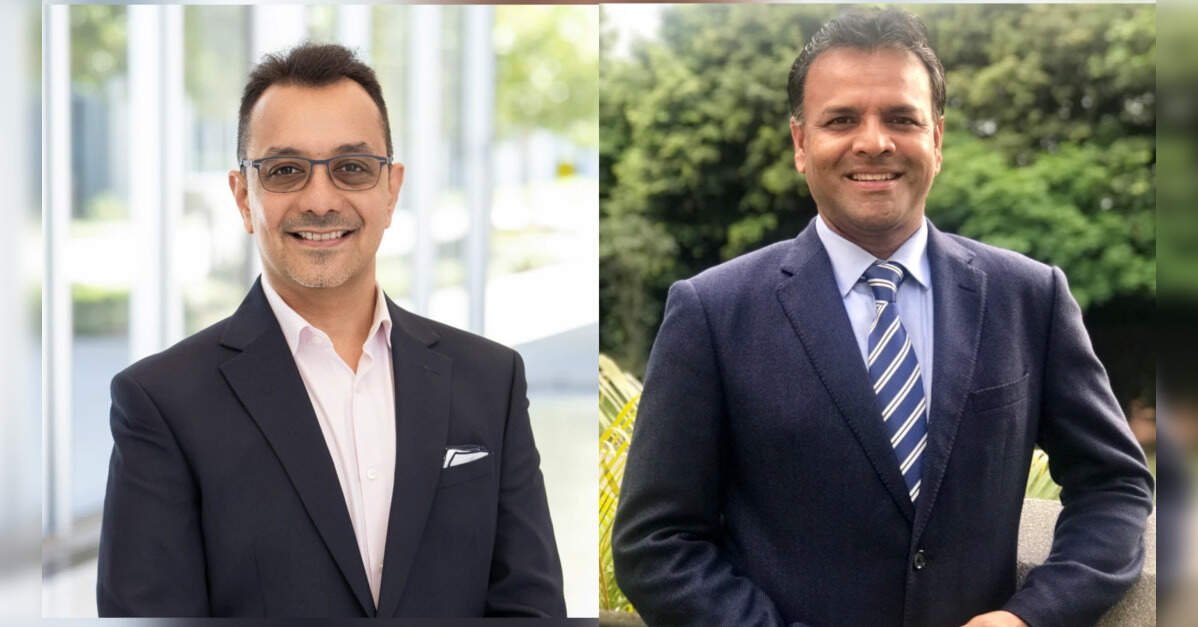
While awareness remains one of the biggest gaps in the heart valve disease journey, the senior executives Amit Raheja, SVP, Asia-Pacific, Edwards Lifesciences and Parameswaran Nair, Country Leader, SEA & India, Edwards Lifesciences believes India is entering a phase where newer technologies, including transcatheter aortic valve implantation (TAVI), mitral and tricuspid therapies, can see faster adoption if access, reimbursement and clinical capabilities improve.
Both the industry experts highlighted that the burden of heart valve disease in India has a distinctive combination of ageing-related disease and rheumatic heart disease.
Globally, the burden of heart valve disease is estimated at close to 30 million people, he said, with India accounting for around 20% of that burden.
The Indian situation is particularly complex because rheumatic heart disease continues to affect younger populations, while increasing longevity is simultaneously expanding the pool of older patients vulnerable to age-related valve disease.
“As you age and you correctly mentioned, people are living longer, which is a good thing. Healthcare has crept up, quality of life has gotten better, people’s affordability has gone up, so all of that is also making people live longer,” Nair said.
However, this creates a “double impact” for India, with rheumatic heart disease affecting people at younger ages and age-related valve disease becoming more prominent as the population gets older.
Awareness remains the first gap
One of the biggest challenges is that symptoms of heart valve disease can easily be mistaken for normal ageing. Shortness of breath, fatigue and tiredness are often dismissed by elderly patients as part of getting older, delaying diagnosis and treatment.
“Awareness is the first major intervention required in the patient journey. Patients tend to confuse this with old age,” Raheja said, adding that increased awareness can help patients seek medical evaluation and, in turn, close gaps around diagnosis, access and treatment.
He said the patient journey has several “leaks” between developing the disease and actually receiving treatment. Awareness among patients, physicians and the broader healthcare ecosystem can help address these gaps.
Nair also pointed to the importance of early diagnosis and routine cardiac examination. He said not every doctor is trained to identify heart murmurs, making auscultation and greater clinical awareness important.
“Those visits to the doctors, making sure the doctor is doing auscultation — and not all doctors are trained to hear murmurs — so those are the awareness that need to be created in the marketplace,” he said.
For a country as large and diverse as India, Nair said awareness campaigns also need to be targeted rather than simply adopting a mass-market approach.
“You can’t do a carpet-bomb approach. For a country like India, you’ve got to be very targeted,” he said, adding that the company is using highly targeted earned-media initiatives, including approaches based on geography and lifestyle characteristics.
TAVI adoption is rising, but remains far below potential
TAVI has emerged as an important less-invasive alternative for eligible patients with severe aortic stenosis. However, Edwards believes adoption in India still has considerable headroom.
Raheja said TAVI treatment volumes are growing rapidly, with the number of patients treated in India nearly doubling every three years. Yet the proportion of patients receiving treatment remains very small compared with the potential patient pool.
“If you look at the patient burden, it’s still a very, very small percentage that is getting treated,” he said.
Nair said wider adoption is constrained by several factors, beginning with the structure of the clinical ecosystem.
Not every patient is a TAVI candidate, he said, making a multidisciplinary “heart team” comprising cardiologists and cardiac surgeons critical to determining the most appropriate treatment.
“The ecosystem that treats the patient, in a setup where it’s more balanced, they would have a solid heart team in place,” Nair said.
The objective, he added, should be for the heart team to evaluate the patient collectively rather than allowing the treatment decision to be driven by whether a patient first approaches a cardiologist or a surgeon.
Reimbursement is available, but pricing remains a challenge.
Affordability is another major barrier. Nair, however, rejected the broader perception that India is a completely non-reimbursed market for TAVI.
Schemes including CGHS and ECHS provide reimbursement for the procedure, he said, but the challenge is that reimbursement levels can be too low.
“I completely disagree. It is a reimbursed market, but the challenge is they’re all being reimbursed at such a low level,” Nair said.
According to him, low reimbursement can push the system towards lower-cost products without sufficient clinical evidence or proven long-term outcomes.
Edwards is therefore advocating for policymakers to assess technologies on a total delivered cost basis rather than looking only at the upfront price.
“If you use a product from company A compared to a product from company B, look at it from a total delivered cost standpoint based on the clinical findings they have,” Nair said.
This includes assessing durability, clinical outcomes and the rate at which patients require repeat procedures.
“What is the redo rate? How often are patients coming back for a redo procedure?” he said.
Nair said India also lacks a comprehensive registry that could capture such repeat procedures and provide a clearer picture of long-term outcomes.
“If I come back for a redo case, nobody even knows that a redo case happened in the TAVI,” he said.
He acknowledged that changing government policy in a country of India’s scale takes time, but said Edwards is engaging with policymakers to advocate for a more comprehensive approach.
“While it’s easy to criticise government, I can tell you one thing, when you’ve got a government with 1.5 billion population, it’s like moving a mountain,” Nair said.
At the same time, he credited the government for taking steps towards expanding access and said the company is continuing discussions to make the reimbursement and procurement framework more pragmatic.
Edwards seeks greater access to government hospitals
The government sector represents another important area of focus for Edwards.
According to Nair, around 90-95% of the company’s business in India currently comes from the private sector, while government-sector activity is concentrated largely in teaching institutions such as AIIMS.
He said institutions such as AIIMS place greater emphasis on proven technology and clinical evidence.
However, Edwards faces procurement restrictions arising from India’s public procurement and “Made in India” requirements, limiting its participation in several government hospitals.
The company is therefore working with the Department of Pharmaceuticals on its inclusion in the public procurement exemption framework.
“We are working with the Department of Pharmaceuticals. We are putting our proposal in,” Nair said.
He said the objective is to ensure that clinicians have access to a broader range of technologies and can make treatment decisions based on the needs of individual patients.
“If the clinician doesn’t even have options, then you’re literally denying a patient of the best possible technology for a particular diagnosis that they have,” he said.
From five AIIMS to nearly 22
Edwards is also expanding its engagement with India’s growing network of AIIMS institutions.
Nair said the company is moving from working with roughly five AIIMS centres towards engagement with nearly 22 AIIMS institutions.
“We are already working with those centres because they value innovation,” he said.
While budget constraints remain, Nair said these institutions are interested in selectively using newer technologies where there is a clinical need.
Beyond AIIMS, Edwards is also focusing on what Nair described as progressive states in healthcare, including Maharashtra, Tamil Nadu, Kerala and Andhra Pradesh.
The company is engaging with these state governments to make advanced structural heart therapies more accessible.
“If healthcare is your priority, it should be your political agenda. Carve a budget out. We can help you in this journey,” Nair said.
Building a broader reimbursement framework
Edwards is also seeking to work with clinicians and other stakeholders on creating differentiated reimbursement categories.
Nair said low-risk patients could continue to be reimbursed at existing levels, while higher-risk patients could potentially be covered under a higher reimbursement category.
“We would like to work with clinicians and key stakeholders to create a new category,” he said.
The objective, according to Nair, is not simply to increase spending but to ensure that appropriate treatment options are available to patients who need them.
“Healthcare cannot be confined to regional. Healthcare needs to be at least made available,” he said.
Tier-II cities emerge as the next growth frontier
The expansion of structural heart care is also moving beyond India’s largest metros.
Nair said that following the Covid-19 pandemic, patients in cities such as Nagpur, Pune, Kochi and Indore have increasingly shown a preference for receiving treatment closer to home rather than travelling to major metropolitan centres.
For Edwards, this is changing the company’s go-to-market strategy.
“While close to 100% of our business used to come from tier-one cities, right now we are putting people on the ground in tier-two cities because patients don’t want to come out from tier-two cities,” Nair said.
The infrastructure is increasingly available, including catheterisation laboratories, but the company is focusing on ensuring specialist expertise is available when procedures are performed.
Edwards is bringing proctors from tier-I cities to support cases in tier-II locations, particularly because procedure volumes at individual centres may initially be lower.
“Every time a case is done in a tier-two city, there is somebody to handle it,” Nair said.
The company is also exploring the use of stockists to ensure medical inventory is locally available.
“India, geographically, is challenged. If your stocks are not available, because when a cardiologist sees a patient, they might want to do the procedure the next day,” he said.
The stockists would primarily carry medical inventory rather than provide clinical support or sell the products.
Latest technologies reach India faster
Edwards says India is now receiving its latest technologies at a faster pace than in the past.
Nair said TAVI in India is growing at nearly 30% on a compounded basis, while surgical business is growing at around 15-20%.
The company has also accelerated the introduction of newer technologies, including the Sapien 3 Ultra Resilia platform.
Nair said that within six months of the newer platform’s launch in India, the mix between the existing Sapien 3 and the newer Sapien 3 Ultra Resilia had moved from being almost entirely the older product to roughly a 50:50 split.
“What that tells you is Indian patients want the best,” Nair said.
“They want the best because they do their own research. They know what’s good value for money.”
Edwards is also preparing to bring its transcatheter mitral and tricuspid technologies to India.
Nair said the company expects to have technology in this space by the beginning of next year, adding another dimension to its structural heart portfolio.
Moving beyond aortic valves
While TAVI remains a key growth area, Edwards’ strategy globally is centred on the broader structural heart market.
Raheja said the company has deliberately remained focused on structural heart rather than diversifying into unrelated medtech categories.
“We’re the only large medtech company globally that is focused only and purely on structural heart,” he said.
The company’s focus extends beyond aortic valves into mitral and tricuspid disease, including both valve repair and replacement technologies, as well as heart failure.
Both stated the company has also made a conscious decision to remain within structural heart, with opportunities spanning aortic, mitral, tricuspid and heart failure therapies.
“We want to be in the structural heart space,” Raheja said.
The company has divested businesses outside this core area as part of that strategy.
R&D remains central to the strategy
The structural heart focus is also reflected in Edwards’ investment in research and development.
Raheja said Edwards spends almost 18 per cent of sales on R&D, compared with an estimated 6-7 per cent average for the broader medtech industry.
“We’re spending almost three times of that, and we’re committed to doing this,” he said.
Nair said, is that pioneering technologies require substantial investment in clinical validation because there is often no existing benchmark to follow.
“When you want to be in the forefront of technology, the amount of money that you need to put back into R&D” becomes significant, he said.
Why Edwards is retaining hand-sewn manufacturing
Despite the growing use of automation, artificial intelligence and robotics across healthcare manufacturing, Edwards continues to rely heavily on human craftsmanship in the production of its tissue heart valves.
The company’s Singapore facility has been manufacturing valves for 25 years, with highly experienced employees involved in the hand-sewing process.
Raheja said many employees have worked at the facility for more than a decade and perform the specialised manufacturing work for several years.
The rationale is simple quality and patient outcomes take precedence over manufacturing efficiency.
“Any technology that comes in, for example AI or robotics, if it’s only from the perspective of productivity or efficiency, we’re very mindful because it should never ever compromise the quality of our products,” he said.
Nair similarly added that they have tested automation but found that hand-sewn valves continue to perform better in certain durability tests.
The company conducts million-cycle and two-million-cycle tests to assess valve performance.
“For some reason, the hand sewn withstand that cycle test a lot better than the automation,” Nair said.
That does not mean Edwards is shutting the door on automation. He said engineers are continuing to explore possibilities at the Singapore plant, including the use of technology and automation in parts of the manufacturing process.
Raheja added that they are open to newer technologies, provided they improve quality rather than merely productivity.
“Will we be the fastest to adopt when there’s risks in quality? That’s not an area that we would get into,” he said.
AI could influence design more than sewing
Nair said artificial intelligence could eventually have an impact on valve design and manufacturing, even if it does not immediately replace the human sewing process.
“AI is all about backend information that can feed into the decisions you make,” he said.
Data generated through patient outcomes and clinical experience could potentially influence future design decisions, which in turn could make certain manufacturing processes more amenable to automation.
“Technology is growing at a fast pace. You really don’t know what’s in store,” Nair said.
For now, however, Edwards’ engineers are continuing to evaluate automation while maintaining hand sewing where it delivers the strongest performance.
Singapore remains the manufacturing hub; India gets a bigger strategic role
Edwards is continuing to expand its Singapore manufacturing operations while increasing its investments in India.
Raheja said the Singapore facility’s long experience and manufacturing expertise make it an important part of the company’s regional supply chain.
“At no point of time should any medical technology company compromise on the quality or outcome of their manufacturing facility,” he said.
At the same time, India is becoming increasingly important to Edwards beyond commercial operations.
The company recently established a global capability centre in Pune, with several hundred employees, and is expanding its local teams, distribution network and partnerships with clinicians and hospitals.
Nair said the company is “bullish on India” across surgical, TAVI and emerging structural heart therapies.
The next three to five years: patient, innovation and partnerships
Looking ahead across Asia-Pacific, Raheja identified three priorities keeping patients at the centre, accelerating innovation and strengthening partnerships across the healthcare ecosystem.
The company plans to continuously listen to patients rather than assuming that patient needs remain unchanged.
“Even the patient’s journey is evolving from time to time,” Raheja said, pointing to the growing influence of AI, Google and other digital information sources on how patients research their conditions and treatment options.
The second priority is accelerating innovation across APAC, backed by research, development and clinical evidence. The third is building partnerships with physicians, surgeons, nurses, support staff, regulators, policymakers, insurers and payers.
For India, the immediate opportunity lies in closing the gap between disease burden and treatment —through greater awareness, stronger heart-team capabilities, better reimbursement frameworks, wider availability of proven technologies and expansion of specialised care into tier-II and tier-III cities.
As Nair put it, access has to come before choice,“Whether somebody chooses to use a non-secondary, but if you even don’t provide access, then how can people even make a decision?”
