



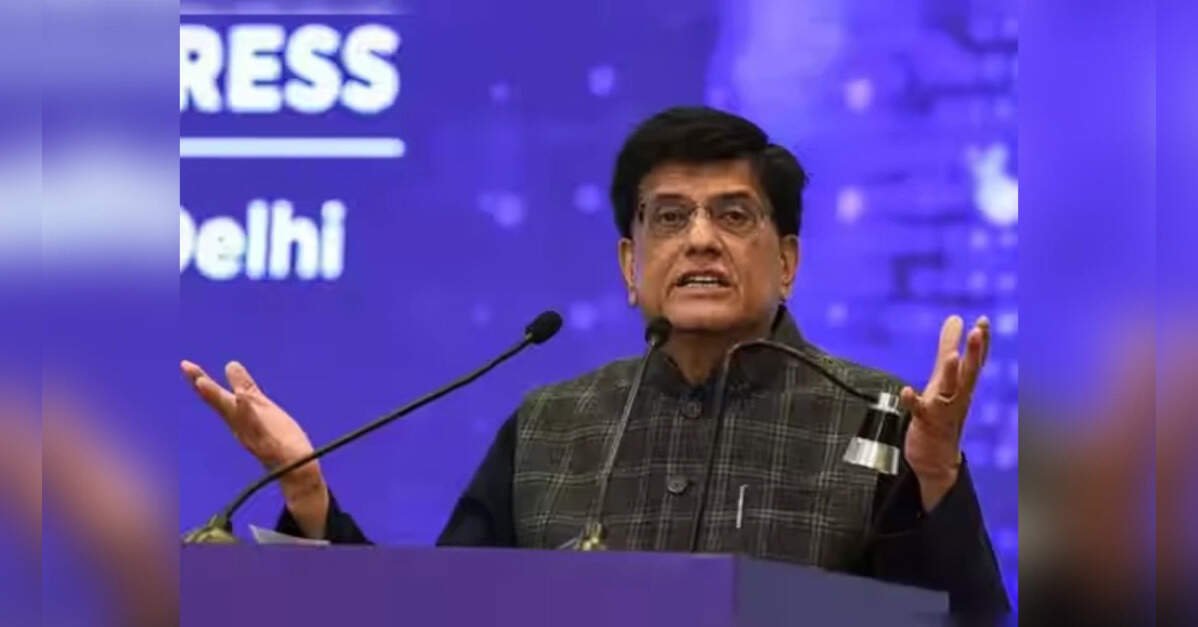
New Delhi: Commerce and Industry Minister Piyush Goyal on Monday pitched for development of high-quality medical devices for global customers, and said the government is ready to provide 100 per cent fund for the acquisition of testing equipment.
Addressing two events of the pharma industry here, he said domestic firms should bring technology partnerships, encourage joint ventures, and invite global innovators and large pharma companies to India.
“We must develop a critical component ecosystem by strengthening our domestic capabilities with high quality. We must create shared testing infra facilities where these equipment can be tested, benchmarked to the best in the world, certify and demonstrated to global customers.
“From BIS (Bureau of Indian Standards), we are willing to support 100 per cent cost of the best testing equipment for your equipment…100 per cent government of India will fund the acquisition of testing equipment…demand from us, there is no proposal from you. And we’ll set up the most modern labs,” Goyal said.
He also called for improving design, copyrights, patent laws, and the IPR (intellectual property right) ecosystem so that internationally people look up to come to India and India can become a global hub of innovation because the country has a huge cost advantage.
“We must bring technology partnerships, we must have better buyer and seller relationship, we must encourage joint venture…We must co-design, and co-develop licence wherever required…look for joint R&D centres with other countries,” he added.
The minister further called upon insurers and health-tech companies to build products and platforms that make the patient journey more seamless, and ensure timely reimbursements.
He suggested the industry to train and certify caregivers and develop a skilled workforce capable of providing healthcare of international standards; and encourage more hospitals to publish honest and transparent treatment packages.
He stressed that hospitals must follow ethical practices and never attempt to cheat patients, as one wrong action can lead to loss of goodwill, business and credibility for India.
There is a need to organise exhibitions and presentations across the world, establish facilitators and tie-ups with hospitals globally, and ensure that only National Accreditation Board for Hospitals & Healthcare Providers (NABH)-enabled, verified and panelled hospitals are allowed to treat patients coming from abroad, he said, adding that quality healthcare cannot be different for Indians and foreigners.
To attract foreign patients, he suggested creating a pool of interpreters for patients arriving from different countries and speaking different languages, so that they have greater confidence and communication between patients and the medical system becomes easier.
The pharma sector has the potential to take India to the world, earn goodwill and serve people globally while creating a huge number of jobs and business opportunities in the manufacture of drugs, medical equipment and consumables, he added.
“While 3.5 million patients have benefited from India’s medical value tourism ecosystem in the last seven years, the country’s target should be 10 million patients a year,” he said.
Goyal said India has the ability, capability, right doctors and the right ecosystem to achieve this.
He emphasised that high standards, ethics, integrity and honesty must be maintained and urged healthcare providers to go the extra mile in caring for international patients.
He said countries with which India is engaging through FTAs (free trade agreements) and business discussions want high-quality pharmaceuticals, doctors, technicians, nurses and caregivers from India in large numbers.
