


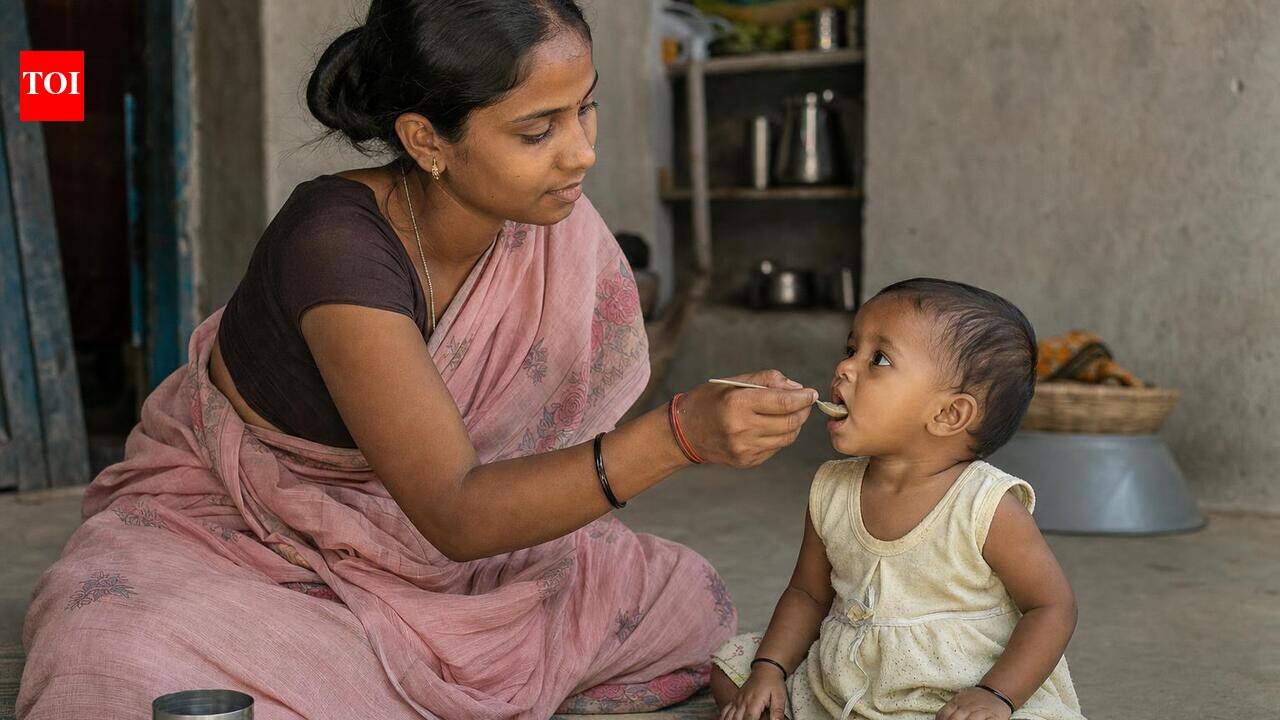
Lucknow: Only one in six children aged between six and 23 months in Uttar Pradesh receives an adequate diet, paediatric experts said ahead of National Nutrition Week. Limited resources, awareness and time prevent families from providing age-appropriate diverse food.The experts warned that poor nutrition during this crucial period can hamper a child’s growth, immunity and cognitive development. Citing findings from the National Family Health Survey (NFHS)-6 (2023-24), they said 17.1% of children in this age group in UP receive an adequate diet, up from 5.9% in NFHS-5 (2019-21). However, 82.9% of children still do not meet the required nutritional standards.The situation in Lucknow district is better, though it is still a matter of concern. According to NFHS-6, 20.1% of children aged six and 23 months receive an adequate diet, compared with just 2.3% in NFHS-5. Among breastfed children in this age group, 23.4% receive an adequate diet, up from 3% in the previous survey. A separate figure for non-breastfed children was not reported as the sample size was too small.KGMU paediatrics department faculty Prof Shalini Tripathi said an adequate diet is not merely about feeding a child enough food. “Children should receive foods from different food groups and be fed the recommended number of times a day. Breastfeeding should also continue wherever possible,” she said.Under NFHS guidelines, breastfed children aged six and 23 months should consume foods from at least four food groups and receive the recommended number of meals. Non-breastfed children should also receive adequate quantities of milk or milk products.The experts said the period between six and 23 months is critical for a child’s growth and development. After six months of age, breast milk alone is insufficient to meet all nutritional requirements, making complementary feeding essential. Children, who do not receive a balanced diet or are fed too infrequently, face a higher risk of poor growth, infections and delayed brain development, they said.The survey also showed that malnutrition remains a major challenge in the state. The prevalence of stunting among children under five declined to 31.5% from 39.7% in NFHS-5. However, wasting increased to 19.2% from 17.3%, while the proportion of underweight children rose to 34.5% from 32.1%.In Lucknow, 31% of children under five are stunted, 14.6% are wasted and 27.8% are underweight. Stunting improved marginally from 32.1%, while wasting increased from 11.5% and underweight rose from 25.5% recorded in NFHS-5. Prof Tripathi said parents should focus on the quality and variety of food rather than merely increasing the quantity. She advised parents to include cereals, pulses, vegetables, fruits, milk and milk products, eggs and other suitable protein-rich foods in a child’s diet after six months of age.Former KGMU paediatrics department head and vice-chancellor of a private medical university Prof Shally Awasthi said adequate nutrition depends on three factors: money, knowledge and time. Families with limited incomes often struggle to provide nutritious food, she said. At the same time, some families that can afford healthy food may not know what foods should be given to children or in what quantities. “Even families that have both money and knowledge may face difficulties because they do not have enough time, especially when feeding responsibilities are left entirely to caregivers,” Awasthi said.She said parents should plan their children’s meals rather than feeding them whatever is readily available. Attention should be paid to portion sizes, dietary diversity and adequate protein intake, she added. Awasthi also advised regular monitoring of a child’s height, weight and overall growth through routine health check-ups.“If a child’s growth is significantly below or above the expected level, parents should consult a paediatrician or nutrition expert,” she added.
