


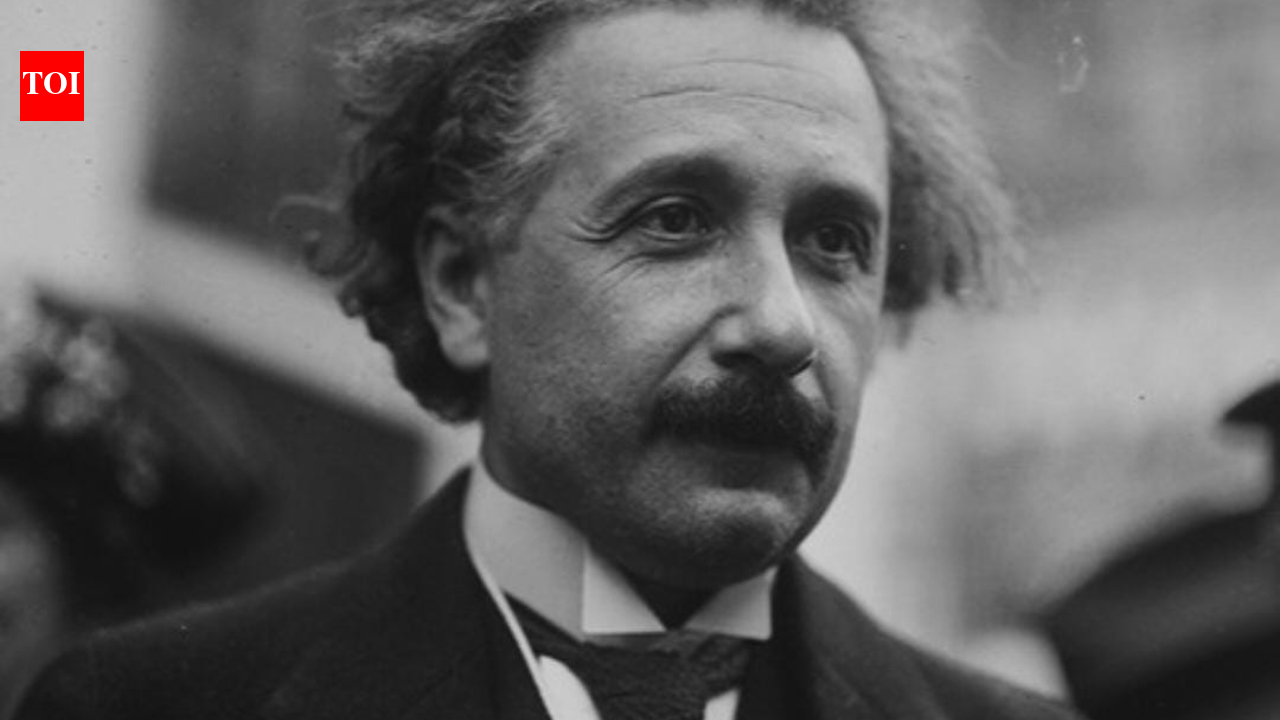
Most of us treat sleep like something we squeeze in after everything else is done. Albert Einstein did the opposite. Biographies and accounts of his daily life describe a man who regularly got around ten hours of sleep a night and made room for short daytime naps.Far from the myth that geniuses run on almost no rest, Einstein appears to have guarded sleep the way some people guard their best tools. The question that keeps coming up is whether that habit actually fed his creativity, or whether it was just a personal quirk. Modern research on sleep and the brain gives a clearer answer than the old stories alone.
Einstein’s real sleep pattern, not the myths
Stories sometimes claim Einstein slept only a few hours or almost none at all. Those versions do not hold up. Multiple accounts put him at roughly ten hours a night, often going to bed around 10 or 11 p.m. and rising later in the morning, with short afternoon rests of about 20 to 30 minutes.He also used a simple trick, similar to ones linked to Thomas Edison and Salvador Dalí: holding a spoon or object so that it would drop and wake him the moment he started to drift off. The point was not a full nap but catching the thin edge between waking and sleeping. That borderline state, now called hypnagogia or N1 sleep, is where many of the scientific findings on creativity begin.
The “sweet spot” just as you fall asleep
A 2021 study published in Science Advances tested exactly this edge-of-sleep moment. Researchers gave people number puzzles that had a hidden shortcut. After struggling with the problems, participants rested for about 20 minutes while their brain waves were recorded. Those who spent at least 15 seconds in the lightest stage of sleep (N1) were nearly three times more likely to spot the hidden rule afterward, about 83 percent compared with roughly 30 percent for people who stayed fully awake.The boost disappeared if they slipped into deeper sleep. The brain in that brief window loosens its usual filters. Distant ideas start linking in ways the fully focused mind often blocks. Einstein’s spoon-and-plate method, whether he used it exactly as the legends say, lines up with this finding.
How a full night of sleep rearranges ideas
Longer sleep adds another layer. Firing REM sleep, the stage filled with vivid dreams, the brain’s associative networks fire more freely. Studies show that people woken from REM perform better on tasks that need remote connections, such as anagrams or linking weakly related words.One classic experiment found that a night of sleep more than doubled the chance of discovering a hidden rule in a problem-solving task compared with staying awake for the same amount of time. Memory consolidation happens too: the brain replays and reorganizes the day’s experiences, sometimes producing the sudden “aha” that feels like it came out of nowhere. Einstein’s long nights would have given him full cycles of both deep sleep and REM, the combination researchers now link to both clearer thinking and more original insights.
Why skimping on sleep usually backfires
The romantic picture of the exhausted genius working through the night does not match the data. Systematic reviews of experiments find that sleep deprivation tends to hurt divergent thinking, flexible problem-solving, and the ability to generate novel ideas. People who sleep poorly also report lower creativity scores in daily life.Positive emotions and mental energy drop when rest is cut short, and those feelings matter for the kind of open, playful thinking creativity needs. Einstein’s choice to protect long sleep and short restorative naps looks less eccentric once you see how consistently the evidence points the same way: the rested brain makes better connections.
