


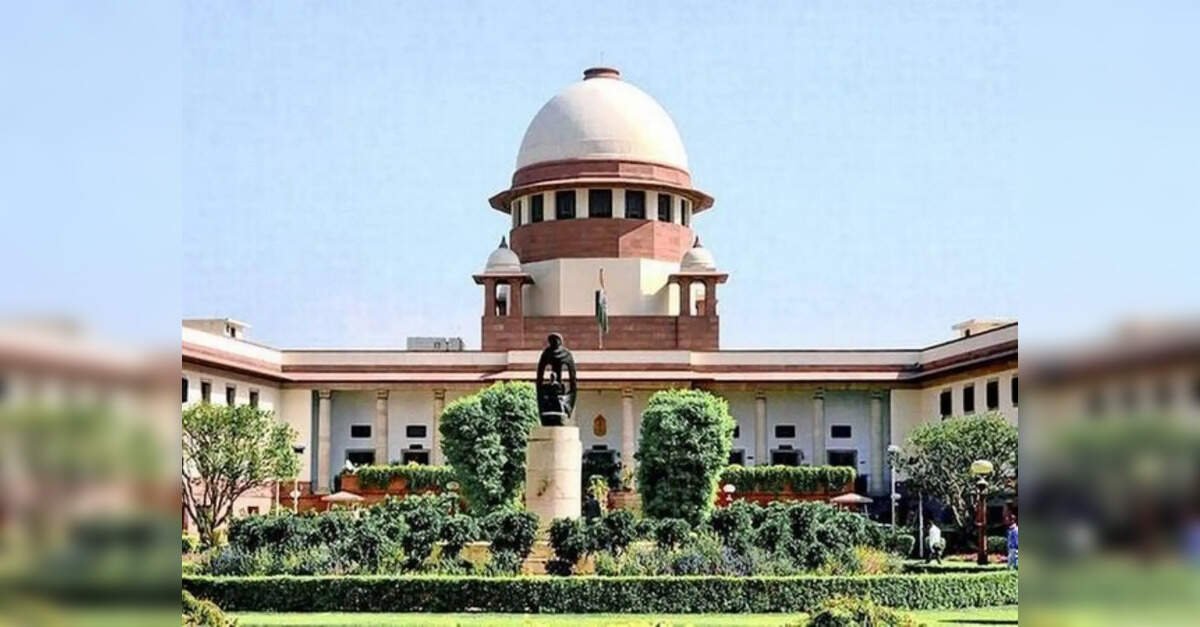
The Supreme Court has allowed appeals filed by Nuvama Clearing Services Limited (NCSL), setting aside orders of the Member and Core Settlement Guarantee Fund Committee (MCSGFC) of NSE Clearing and the Securities Appellate Tribunal (SAT) directing restitution of securities liquidated during the default of trading members.
The judgment, delivered on September 2 by a bench of Justice J.B. Pardiwala and Justice K. Vinod Chandran, arose from disputes concerning the liquidation of securities belonging to clients of trading members whose collateral had been placed with professional clearing members (PCMs).
The matter concerned Anugrah Stock & Broking Private Limited, while the connected appeals included matters involving Vrise Securities, Action Financial Services and Yuvraj Securities. The case concerned the functioning of professional clearing members in the F&O segment. Trading members (TMs) place their own and their clients’ collateral with PCMs, which in turn provide collateral to the clearing corporation.
When a TM defaults, the PCM may liquidate collateral to meet settlement obligations. The dispute arose over whether a PCM was required to ascertain the individual debit or credit positions of the TM’s clients before liquidating securities and whether NSE Clearing’s MCSGF committee had the authority to direct the PCM to restore securities already liquidated.
In the Anugrah matter, the committee had directed the PCM to reinstate securities worth about INR 460.32 crore that had been liquidated. If restitution was not completed, the PCM was directed to block an amount equivalent to the value of the securities on the 16th day, with an additional 5 percent, from its available collateral with NCSL. A penalty of INR 1 lakh was also imposed.
The SAT subsequently upheld the Committee’s directions.
No statutory duty on PCM to verify individual client positions
The apex court answered in favour of the PCMs the question whether they had a statutory obligation to verify the debit-credit positions of individual clients of a trading member before liquidating collateral.The court also held that the regulatory mechanism applicable at the relevant time did not provide PCMs with visibility of individual clients’ debit-credit positions.
The bench noted that the regulatory framework subsequently evolved from monthly reporting in 2016 to weekly reporting in 2019 and eventually daily reporting in 2021. The 2021 framework specifically provided for disaggregated client-level collateral reporting and mechanisms to identify defaulting clients.
The Court said these later measures demonstrated that such visibility had not been available under the earlier framework.
“The absence of such a measure before its implementation” supported the PCMs’ position that they lacked visibility into the individual clients’ positions, the Court held.
NSE Clearing panel lacked power to order restitution
A key finding of the judgment concerns the jurisdiction of the MCSGF Committee to order restitution of securities.
The bench examined Section 9(3)(b) of the Securities Contracts (Regulation) Act, which permits stock exchanges to frame bye-laws prescribing penalties including fines, expulsion and suspension, but specifically permits only penalties of a like nature that do not involve payment of money.
The Court contrasted this with Section 11B of the SEBI Act and Section 12A of the Securities Contracts (Regulation) Act, under which SEBI has been specifically empowered to direct disgorgement of wrongful gains or losses avoided through contraventions.
The bench held that the power of disgorgement had deliberately been conferred on SEBI and not on stock exchanges through their bye-laws. The MCSGF committee therefore could not derive such a power through principles of equity, justice or good conscience.
The court consequently held that the committee’s direction to restore liquidated securities, coupled with the alternative direction to block an equivalent monetary value plus 5 percent, was not statutorily permissible.
No claim against PCM for TM’s default
The bench also rejected the argument that individual investors could claim against the PCM for losses arising from the trading member’s default.
It held that the third question of law had to be answered against the investors, particularly in circumstances where the trading member had operated illegal schemes and investors had participated in those schemes on the promise of assured returns.
The court noted that Anugrah had operated in multiple capacities, as a trading member, depository participant and, without the requisite authorisation, as a derivatives advisory service offering assured returns in the nature of portfolio management services.
According to the judgment, investors had deposited securities with Anugrah under arrangements promising fixed returns, despite the illegality of such arrangements.
Court distinguishes present regulatory regime
The Court noted that SEBI’s 2021 framework now requires client-level collateral information to be reported daily and provides mechanisms for identifying defaulting clients and appropriating collateral.
Under the current framework, collateral of clients is to be used for the losses attributable to those clients, while residual losses relating to a TM’s proprietary account are to be met from the TM’s proprietary collateral. The framework also prevents losses from being appropriated from another constituent’s collateral.
The court said these safeguards were not available when the transactions in question took place.
Anugrah investors retain remedies against trading members
While setting aside the directions against the PCMs, the Supreme Court clarified that investors were not left without remedies. It said the constituents of the TMs involved in the appeals “will be left liberty to avail their remedies against their respective TMs, subject only to just exceptions.”
The bench noted that proceedings had already been initiated against Anugrah, including a commercial suit filed by NSE before the Bombay High Court. A Court Receiver had been appointed over Anugrah’s assets, while restrictions had also been placed on the opening of new bank accounts.
The apex court expressly left the constituents of the concerned trading members at liberty to pursue remedies against their respective TMs, subject to applicable exceptions.
