


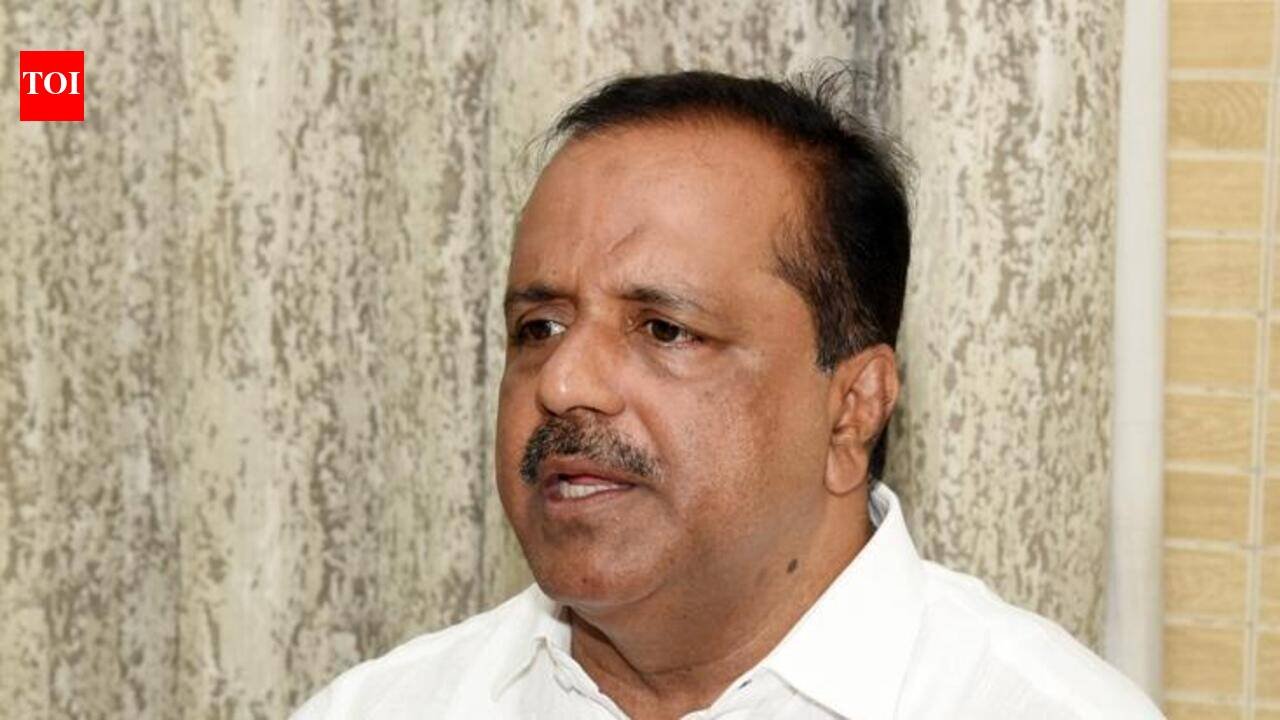
Mangaluru: Minister for health and family welfare UT Khader Wednesday clarified that ongoing food safety inspections across Karnataka are not aimed at shutting down businesses but at ensuring customers are not cheated and receive safe, quality food.“The intention is not to cease or close anyone’s business. We want them to survive, but ethically,” Khader told reporters.Khader urged hotels, restaurants, catering establishments and other food businesses to ensure cleanliness, quality and purity in their operations. Referring to recent inspections of sweet-manufacturing units, he said two units had been closed following inspections, while notices had been issued to other establishments.He said the department was considering imposing a minimum penalty as a first-level action. “If they are caught again, there cannot be any forgiveness. I will not support anyone, even if the owner is close to me, if violations are found during inspections. We will stand with consumers,” he said.He said QR codes for complaints would be made mandatory at restaurants and other establishments, with similar systems planned for pharmacies.Khader said the department was also working on a uniform “health oath” and guidelines on health and food safety to be displayed at hotels and public places.The minister said the govt was working to strengthen food testing laboratories in the state. He stressed the need for a robust govt laboratory to ensure test reports withstand legal scrutiny, especially when challenged by large companies in court.“We need an excellent laboratory,” he said, adding that the department was taking steps in that direction.For the first time, he said the govt was considering organising a one-day ‘Yuva Dasara’ in Ullal during the nine-day Dasara period. The event will feature cultural programmes, sports activities, art exhibitions and felicitation of young achievers.Responding to concerns over restrictions on loudspeakers and the timing of religious processions during festivals, Khader said there was no blanket instruction targeting any particular religion or religious centre. Religious institutions should make efforts to conclude programmes as early as possible, while the police department should extend necessary cooperation.
