


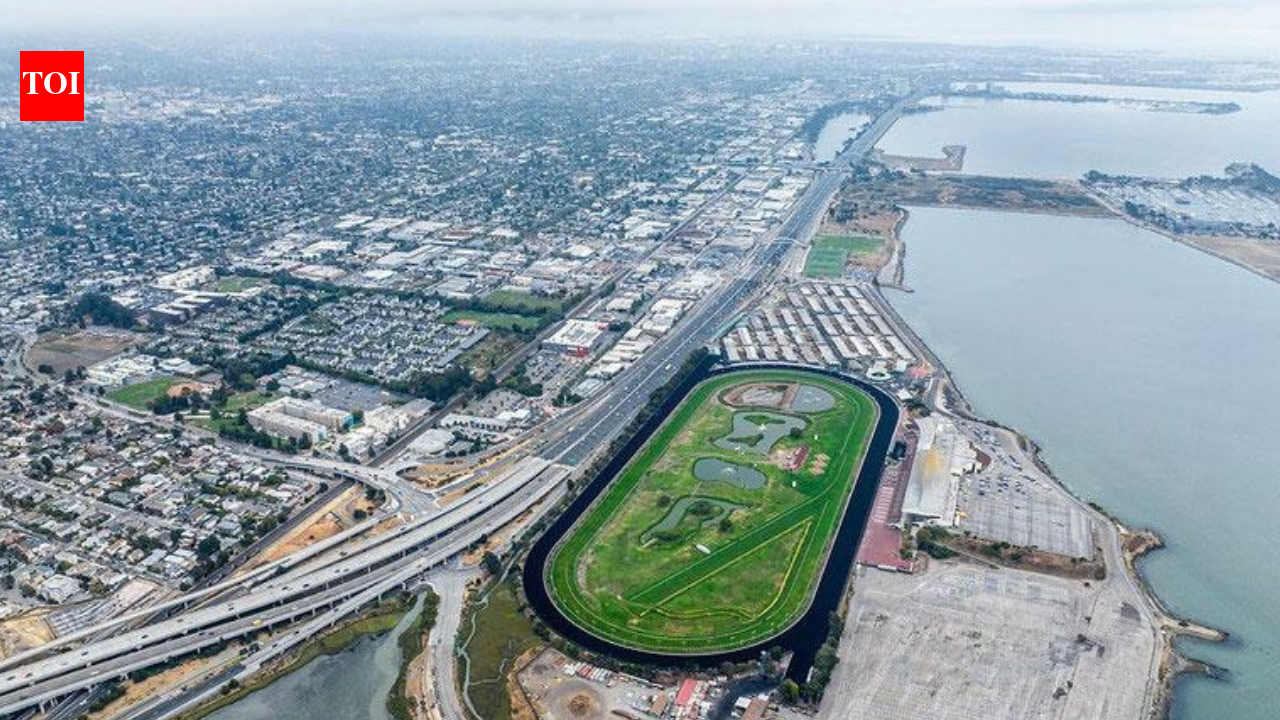
California lawmakers are moving forward with $125 million in state funding to help purchase the former Golden Gate Fields racetrack and transform the roughly 162-acre Bay Area property into a major public waterfront park, according to reporting by Albany Scanner and San Francisco Chronicle, as well as information from the East Bay Regional Park District (EBRPD). The funding, proposed by Gov. Gavin Newsom, is part of the state budget and would come from Proposition 4, the climate bond approved by California voters in 2024. The money still requires legislative approval and must be signed by Newsom before it is secured. The proposed state contribution would be a major step toward closing the gap on a $175 million purchase that could permanently change the East Bay shoreline.
From racetrack to waterfront park
Golden Gate Fields, which straddles Albany and Berkeley, operated as a horse-racing facility until it closed in June 2024. The property covers approximately 162 acres, with the majority in Albany and roughly 40 acres in Berkeley.In February 2026, the Trust for Public Land (TPL) secured an option agreement giving it the exclusive right to purchase the property with the goal of creating a public park and shoreline open space. If the purchase goes through, ownership would be transferred to the East Bay Regional Park District, which would become the site’s long-term steward. The proposed park could eventually include habitat restoration, recreational facilities, improved shoreline access and connections to nearby trails and parks.
The $125 million still isn’t enough
The purchase price is $175 million. The Park District had previously committed $20 million from voter-approved Measure WW funds toward acquiring the property. If the full $125 million state allocation is approved, that would leave roughly $30 million still to be raised.TPL and EBRPD are working to assemble the remaining funding from public and philanthropic sources. The deadline matters: TPL must secure the financing by early 2027, with the transaction expected to close in spring 2027 if the funding package comes together.And buying the land won’t be the end of the expense. The purchase price includes removal of existing above-ground structures, but officials have not yet released a full estimate for preparing and developing the property as a public park.
What would happen after the purchase?
Residents should not expect to walk into a finished park immediately after the sale. According to EBRPD, 2027 to 2029 would be devoted largely to a public planning process, involving Albany, Berkeley, residents and other stakeholders.Community input would help determine priorities for habitat restoration, recreation, access points and connections to surrounding neighbourhoods and regional trails. Actual park construction would happen in phases after 2029, depending on available funding.The Bay Trail is expected to remain open, while broader public access to the property would expand gradually as safety improvements, restoration and infrastructure work are completed.
What about housing?
For now, the proposal is explicitly centred on a public park. TPL and EBRPD say the property is not currently zoned for housing in Albany or Berkeley. The future park could include habitat restoration, recreation and other compatible uses, with the precise vision to emerge through the public planning process.The project is also being framed as a way to create a more connected stretch of East Bay waterfront, linking Golden Gate Fields with nearby open spaces including the Albany Bulb, McLaughlin Eastshore State Park and other shoreline parks.
A financial question for Albany
The transformation could bring a major benefit to the region, but it also presents a financial challenge for Albany. Before the racetrack closed, Golden Gate Fields was among the city’s significant commercial taxpayers. According to Albany’s analysis, the property generated about $1.1 million annually in special revenues for the city and approximately $700,000 for Albany Unified School District.The city estimates that another $150,000 to $300,000 a year went toward its general fund through racetrack, sales, business-license and utility-users’ taxes. If the property becomes tax-exempt under nonprofit ownership, much of that revenue could disappear, potentially putting pressure on city services.
A long-awaited transformation
For EBRPD officials, however, the opportunity extends beyond converting a former racetrack. The proposed park could expand public access to San Francisco Bay, restore habitat and strengthen connections between existing waterfront parks and trails.“This is an extraordinary opportunity to create a more connected system of parks and trails,” EBRPD General Manager Max Korten said. But before the vision becomes reality, there is still a $30 million funding gap, legislative approval and years of planning ahead.
