


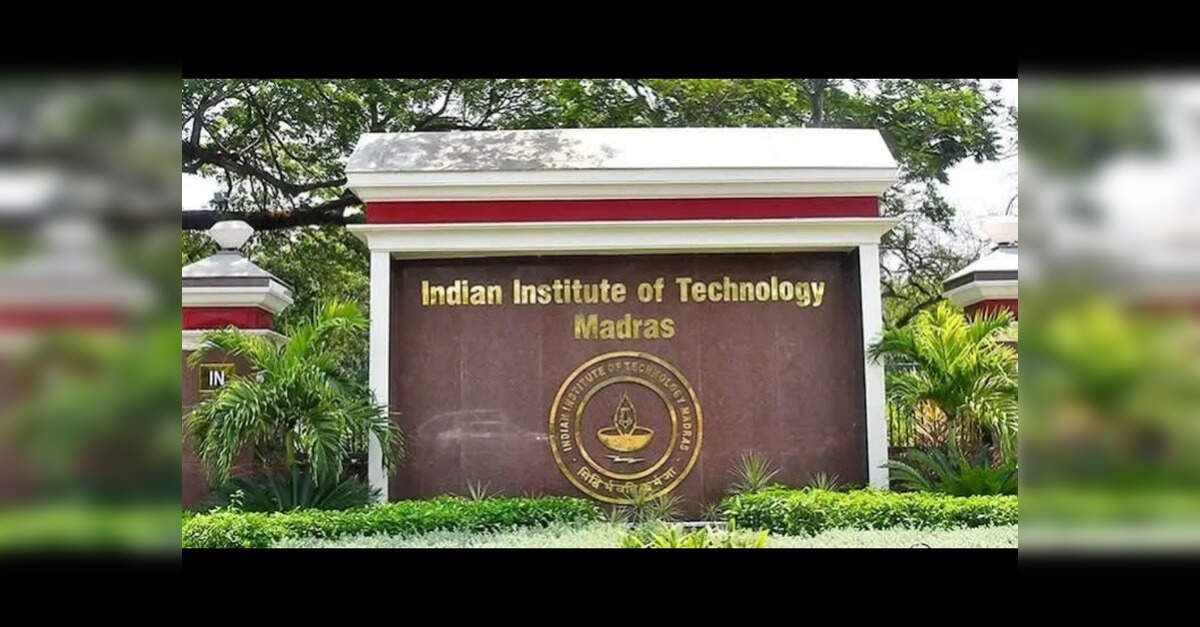
CHENNAI, September 1, 2026: Indian Institute of Technology Madras (IIT Madras) has partnered with UNESCO Mahatma Gandhi Institute of Education for Peace and Sustainable Development (UNESCO MGIEP) to develop artificial intelligence (AI) and immersive learning technologies that integrate Social and Emotional Learning (SEL) into existing curricula.
The collaboration will bring together UNESCO MGIEP’s expertise in SEL and learner-centred education with IIT Madras’ work in artificial intelligence, Extended Reality (XR), game design and immersive technologies.
The partners plan to develop AI-powered tools that can analyse existing curricula and generate learning experiences incorporating SEL concepts, gamification and immersive technologies. The tools are intended to help teachers integrate SEL into regular lessons rather than treating it as a separate subject.
The cooperation agreement was signed in the presence of Prof. Obijiofor Aginam, Director, UNESCO MGIEP; Prof. Manu Santhanam, Dean, Industrial Consultancy and Sponsored Research, IIT Madras; and Prof. M. Manivannan, Head, Experiential Technology Innovation Centre (XTIC), IIT Madras.
According to UNESCO MGIEP, the project will also explore open-source AI tools that can help teachers incorporate SEL into lesson plans, classroom activities and assessments.
“UNESCO MGIEP will provide expertise on Social and Emotional Learning (SEL) and alignment with UNESCO’s recommendations on AI ethics and learner-centred education,” said Prof. Obijiofor Aginam, Director, UNESCO MGIEP.
He said the resulting open-source AI tools could help integrate SEL into classroom practice while reducing the effort required from teachers to incorporate it into existing lessons.
The partners also intend to explore AI models that can operate at lower cost and in low-bandwidth environments. According to UNESCO MGIEP, this could help expand access to AI-enabled learning while addressing concerns around the digital divide.
Prof. M. Manivannan, Head, XTIC, IIT Madras, said a key outcome would be the development of AI-powered tools that can modify conventional curricula by integrating SEL concepts and gamified, immersive learning experiences.
The proposed technology would integrate SEL components into existing academic content instead of requiring institutions to introduce it as an additional subject.
The learning experiences could cover areas such as self-awareness, self-management, social awareness, relationship building and responsible decision-making. The use of immersive technologies is expected to provide students with more experiential forms of learning and increase participation.
The collaboration is aimed at addressing the challenge of incorporating SEL into mainstream education. Rather than adding SEL as a separate academic requirement, the partners plan to embed it within existing classroom content and activities.
The initiative is also aligned with United Nations Sustainable Development Goal 4.7, which calls for learners to acquire knowledge and skills needed to promote sustainable development, including education for sustainable development, human rights, peace and global citizenship.
Beyond developing the AI tools, IIT Madras and UNESCO MGIEP will undertake joint research in educational technology, pedagogy, AI and learning sciences. The partnership will also support faculty and researcher exchanges and the organisation of workshops, conferences and seminars.
UNESCO MGIEP is a specialised UNESCO institute focused on education for peace and sustainable development, with Social and Emotional Learning as a key area of work. IIT Madras’ Experiential Technology Innovation Centre works on Extended Reality, immersive systems and technology-enabled learning.
The project will therefore bring together AI and immersive technology research with expertise in pedagogy and SEL, with the partners seeking to develop tools that can be adapted to different educational contexts.
