


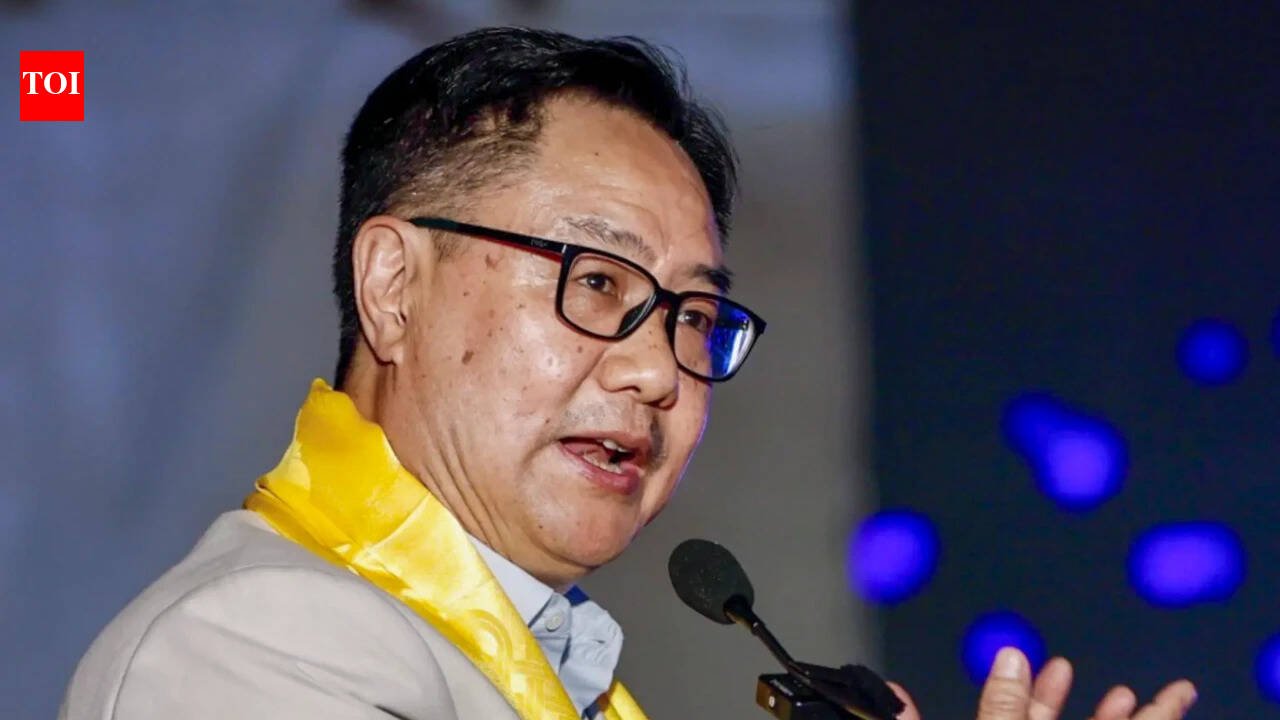
SRINAGAR: Ladakh is poised for a bespoke constitutional shield, with MHA putting the final touches to a special Article 371 framework for the Union territory, Union minister Kiren Rijiju said.PM Narendra Modi will visit Ladakh to share his views on the proposed framework with people, Rijiju said Friday at a function at Druk Padma Karpo School in Leh district.“Autonomous hill development councils and other existing arrangements are not as empowered. So, recent announcement made by home minister Amit Shah to provide a special provision for Ladakh under Article 371 is going to take shape with the blessings of PM Narendra Modi,” Rijiju said.Unlike Article 370, which gave J&K a high degree of autonomy before its abrogation in 2019, Article 371 provides special, temporary and transitional provisions for balanced regional development and protection of tribal cultures, customary laws and local employment.The proposed Ladakh model is being framed as a “sui generis” governance arrangement. It is expected to offer administrative flexibility and safeguards for tribal land, environment, traditional practices and jobs without granting statehood or directly bringing the region under Sixth Schedule.Rijiju said the provisions would include seven councils, matching Ladakh’s expanded district map. “Earlier, Ladakh had only two districts. Leh and Kargil. Now there are seven districts and along with them there will be seven councils,” he said.
Share your thoughts in the comments
Be respectful · TOI community guidelines
Ladakhi representatives from Leh Apex Body and Kargil Democratic Alliance, the region’s two major political groupings, have been in talks with MHA since 2023 for constitutional safeguards covering land, jobs, culture and environment. Next round of talks is scheduled for Sept in New Delhi.Rijiju said Modi had long believed Ladakh needed special attention and had worked towards its development since taking office in 2014. He said the region’s transformation had been striking, pointing to roads, electricity, water, mobile connectivity and telecommunications that were largely absent a couple of decades ago.“When we were in university, and later when I became an MP in 2004, I came to Ladakh,” he said. “There were no roads, electricity, water or other basic facilities. Today, the situation has changed. With mobile phones available everywhere, vast road network, telecommunication facility, we no longer have to wonder how long it takes to travel from one part of Ladakh to another.”
