


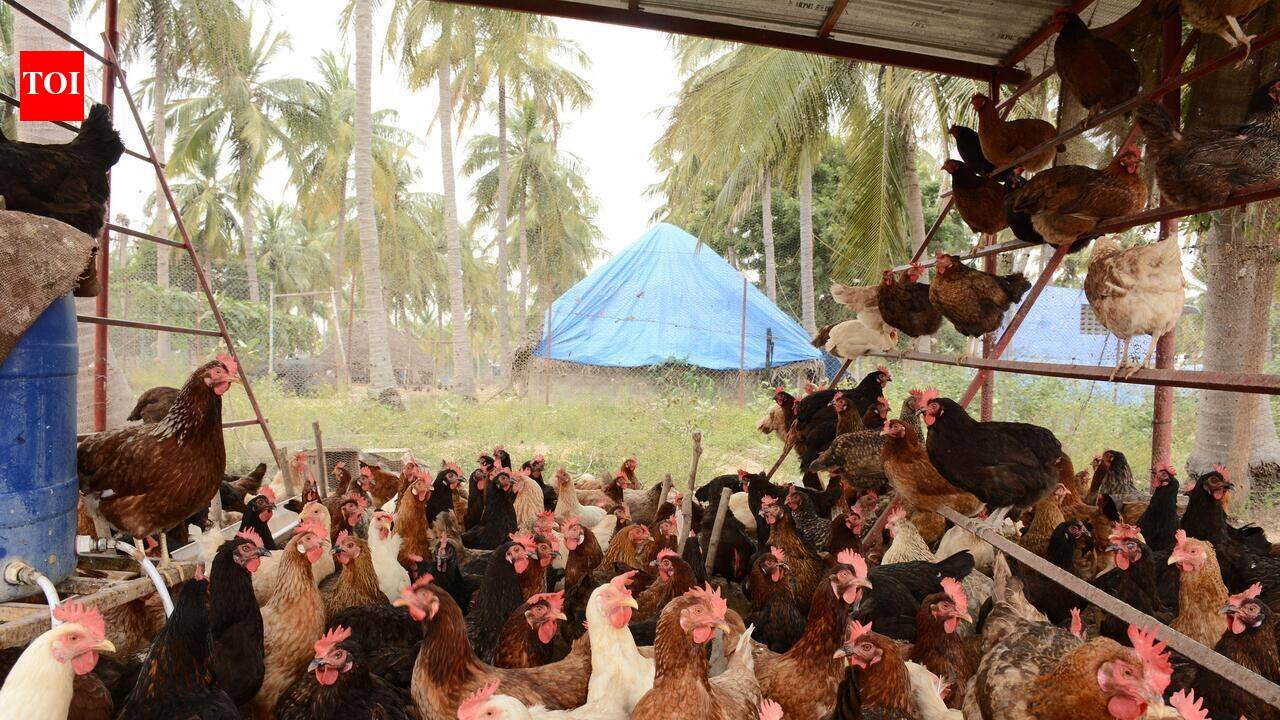
Mangaluru: Rising maize and soya prices have pushed feed costs up by around 60%, putting poultry farmers in Dakshina Kannada under stress.Alwyn Pinto, president of Dakshina Kannada Motte Varthakara Sangha, said 5% to 10% of poultry farmers were hesitant to bring new birds to their farms because of rising input costs. If the trend continues, egg prices could reach Rs 9 a piece after Nov, with retail prices touching Rs 10, he said.Pinto said the availability of poultry feed had declined, partly due to its diversion for ethanol production.“Maize available in the market is being sold immediately, with traders procuring large quantities at higher prices, making supplies to Mangaluru difficult. This problem has emerged over the past two to three months,” he said.Maize is currently priced at around Rs 32-Rs 33 per kg and is expected to rise to Rs 38. Feed and water availability remain major concerns for poultry farmers, he added.Ajay, secretary of Dakshina Kannada Motte Varthakara Sangha, said egg prices could recover after a temporary decline over the next two to three days, potentially reaching Rs 9 during Oct-Nov. A bird consumes around 100-120 grams of feed a day, costing nearly Rs 5 per bird, apart from labour and other expenses, he said.Dayanand Adyar, president of South Kanara District Poultry Farmers Multi-Purpose Co-operative Society, said the cost of maize had risen from Rs 16 to Rs 28 per kg, while supplies had fallen due to poor rainfall and drought-like conditions in some areas. Some traders were also holding stocks in anticipation of further price hikes, he said.The price of soya, another major protein source in poultry feed, has risen from Rs 35 to Rs 76 per kg in about two months. Amino acids used in feed have also reportedly doubled in price, Adyar said.The cost of a 50-kg feed bag has increased from Rs 1,900-Rs 2,000 to around Rs 2,600. As a result, chicken production costs have crossed Rs 115 per kg and could rise to Rs 117-Rs 120.Adyar said the wholesale chicken rate in Mangaluru had risen to Rs 83-Rs 85 per kg on Friday, leaving farmers under pressure.He said the situation could persist until the next major crop, while demand-driven price increases were likely after Shravana, particularly during Dasara, Deepavali and the Sabarimala season.
