


Financial literacy remains unevenly integrated into India’s school education system, with students often learning basic concepts of money, savings and budgeting informally rather than through a dedicated, structured curriculum.
While some schools introduce financial concepts through mathematics, commerce, economics, or extracurricular programmes, there is no uniform approach across schools to equip students with practical skills such as managing money, understanding credit, investing, understanding insurance, and avoiding financial fraud.
Beyond Percentiles: What Business Schools Really Look for After CAT
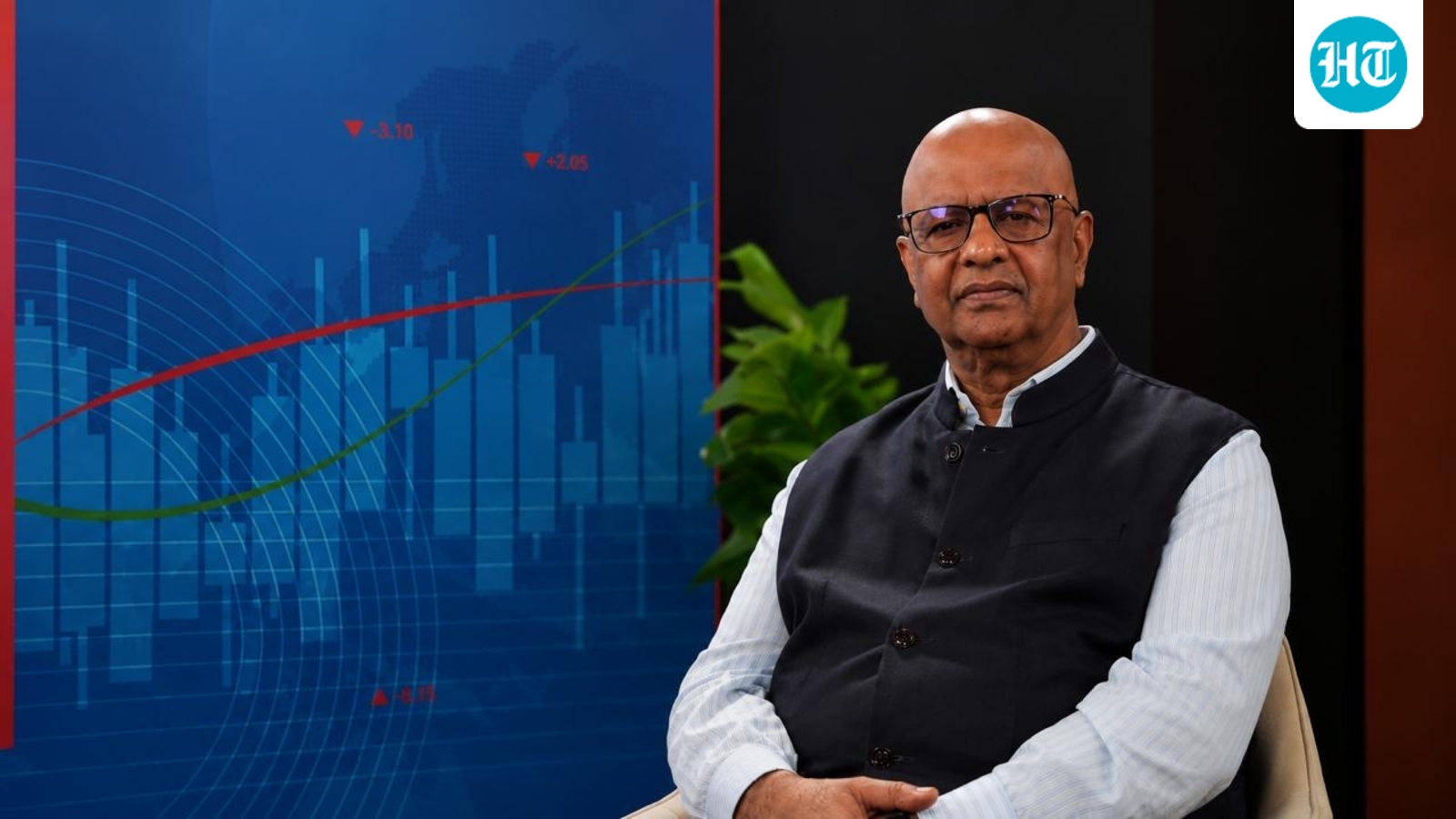
NISM Director Sashi Krishnan believes financial education should be made compulsory in schools and at the undergraduate level to help young people make informed financial decisions from an early age.
While speaking to HT Digital, the NISM Director discussed a career in finance, the role of AI in financial education, jobs in the industry over the next 5 years, and more. Read the interview here:
1. Financial literacy is increasingly being recognized as a life skill. Do you believe it should become a compulsory part of school and undergraduate education in India? What role can NISM play in making that happen?
Financial education should be made a compulsory part of the school and undergraduate curriculum. By including financial education in school and college curricula, we can reach many more students. A young person’s ability to manage personal finances is as crucial to their long-term well-being as basic literacy, health education, or digital fluency. Every individual, regardless of their career path, will inevitably face financial decisions: budgeting a monthly salary, evaluating credit options, navigating tax structures, choosing insurance, investing for long-term goals, or protecting personal assets from digital fraud. If young adults enter the workforce without basic financial training, they will have to learn through trial and error. They could then make costly mistakes, land up with high-interest debt, or fall victim to fraudulent financial schemes. Financial literacy, therefore, has become an essential life skill that will help individuals build financial resilience early in life.
NISM has been running investor awareness and financial literacy programmes across the country for years. Our resource persons are present in 27 states and 400 districts. Our resource person network has grown to about 920 trainers, and we have conducted more than 13,200 investor awareness sessions since inception. Through these investor awareness sessions, we have connected with over 800,000 participants. We partner with over 1000 higher education institutions for various student engagement programs. We engage with over 400,000 students through our National Financial Literacy Quiz. Our Webinars, on various topics related to the securities markets have attracted wide participation. The viewership of our Masterclass series has crossed one crore. There are many more such investor awareness initiatives.
How B-schools are reinventing themselves for India’s startup economy
2. India’s financial sector is evolving rapidly with fintech, AI, and digital investments. What skills should today’s students develop to remain relevant in this changing ecosystem?
The programmes at NISM are designed around the skills the markets require. Along with a deep understanding of the securities markets, financial products, valuation, risk, and the regulatory framework, students also need to develop skills in many other emerging areas. These would include statistical modelling, machine learning, financial econometrics, artificial intelligence, algorithmic trading and behavioural finance. The learning experience at NISM is immersive – in our securities market simulation lab, data sciences lab, Regtech lab and Bloomberg lab. Students also complete a summer internship with a financial sector intermediary and complete various NISM Certifications. On graduation, these students are employment-ready. They have a strong foundation in securities market concepts, comfort with data, exposure to fintech, and the right SEBI-mandated certifications.
3. How is NISM collaborating with universities and colleges to bridge the gap between classroom learning and the needs of the financial services industry?
We work with colleges and universities on several fronts. We partner with universities and colleges to bring NISM certifications, e-learning modules and structured learning pathways directly into their programmes, across subjects like securities markets, mutual funds, derivatives, investment advisory, portfolio management, research analysis and risk management. We encourage students to register for our e-learning courses. We offer 40 skill development modules and 28 e-learning programmes. Many universities have included our Financial Literacy Course for Bharat as a credit course in their curriculum. We also organize summer school programs and immersion programs for college students, where they get opportunities to interact with our faculty and market professionals.
We support the faculty too, through faculty development modules, assessment support and expert engagement, so the teachers at these institutions can carry the industry perspective into their own classrooms long after we have set things up.
Will AI replace financial analysts? How junior finance roles are changing
4. Artificial Intelligence is reshaping finance as well as education. How do you see AI changing the way students learn about financial markets and prepare for careers in the sector?
AI has impacted both how students learn and what they need to learn. On the learning side, AI lets us personalise education, which was not possible earlier. A student who is weak on a concept can get targeted practice; simulations can be made richer and more responsive; and routine doubts can be answered instantly, freeing up faculty time for higher-order thinking that really needs a human.
On the substance side, students now have to learn about a market where AI is doing more of the work, in research, in execution, in fraud detection and in advisory. We have built this into what we teach. Our data sciences and fintech programme takes students through artificial intelligence and machine learning in finance, data analytics, blockchain and generative AI, use of tools like Python, and hands-on experience on real-life platforms. Students are also required to apply this to actual problems and build solutions. We, however, sensitize students to the fact that professionals who excel are those who combine what machines produce with the judgement that machines lack.
5. With growing interest among students in investment banking, wealth management, fintech, and capital markets, where do you see the biggest employment opportunities over the next five years?
India’s financial services sector has been growing strongly and is expected to keep expanding at a healthy pace through the end of the decade, adding lakhs of new jobs. A large share of that growth is now spreading into tier-two and tier-three cities. The opportunity is not only large, but it is also becoming more widely spread across the country.
Fintech is probably the single biggest engine, with roles in digital payments, product management, fraud analytics and regulatory technology growing very fast. Alongside it, there is a huge skill gap where finance and technology converge – like data science, AI and machine learning applied to credit and risk, and cybersecurity. There will also be opportunities in the wealth management and investment advisory space, driven by the surge of first-time retail investors who need trustworthy guidance. As markets grow and regulation deepens, control functions like risk, compliance, and surveillance will require talent. Traditional roles in investment banking and fund management will always exist but will be narrow and crowded. Students who combine domain knowledge in the markets with genuine technology skills will have the widest choice of all, because that specific combination is exactly what the industry is short of right now.
