


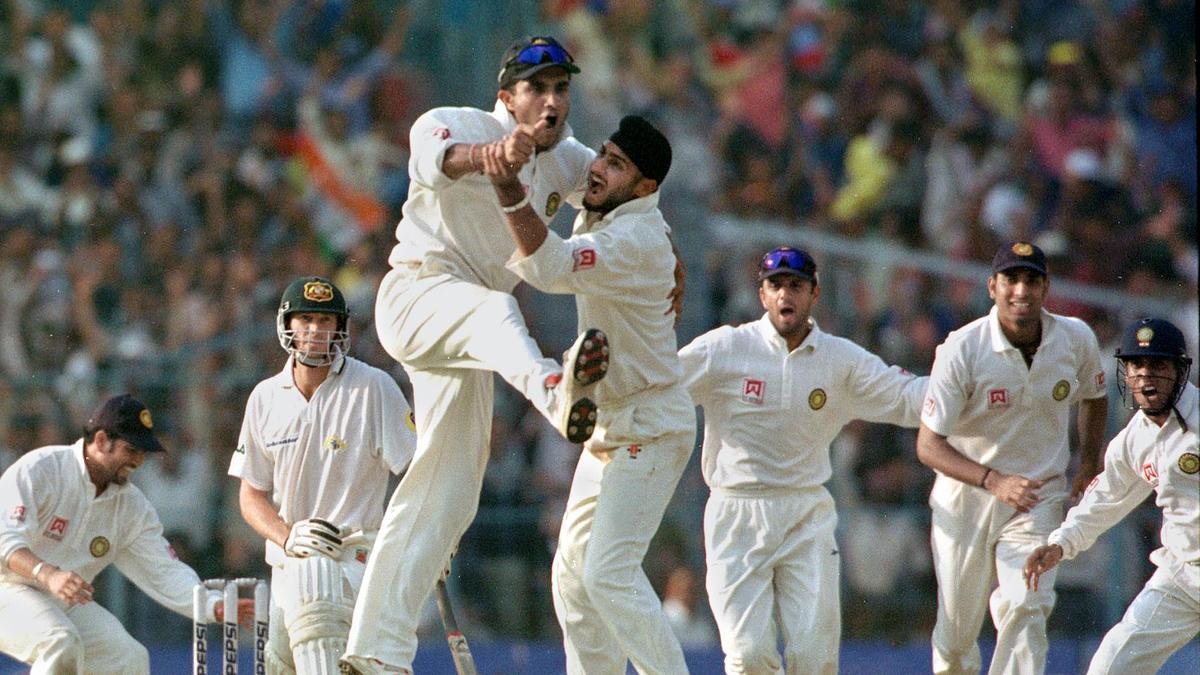
Earlier this year, India celebrated the 25th anniversary of one of the most iconic Test series ever, a series like no other. On its own, it was a triumph of extraordinary proportions, but it meant even more from an overarching perspective because of the circumstances under which it was fashioned.
Indian cricket was ensnared in a mesh of shame and lack of trust after the match-fixing scandal broke out in 2000. The average fan had lost faith in their heroes, not knowing what was fact and what was make-believe. Without the patronage of the average fan, of course, no sport can even survive, let alone flourish.
To compound the woes of India’s superstars and superstars-in-the-making, they were confronted within a few months of the lid being blown off corruption in the sport by the world’s most formidable outfit at the time, a compelling force of the irresistible and the immovable. Steve Waugh’s Australians were the gold standard of Test cricket, indeed of any form of cricket, when they arrived in India in early 2001, looking to conquer the Final Frontier that had proved insurmountable for nearly three and a half decades.
Waugh’s warriors were sitting on a 15-Test winning streak when the teams lined up at Mumbai’s Wankhede Stadium for the first of three matches. Within three days, they had extended their run to a record-equalling (their own record, lest it should be forgotten) 16 matches, blowing Sourav Ganguly’s men away with a powerhouse performance with Glenn McGrath, Shane Warne, Matthew Hayden and Adam Gilchrist leading the way.
That Australian side was as formidable as any Test cricket has witnessed. India, outclassed by ten wickets, were on a hiding to nothing. Their fans, disillusioned and morose, feared a chastening, humbling, humiliating 3-0 rout, a fear that grew exponentially after India were shot out for just 171 in the first innings of the next Test at the Eden Gardens in reply to the visitors’ 445.
Not even the fact that Harbhajan Singh had become the first Indian to take a Test hat-trick on the opening day of the match provided any solace as India began their second innings, 274 runs in arrears and facing another embarrassing loss. Their three team scores at that point were 176, 219 and 171. Where was the light at the end the tunnel? Did the tunnel even end?
Then began the mother of all fightbacks, a bounce-back of unprecedented magnitude and impact. The decision to thrust V.V.S. Laxman to No. 3 as he swapped places with incumbent Rahul Dravid, who dropped down to No. 6, turned out to be a masterstroke, a call that impacted not just the Test and the series, but also the way teams viewed the follow on and the way teams viewed the Indian side, which now felt that no situation was too daunting, no task was beyond them.
The Hyderabadi with the wrists of steel and the Bengalurean with the heart of a champion joined hands in the first of several massive Test associations that would dot their careers. This one was worth 376 – savour that. They batted throughout the fourth day, and when Ganguly applied the closure on the final morning, only one team was in with a winning chance. With Harbhajan continuing his grand form and Sachin Tendulkar atoning for twin knocks of 10 with the scalps of Hayden, Gilchrist and Warne (with a ripping googly, no less), India romped home by the princely margin of 171 runs.
Dramatic turnaround
Just 72 hours previously, the dramatic turnaround wasn’t even in the realms of fantasy. Through 281 and 180 and the offie’s six for 73 and the genius’ three for 31, India pulled off a victory for the ages, a result that not just squared the series but also returned the confidence of the fans. Suddenly, cricket and cricketers weren’t looked at askance. There was genuine hope and the realisation that this was a bunch of good men in whom faith and trust and belief could be invested without inhibition and doubt.
That was amplified in the next game in Chennai when, in another tight contest, India squeaked home by two wickets to close out a 2-1 victory, one of the most memorable in Test history. Even today, people talk in awe and with reverence of the deeds of Laxman and Dravid, of Tendulkar and Harbhajan, of Ganguly’s captaincy, of the spirit and resolve of a bunch of warriors who could so easily have capitulated abjectly after the hammering in the first Test and the meltdown in the first innings of the second, but who refused steadfastly to roll over and who fashioned a miracle of extraordinary proportions.
Now, for a moment, think what it would have been like if it was only a two-Test series, like most are these days unless they involve two of England, Australia and India. Imagine if the series had ended in a 1-1 stalemate after India’s epochal comeback at the Eden. If there was no winner only because there wasn’t a third match pencilled in. A 1-1 scoreline with one of the Tests drawn is still acceptable but a 1-1 scoreline because a third game is unavailable leaves you with a sense of being deprived of the logical denouement that sport promises. And often delivers.
Think also what it would have been like had India’s tour of Sri Lanka in 2015 been a two-Test affair, like it is this time around. At the time, India hadn’t won a series in this country since 1993. It was Virat Kohli’s first full tour as Test captain in his own right, following the retirement some seven months previously from the five-day game of Mahendra Singh Dhoni. The first Test was in Galle, as it generally is in Sri Lanka, and India ruled the exchanges for three whole days.
Enjoying a first-innings lead of 192, India did allow the hosts to pull away to 367 in their second innings from 95 for five on the back of a special 162 from Dinesh Chandimal, but even then, a fourth-innings target of 176 with more than two days to go was well within the reach of Kohli’s lads, among whom were K.L. Rahul, Shikhar Dhawan, Rohit Sharma and Ajinkya Rahane. It seemed as if India had taken it for granted that they would get the job done when they resumed day four on 23 for the loss of Rahul’s wicket. The end result – seven wickets for the indefatigable Rangana Herath, a 63-run shock win for the Lankans under Angelo Mathews.
That evening, the Indian dressing room shook with the reverberating aftershocks of the defeat. Harsh words were said, Kohli and then team director Ravi Shastri read the riot act, and Indian cricket took a massively significant step towards erasing its tag of being lambs overseas. There was a sea change in attitude and team culture, which manifested in convincing victories in the next two games and a fabulous 2-1 triumph that was the genesis of the six-match winning streak on which the team is currently sitting in this nation. Now, what if that had been a two-Test series? How would Indian cricket have shaped up?
Gautam Gambhir.
| Photo Credit:
PTI
“Ideally, I would want a three-Test series,” Gautam Gambhir, the India head coach, agreed ahead of the ongoing second Test in Colombo. “I’ve always believed that there should always be a possibility that a team that loses in the first Test should have the chance to come back. Sometimes, what happens is, in a two-Test match series, if you lose the first Test match, there is no chance for the other team to come back and win the series. The maximum you can do is to try and draw the series.
“I still remember that series, between India and Australia (2001), where India was one down, and they still managed to come back, and win that series 2-1.”
Given that the World Test Championship has been in vogue since 2019 and there is no compulsion for teams to play more than two Tests, commercial considerations have driven most teams to stick to the bare minimum. There is a greater demand for T20 Internationals, which is right now the goose that lays the golden eggs, and therefore two-Test showdowns have become the norm. Why, one of the unfounded criticisms against South Africa’s march to the WTC final (and eventually the title) last year was that they had shaped their success around two-match faceoffs. That was an unkind cut, because South Africa did what they had to do within the ambit of the rules as they exist. But a greater standardisation of series will help ward off such loose talk, something Arjuna Ranatunga, the legendary Sri Lankan skipper who took the team to the 1996 World Cup crown, strongly espouses.
“For me, playing a Test tournament is not the criterion, it’s all about playing bilateral Test matches, playing three- and five-Test series,” Ranatunga told this writer a few days back. “What’s this two-Test series about anyway? It’s so unfortunate, this World Test Championship is (just) another commercial venture.”
Cricket calendars are already packed, with ICC events thrown in every alternate year, be it the T20 World Cup or its 50-over counterpart that still drives the sport despite the dwindling popularity of bilateral ODIs. Then, there are continental events such as the Asia Cup, which also make demands on the Asian Test-playing nations of whom there are five (though only four are involved in the WTC). All of these also contribute a great deal to ensuring that three-Test series become rare as hen’s teeth, but as much as the problem might appear insurmountable, there is nothing that will and desire and the urge to put one’s money where the mouth is can’t achieve.
The primacy of Test cricket cannot be protected merely by paying lip service; it is incumbent upon every stakeholder involved in this wonderful sport to ensure that the longer version is thriving and vibrant, though no one can apportion any blame to the protagonists if they are not as fascinated by the tugs and pulls, the ebbs and flows, of Test cricket, as several others are.
Australia versus Bangladesh is the classic example of the power of the three-match contest. Just imagine the interest levels that would have accompanied the decider after Goliath fought back to quash David’s impunity in winning the first Test. Now, we can only think of what might have been. Unfinished business, unfulfilled promise…
