


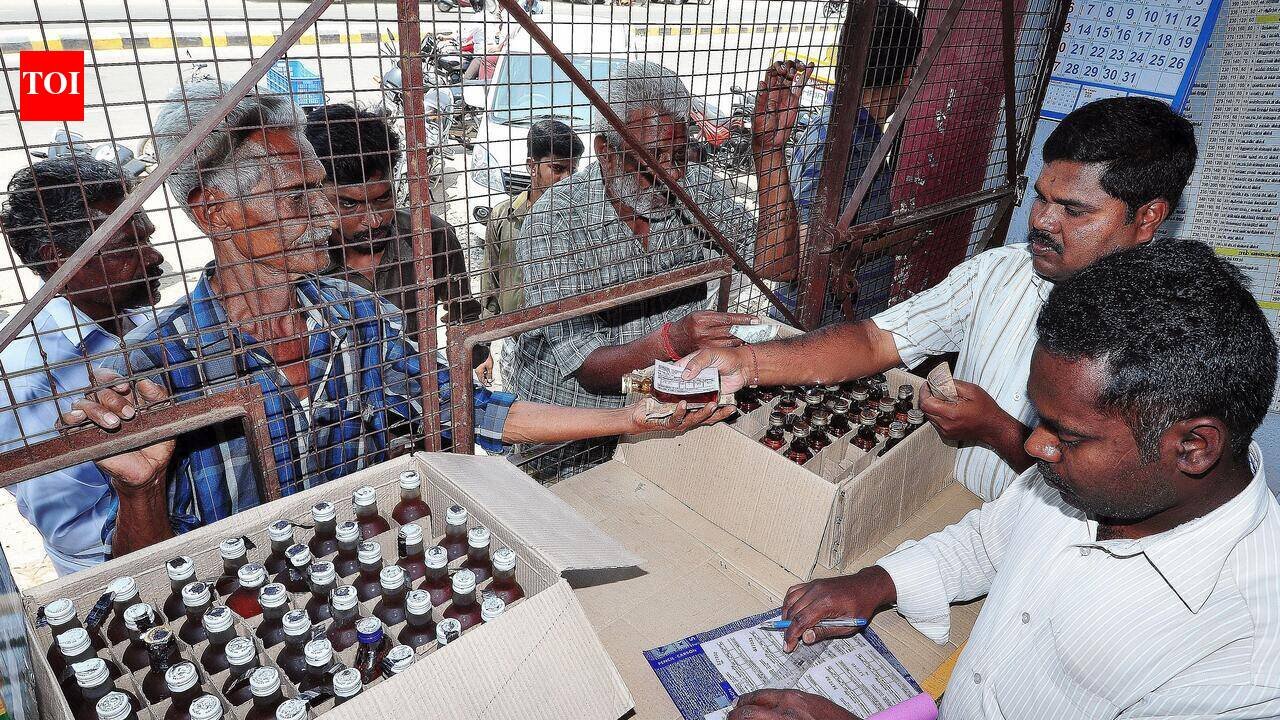
Pune: The FSSAI action against popular Indian-made foreign liquor (IMFL) products is beginning to be felt at retail counters in Pune, with supplies of some variants of a popular rum becoming uneven even as other variants and pack sizes continue to reach the market. Retailers said some consumers were turning to competing domestic rum brands when their preferred product was unavailable.A representative of the Pune District Wine Merchants Association said the affected rum remained in high demand despite the uneven supply. “People are asking for it, which we cannot provide,” he said, adding that the brand had one distillery serving Maharashtra, while some competing companies had two or three distilleries and better stock availability.The brand was already operating with relatively tight distributor stocks and demand had remained high during the rainy season, he said. The situation has meanwhile benefited competing domestic rum brands, particularly those manufactured under the Maharashtra Made Liquor (MML) category. “They are picking up, they are getting good sales,” he said.For consumers, another association representative said, the regulatory dispute was less important than being able to find their preferred product. “A layman, a customer, is least bothered whether it is seven years matured or not. He loves the taste, he wants the brand,” he said.The FSSAI action began with prohibition orders in June and July and had by early August covered several variants across manufacturers. The regulator has said its laboratory tests found certain products to be sub-standard because of the addition of external artificial or nature-identical flavours. It has also objected to an age claim on a popular rum after finding that matured rum accounted for less than 5% of the blend.FSSAI in a press release dated Aug 2 has clarified that it is not banning flavouring in alcoholic beverages. It said permitted flavours such as vanilla or coffee can be used where there is a legitimate technological purpose. Its objection is specifically to adding the flavour of the same alcoholic beverage — such as rum flavour to rum or whisky flavour to whisky — to recreate a taste that, according to the regulator, should come from the product’s ingredients and manufacturing process. FSSAI has cited rules requiring the name on the front of the pack to reflect the true nature of the product.An industry expert, however, said, “Regulations 2.5 and 2.8 allow rum and whisky to be made using neutral or rectified spirit, while the regulations also recognise flavoured alcoholic beverages.”The issue, therefore, is not whether flavouring is allowed at all, but how these provisions apply when manufacturers add the same flavour as the product — such as rum flavour to rum or whisky flavour to whisky.FSSAI says such products do not reflect the true nature of the beverage and should instead be labelled as flavoured spirits, while the industry argues that the existing regulations already permit neutral spirit and flavouring.Another liquor industry expert also questioned the overlap between FSSAI’s action and the role of State Excise departments, which have traditionally overseen liquor production and label approvals. “FSSAI is a relatively new regulatory authority. The regulations governing alcoholic beverages came later, while quality and standards for liquor have traditionally been governed by State Excise laws. State Excise has been doing this for ages,” the expert said.The issue comes amid falling import duties on some foreign spirits, which industry says could increase competition for domestic brands. India reduced the effective tariff on US bourbon from 150% to 100% in February 2025, while the duty on Scotch whisky and gin from the UK fell from 150% to 75% in July 2026, with a further reduction to 40% planned over the next decade.BOX:“There is no question about the use of ENA in the formulation of a product. The moot question is whether identical flavour can be used. We allow the use of other flavours such as vanilla, coffee, chocolate or cinnamon. However, under Clauses 3.1.1(4) and 3.1.1(7) of the Food Safety and Standards (Food Products Standards and Food Additives) Regulations, 2011, every additive has to have a technological justification and should not be used in a way that misleads consumers. There is no technological justification for adding rum flavour to rum. If the product is good enough, there should be no requirement to add the same, identical flavour.” — Senior FSSAI official
