


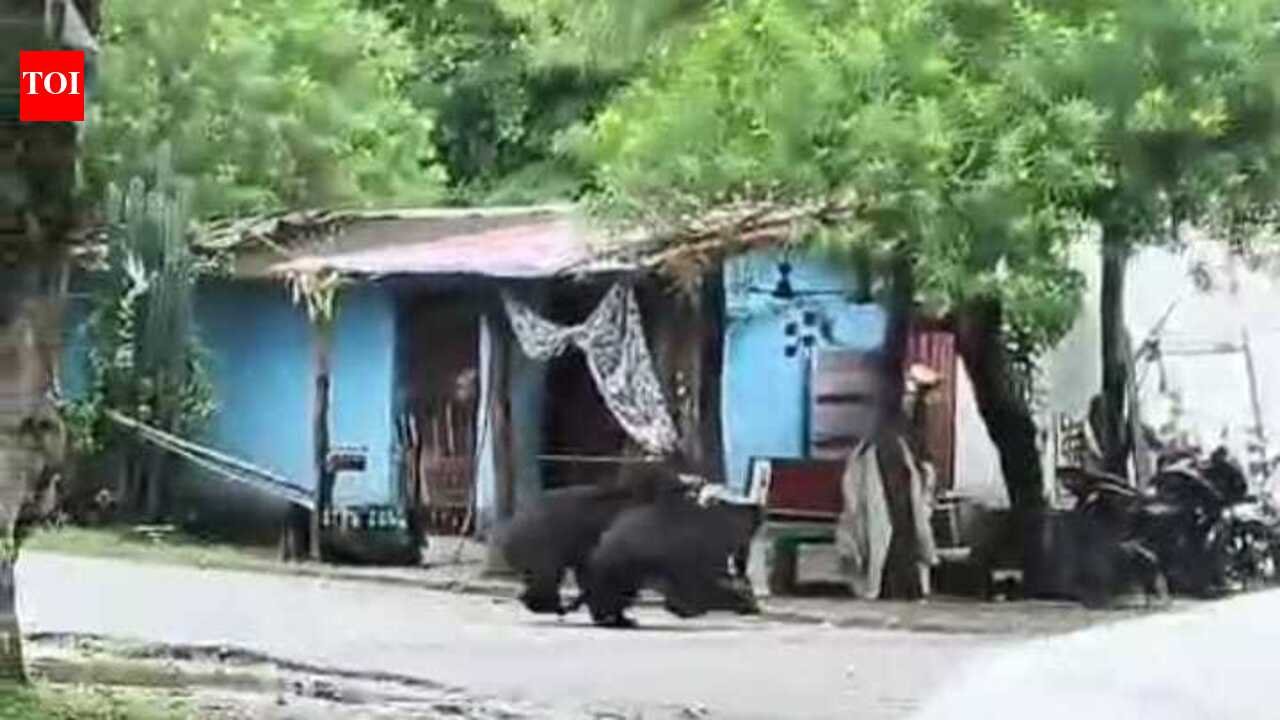
Bettiah: Human-wildlife conflict is emerging as a challenge for villages along the fringes of Valmiki Tiger Reserve (VTR) in West Champaran district with three people killed in tiger attacks in the past 20 days.The latest fatality was 55-year-old farmer Vijay Haldar, who was attacked by a tiger at Bhedihari under Valmikinagar police station on Aug 15. The forest department has stepped up surveillance through elephant and foot patrols.Between Jan and Aug this year, four people were seriously injured in bear attacks, while eight others were injured in a leopard attack in Piprasi, bordering Uttar Pradesh. A farmer in Inarwa escaped a rhinoceros attack on Thursday.Wildlife Trust of India director Samir Kumar Sinha said human activity along forest boundaries was an important factor.“Human-wildlife conflict increases with greater human interference along forest edges. Wild animals generally attack when they perceive a person as prey or a threat, particularly when someone comes too close. In agricultural fields, people working in a bent position may sometimes appear like prey to a wild animal, increasing the possibility of an attack,” Sinha said.He stressed the need to identify individual animals involved in repeated attacks. “In cases of multiple carnivore attacks, it is important to establish the identity of the individual animal exhibiting aberrant behaviour. The tiger reserve management should use its tiger database to identify the animal,” he said.Valmikinagar range officer Satyam Kumar said patrolling and surveillance had been stepped up in vulnerable areas. Villagers have been advised not to venture alone near forest edges and to travel in groups while going to fields. Residents have also been asked to report pugmarks and other signs of wildlife movement.Sinha said monsoon flooding could have restricted animal movement. “Inundation of the forest, adjoining agricultural areas and river floodplains may confine animals to smaller areas, increasing the chances of accidental and sometimes fatal encounters with humans,” he said.Human-wildlife conflict mitigation expert Abhishek said conservation efforts were more effective when locals benefited directly from wildlife protection.“Eco-tourism, guiding, homestays, handicrafts, transport and conservation-related employment can provide livelihoods while creating a stake in protecting wildlife. The Eco-Development Committees in Valmiki can play an important role, but they need to become more active and ensure wider community participation. Fair sharing of tourism benefits can turn tigers from a source of conflict into an ecological and economic asset and make coexistence more practical,” he said.
