


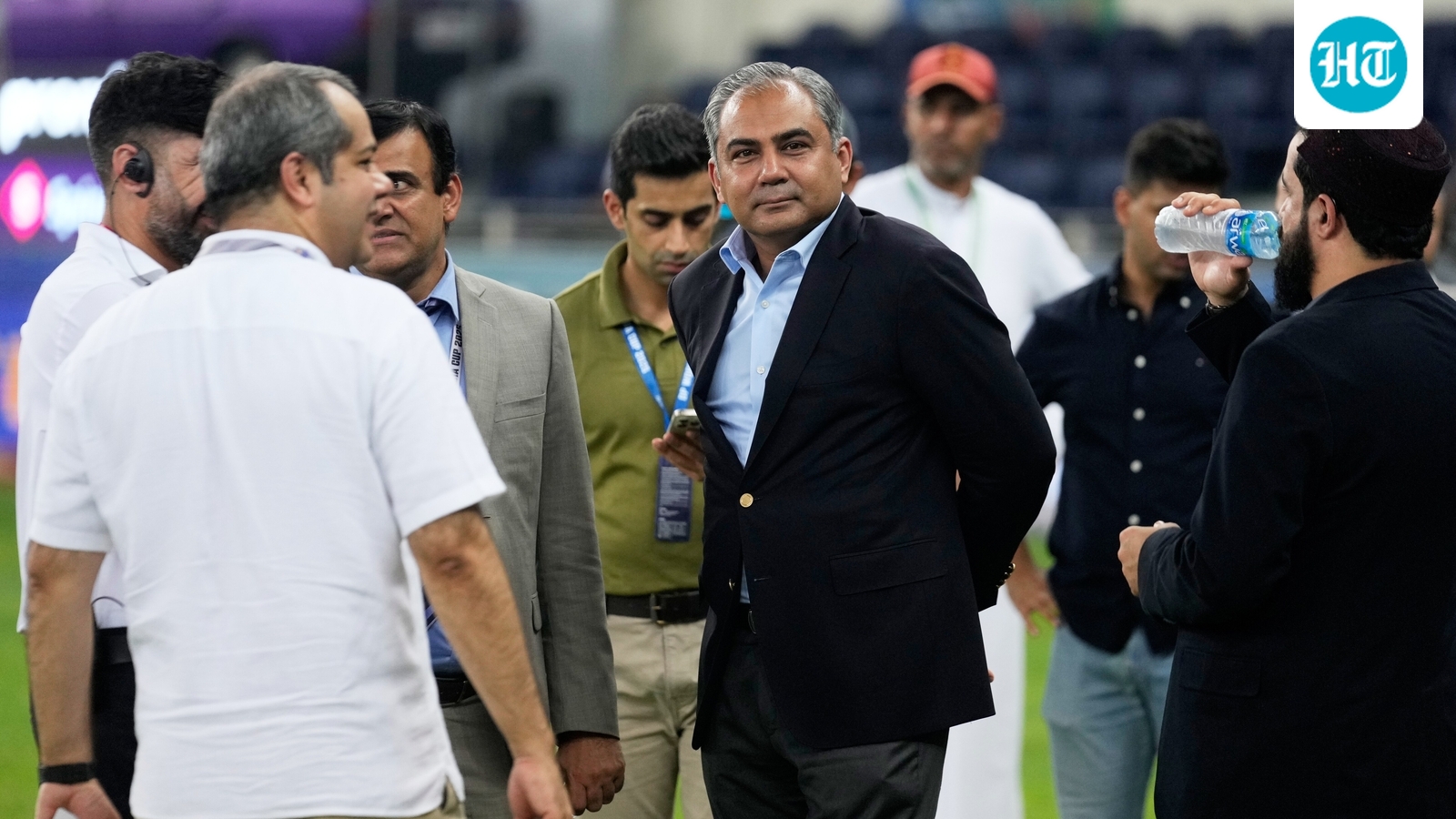
A year later, Indian cricket could once again face a familiar Mohsin Naqvi issue in the same city of Dubai, with the Women’s Asia Cup set to begin there next week. And that raises an obvious question: what happens if the Indian team goes all the way to the final?
Naqvi remains the president of the Asian Cricket Council (ACC), which means he could once again find himself on the presentation dais after the tournament finale.
To understand why that could become an issue, it is worth revisiting what unfolded in Dubai last year, when the city hosted the men’s Asia Cup. The Suryakumar Yadav-led Indian team, who beat Pakistan in the final, refused both to shake hands with their opponents and to accept the trophy from Naqvi in the aftermath of the Pahalgam terror attack and the ensuing military confrontation between India and Pakistan.
The decision led to a prolonged delay in the presentation ceremony, after which Naqvi left the venue with the trophy. More than a year later, it has still not been handed over to the Indian team.
Naqvi’s position made the episode particularly contentious. Apart from being the ACC chief, he also heads the Pakistan Cricket Board and serves as Pakistan’s Interior Minister. During the tournament, he repeatedly criticised the Indian team’s decision to refuse handshakes with Pakistan, whom they faced three times, including the final.
The Women’s Asia Cup begins on August 28, with the final scheduled for September 13. India and Pakistan have been drawn in the same group, guaranteeing at least one meeting between the two sides.
However, unlike the men’s tournament, the women’s competition is unlikely to produce multiple India-Pakistan clashes. A second meeting can only come in the final, should both teams progress that far.
Pakistan have never won the Women’s Asia Cup. They have reached the final only twice, in 2012 and 2016, while they were eliminated in the group stage in 2018 and reached the semi-finals in 2022 and 2024. India, meanwhile, are the most successful team in the tournament’s history, having won seven titles and reached the final in all nine editions.
Pakistan do have a realistic chance of reaching the semi-finals, with lower-ranked Thailand and Hong Kong also in Group A. But a second India-Pakistan meeting would depend on both teams navigating the knockout stage, with Sri Lanka or Bangladesh potentially standing in Pakistan’s way in the semi-finals.
That brings the tournament back to the question that could dominate the closing stages: what happens if India, the defending champions and finalists in every edition, win the Women’s Asia Cup and Naqvi is on the presentation dais?
Would Harmanpreet Kaur and her team follow the precedent set by the men’s side last year?
The women’s team has already followed the no-handshake policy in recent meetings with Pakistan, including at the World Cup and in the T20 World Cup this year.
The BCCI’s position on a potential trophy presentation involving Naqvi is not known. However, the board has made it clear on multiple occasions since last year that there will be no exchange of pleasantries between the two teams.
For now, the answer remains unclear. One possibility is that Naqvi could choose not to be the official handing over the trophy if India win. But that is not what happened last year, despite India having made their position on the presentation ceremony clear even before the men’s final.
The BCCI later attempted to break the deadlock. Naqvi, however, maintained that he was willing to hand the trophy to the Indian team and instead proposed a separate presentation ceremony at his office in Dubai, provided the players came to collect it from him.
BCCI secretary Devajit Saikia also met Naqvi on the sidelines of an ICC meeting and later said the “ice had been broken” between the two sides. The trophy issue, however, remains unresolved.
Now, a year later and in the same city, the Women’s Asia Cup could bring the entire question back into focus — provided India make it to the final and lift the trophy.
