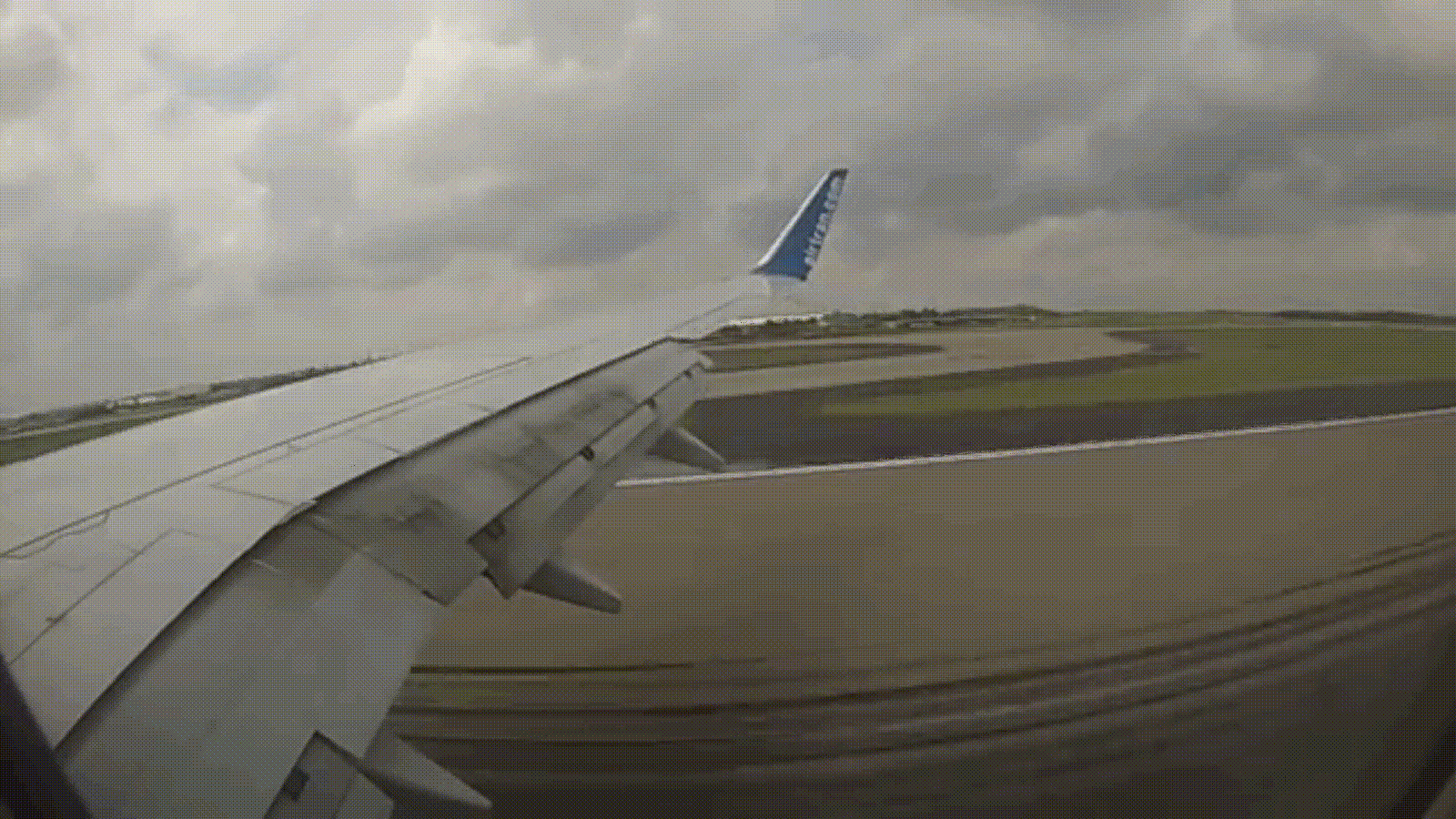
When flying in an aircraft, you may have always noticed that the flaps on the wing are deployed before landing. Have you ever wondered why that happens? The pilot often engages two flaps – one that rises on the upper wing and one that extends below. In HT Lifestyle’s edition of ‘Everyday Explained’ for today, let’s learn the function of these wing flaps.
Also Read | Everyday explained: Why are manhole covers always round and not square or rectangular?
Why do the panels on an aircraft wing open mid-air before landing?
The aerodynamic flaps and spoilers were added to airplanes around the 1940s. When a flight begins its descent, spoilers are deployed to create drag, reducing the aircraft’s speed while landing. These spoilers can reduce lift, disrupt airflow, increase drag, help the aircraft descend, and, after landing, help put more weight onto the wheels for better braking. They also help an aircraft lose altitude. This is necessary when trying to descend quickly.
Meanwhile, you may have also seen aircraft wing flaps extend, allowing the plane to fly safely at lower speeds. The wing flaps are fully deployed for landing.
Where are aircraft spoilers on a plane?
According to California Aeronautical University (CAU), aircraft spoilers are the large panels along the top or upper surface of each wing. They are just forward of the flaps. You can identify them in the air as they raise up slightly when in flight, as you begin to descend. Then, as you land, the spoilers go all the way up – as the flaps go down.
All spoilers are not created equal. There are two main types: vertical and hinged. Per the CAU, vertical aircraft spoilers are those that are found on smaller aircraft, including gliders. They generally have to be fully raised in order to be effective. The more vertical they reach, the more beneficial they become.
Meanwhile, hinged aircraft spoilers are much more common, but are a bit different. They are much more easily controlled and can be added to the wing of any type of aircraft.
Why are spoilers important?
They act as speed breakers in the air. Instead of aggressive thrust changes, the aircraft uses controlled drag to manage speed and maintain a stable vertical profile into terminal airspace.
When it comes time to land an aircraft, a pilot wants to stop as quickly as possible, especially if there are obstacles on the runway. Just as flaps help to reduce speed, so do spoilers. Both make the brakes much more effective, and they are used nearly every time a pilot lands an airplane.
Nearly all modern airliners have spoilers. Next time you’re on descent, look at the wing.
Source link