


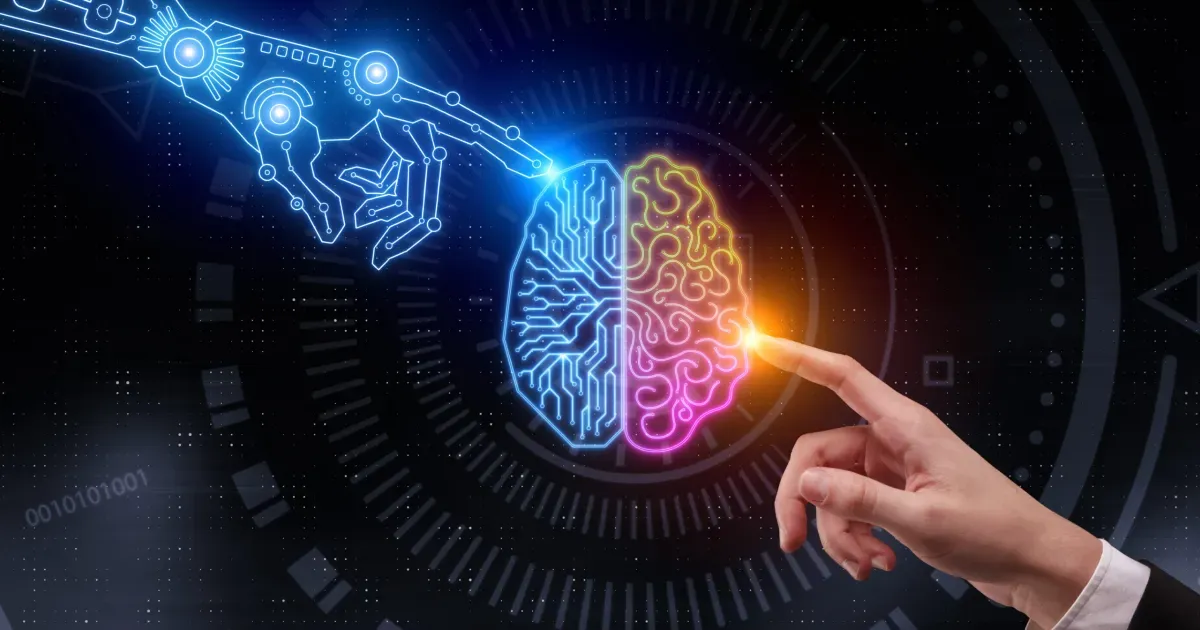
Artificial intelligence is no longer a subject reserved for laboratories, tech conferences, or science-fiction writers. It has entered daily life with quiet confidence, shaping the way we write, search, diagnose, design, trade, and even think. From the smartphones in our hands to the algorithms that recommend what we watch, read, or buy, AI has already become part of the human experience. The real question is no longer whether AI will change the world. It already is. The deeper question is what that change means for human intelligence itself.
For centuries, human intelligence has been celebrated as the highest force of creation — the ability to reason, imagine, question, and feel. It is not simply about processing information. It is about meaning, judgment, ethics, and empathy. AI, by contrast, is brilliant at pattern recognition, speed, and scale. It can absorb data in quantities no human mind can match, and it can produce answers in seconds that might take a person hours or days. But speed is not wisdom, and calculation is not consciousness.
This distinction will matter more in the years ahead. The future is unlikely to belong to AI alone, nor to human intelligence standing in stubborn opposition to it. The future will belong to those societies, institutions, and individuals that learn how to combine the strengths of both. AI can assist human intelligence, but it cannot replace the human capacity for moral choice, imagination, compassion, and purpose. A machine may generate a flawless essay, but it cannot suffer, hope, forgive, or dream. It can imitate intelligence, but it cannot live experience.
There is, however, a genuine danger in the age of AI: the temptation to surrender too much of our thinking to machines. When every answer is a click away, curiosity weakens. When every task can be automated, effort begins to look unnecessary. When every decision is guided by an algorithm, judgment may slowly lose its sharpness. The risk is not only that AI becomes smarter. The greater risk is that humans become lazier in their thinking, more dependent in their choices, and less confident in their own intellectual abilities.
Education will be the battlefield where this struggle is most clearly seen. If used wisely, AI can revolutionize learning by personalizing instruction, helping teachers, and making knowledge more accessible. It can support students who struggle and challenge those who excel. But if misused, it can also encourage copying over learning, speed over depth, and convenience over understanding. The purpose of education is not to produce humans who can merely ask AI the right questions. It is to produce minds that can ask the right questions in the first place.
That is why the future of human intelligence must be built on discernment. In a world flooded with synthetic content, misinformation, and machine-generated noise, the ability to evaluate truth will become more valuable than the ability to simply retrieve information. Human intelligence must evolve from memorization to interpretation, from passive consumption to active reasoning. The most important skill of the coming era may not be coding or automation, but critical thinking.
At the same time, AI should not be seen only as a threat. Used ethically, it can free human beings from repetitive burdens and allow them to focus on work that requires empathy, creativity, and higher-order thought. Doctors can use AI to improve diagnosis, farmers can use it to predict weather and improve yields, journalists can use it to process data, and public institutions can use it to deliver services more efficiently. The promise of AI is not that it makes humans obsolete, but that it gives humans more room to be fully human.
Yet this promise will remain hollow unless guided by values. AI is not neutral in the way its defenders sometimes claim. It is built on data, trained by people, and deployed by institutions with interests of their own. That means bias, inequality, surveillance, and misuse are not accidental side effects; they are real possibilities. The future of AI must therefore be shaped by regulation, transparency, and accountability. Technology without ethics is not progress. It is power without conscience.
In the end, the rise of AI should force humanity to rediscover what intelligence truly means. Intelligence is not just the ability to compute faster or predict better. It is the ability to understand consequence, to choose rightly, to create meaning, and to remain humane in a changing world. If AI compels us to become more thoughtful, more disciplined, and more imaginative, then it will have served a noble purpose. If it makes us passive, dependent, and intellectually hollow, then we will have mistaken convenience for progress.
The future will not be decided by machines alone. It will be decided by the human beings who design them, use them, regulate them, and, above all, refuse to surrender their own minds. AI may become more powerful, but human intelligence must become more purposeful. That is the challenge of our time — and perhaps the greatest test of civilisation itself.
