


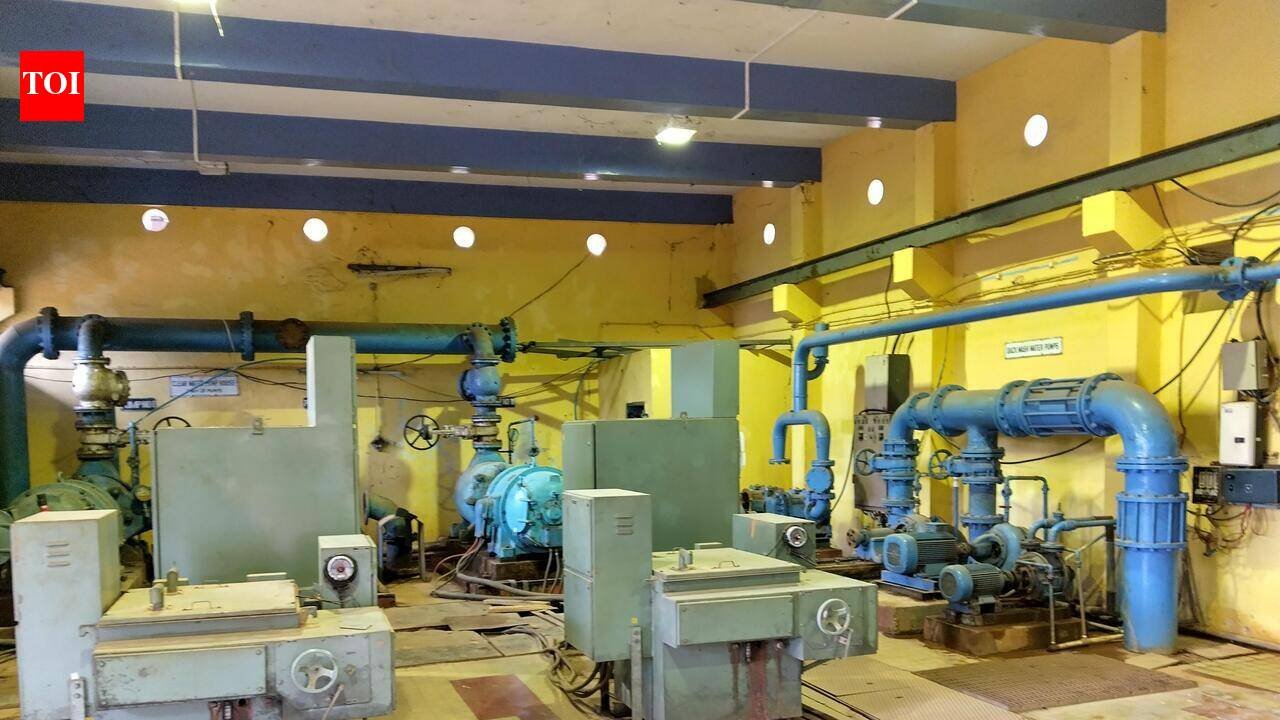
Ponda: Drinking water department minister Subhash Phaldessai has assured that the 69-year-old asbestos cement (AC) pipeline of the Portuguese-era Opa water treatment plant will be replaced on priority. He also said all pipelines in the state that are more than 60 years old would be replaced.The first 8-million-litre-per-day (MLD) water treatment plant was constructed by the Portuguese govt at Opa ward in Khandepar village, Ponda, in 1957. Commissioned in Dec that year, the plant was designed by renowned engineer Mokshagundam Visvesvaraya.The plant has a 350mm-diameter AC rising main that carries water from the Opa plant to the master balancing reservoir at Curti hillock. The pipeline has become fragile and the water division has planned to replace it with a mild steel (MS) pipeline.Phaldessai told TOI that his department has proposed replacing all pipelines that are more than 60 years old, with the AC pipeline of the Portuguese-era plant being given priority.The water division had planned to replace the AC pipeline with a 508mm-diameter MS pipeline in 2020-21. However, the work could not materialise after the Goa scheduled rates of the public works department were revised. The project was then estimated to cost around Rs 4.3 crore based on the 2019 rates.The Opa water works complex, which originally had an 8 MLD plant, has since been expanded with four additional plants — 12 MLD in 1967, 54 MLD in 1972, 40 MLD in 2000 and 27 MLD in 2020. Together, the plants treat and supply more than 150 MLD of water to Ponda and Tiswadi talukas.The Opa weir was constructed in 1972 to raise the water level and provide storage during the lean period from March to June. It is 2.42m high and about 82m long, spanning the river.Located at Opa ward in Khandepar village, the water works supplies water by gravity to nearly 95% of Ponda and Tiswadi talukas, including Panaji, Bambolim, Taleigao, Ribandar and the entire Ponda taluka.Phaldessai said his department had replaced around 200km of pipelines in the past two years and plans to replace another 1,200km.“Because of old pipelines, non-productive water quantity has increased and the pipeline replacement will minimise the losses,” Phaldessai said.
