


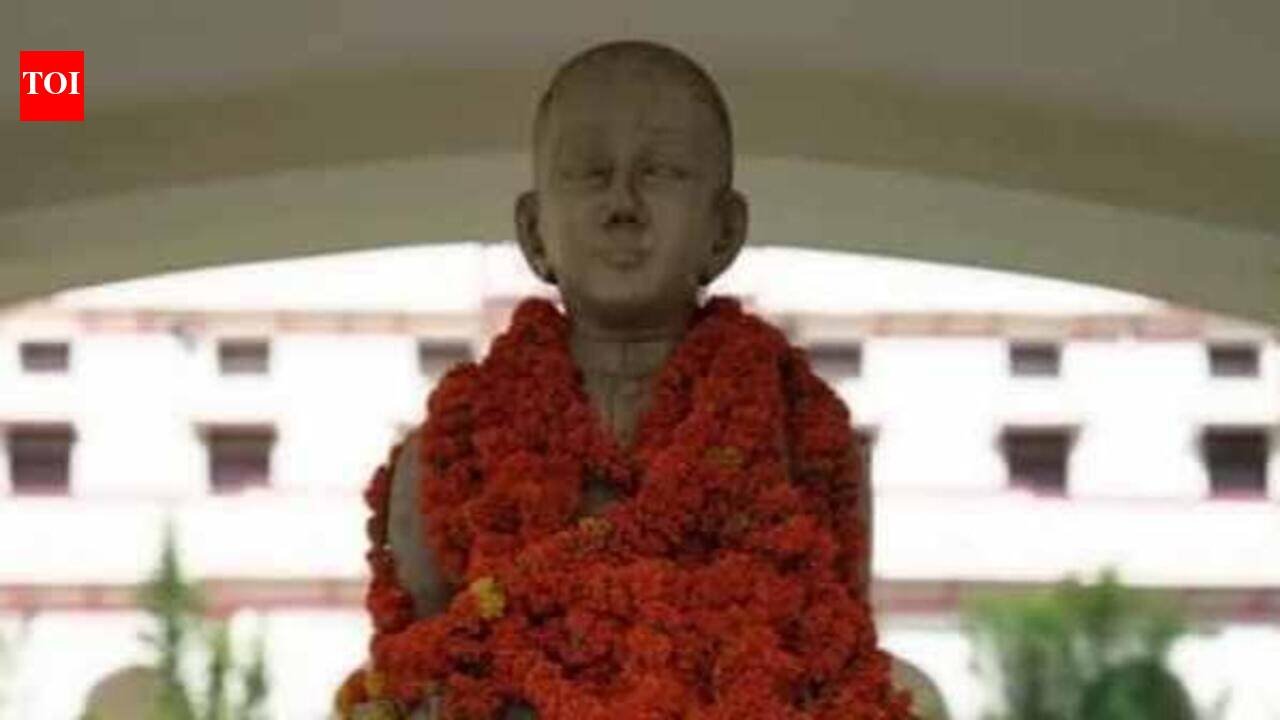
Prayagraj: Prayagraj had emerged as a major centre of resistance, political thought and revolutionary activity against British rule. From the revolt of 1857 to the Non-Cooperation, Civil Disobedience and Quit India movements, the city witnessed several defining moments of India’s freedom struggle.According to Prof Yogeshwar Tewari, former head of the department of medieval and modern history at Allahabad University, the city’s strategic importance ensured that developments here had an impact far beyond its boundaries. Its streets witnessed armed rebellion, while its institutions became centres of nationalist politics and student activism.The first major chapter came with the revolt of 1857. News of the Meerut uprising reached Allahabad on May 12, and rebellion broke out on the night of June 6. Indian soldiers guarding the boat bridge at Daraganj opened fire on British officers, while the Alopibagh brigade joined the rebels. By July 7, rebels led by Maulavi Liaquat Ali had captured the city and surrounding areas, taking control of a treasury containing Rs 30 lakh. Khusro Bagh became the headquarters of the uprising.The British eventually recaptured the city and brutally suppressed the rebellion. Prof Tewari records that more than 600 freedom fighters, including children, were hanged at the ‘neem tree’ near Kotwali. The village at the centre of the city was destroyed and the area was later developed as Alfred Park.The failure of 1857 did not weaken nationalism in Prayagraj. The city hosted the Congress session in 1888 and again in 1892, strengthening its position in national politics. Leaders such as Motilal Nehru, Madan Mohan Malaviya and Purushottam Das Tandon became prominent figures in the freedom movement. Motilal Nehru supported the Non-Cooperation movement and later chaired the Nehru Commission, while Malaviya and Tandon played key roles in political and public mobilisation.Prayagraj was also associated with revolutionary activities. Chandrashekhar Azad, who had adopted “Azad” as his name during the Non-Cooperation movement, became closely linked with the city. His final battle took place at Alfred Park on Feb 27, 1931, where he fought the police before dying of bullet injuries. His death sparked widespread public anger.Mahatma Gandhi visited Prayagraj six times between 1896 and 1942. His visits strengthened nationalist sentiment, while the city became an important centre of the Non-Cooperation movement. During the Civil Disobedience movement, volunteers led by Kamala Nehru and Vijayalakshmi Pandit took part in processions. On April 10, 1930, Jawaharlal Nehru and other leaders manufactured salt in the heart of the city. The salt was later auctioned, with one packet fetching Rs 175.Students too played a major role. The Allahabad University Students’ Union, established in 1923, provided a platform for political activism. During the Quit India movement in 1942, students led a procession towards the district collectorate. Student leader Lal Padmdhar was shot dead by the British on Aug 12 that year. Police later surrounded the university, but vice-chancellor G.N. Jha refused to permit their entry.From the bloodshed of 1857 to the student-led resistance of 1942, Prayagraj was not merely a witness to the freedom struggle. Its leaders shaped national politics, its revolutionaries challenged colonial rule and its students repeatedly took to the streets for freedom.
