



A dashcam can be a quiet little witness in your car. It records the road while you drive and, if something goes wrong, can give you a video record of what actually happened.
But there is one important decision to make before buying one: Do you need a front-facing dashcam or a dual-camera setup with both front and rear recording?
At first glance, the answer seems obvious. Two cameras should be better than one, right? Not necessarily. A front-only model can be perfectly adequate for many drivers, while a dual dashcam makes more sense if you want coverage behind the car as well.
The difference comes down to coverage, cost, installation, storage and how much protection you want from incidents that happen behind you.
Front vs dual dashcam: What is the difference?
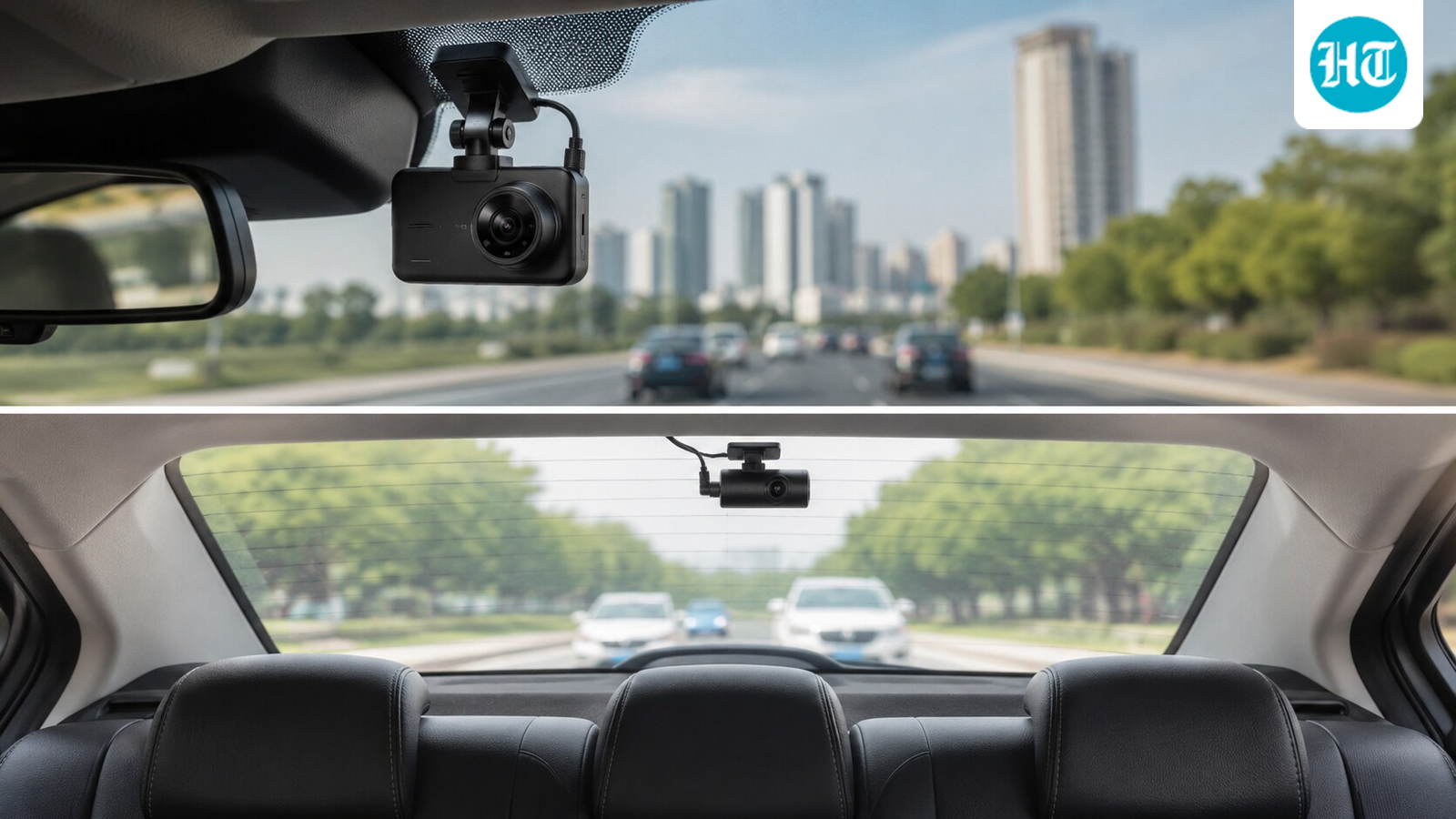
A front dashcam has one camera mounted near the windshield and records the road ahead. A dual dashcam, also called a two-channel dashcam, adds a second camera, usually mounted on the rear windshield, and records both directions simultaneously.
For example, 70mai’s A400 can record up to 1440p from the front and 1080p from the rear when used with its compatible rear camera. VIOFO’s A229 Pro 2CH goes a step further, supporting 4K front and 2K rear recording.
That second camera is the biggest difference, but it changes quite a bit about how useful the system can be in real-world situations.
Front vs dual dashcam: Comparison
Front dashcam: Simple, affordable and enough for many drivers
A front-facing dashcam does one job and does it well: it records what is happening ahead of your vehicle.
That can be useful during accidents, sudden braking incidents, traffic disputes or other situations where the footage can help establish what happened. Modern dashcams can also offer features such as loop recording, G-sensors, GPS, Wi-Fi and parking surveillance, although these vary from model to model.
Loop recording is particularly useful because the camera can continuously record and overwrite older footage when the memory card fills up. 70mai, for example, lists loop recording on its A400, while its G-sensor can trigger recording after a detected impact during parking surveillance.
The obvious advantage is simplicity. There is only one camera to install, fewer cables to hide and less footage to manage.
It can also be the better choice if you are working with a tight budget and mainly want a record of the road ahead.
Best front dashcams to consider
Dual dashcam: Why the rear camera matters
The real selling point of a dual dashcam is simple: it records the bit of the road your front camera cannot see.
Imagine you are waiting at a traffic signal and another car hits you from behind. Your front camera may capture the aftermath, but it cannot directly show the approaching vehicle or the moment of impact from the rear. The same applies to tailgating, rear-end collisions and some hit-and-run situations.
70mai describes its multi-channel systems as recording front, rear and, on some models, cabin views to provide a broader record of what happened around the vehicle. Its India range includes the A810 with dual-channel recording and HDR, while the A800S offers dual-channel recording and 24-hour smart parking surveillance.
Qubo’s Dashcam Pro 2K (Front + Rear) is another India-focused example. Its front camera records at 2K and the rear camera at 1080p, with WDR and G-sensor support.
This does not mean a dual dashcam magically proves fault in every accident. The footage still needs to be clear, relevant and interpreted in context. But having footage from both ends of the vehicle can give you a much fuller record of an incident.
Is a dual dashcam harder to install?
Yes, a little. With a front-only dashcam, installation is relatively straightforward: mount the camera, connect the power cable and route the wire neatly around the windshield.
A dual system adds another camera at the back. That means the rear camera’s cable has to be routed from the front unit towards the rear windshield, usually tucked along the vehicle’s trim.
It is not necessarily a difficult job, but it is more fiddly. If you want a clean installation, professional fitting can make sense, particularly if the car has complicated interior trim or you also want parking surveillance.
And there is another point worth remembering: parking mode is not automatically included just because a dashcam has it listed as a feature. Some systems need a separate hardwire kit or constant power connection.
70mai, for example, states that its Dash Cam 3 requires the UP02 hardwire kit for parking surveillance functions. So, if parking protection is important to you, check the installation requirements before buying.
What about video quality?
This is where buyers need to look beyond the words “dual dashcam.” Having two cameras does not necessarily mean both cameras record at the same quality.
Some models use a higher-resolution camera at the front and a lower-resolution one at the rear. Qubo’s Dashcam Pro 2K (Front + Rear), for example, records 2K at the front and 1080p at the rear.
Meanwhile, 70mai’s current India lineup includes models with more advanced dual-channel configurations. Its A810 offers 4K UHD and HDR dual-channel recording, while the newer T800 goes up to dual 4K recording on its front and rear cameras, along with a third cabin camera.
So, if rear footage is important to you, don’t simply look for the “dual-channel” label. Check the resolution, sensor, field of view and night-recording capability of the rear camera separately.
Does a dual dashcam use more storage?
Two cameras are producing footage instead of one, so storage can fill up faster. This is where loop recording becomes important.
Most dashcams continuously overwrite older footage once the memory card is full, while important clips can be protected through emergency recording or G-sensor-triggered events, depending on the model.
If you buy a dual dashcam, therefore, it is worth checking the manufacturer’s recommended memory-card capacity rather than simply buying the cheapest card available.
Which one is better for Indian roads: Front dashcam vs dual dashcam
For a driver who mostly wants basic accident documentation without spending too much, a front dashcam is the sensible starting point.
But Indian roads can be unpredictable. A vehicle can come from behind, a motorcycle can squeeze through a gap, or an incident can unfold while your car is parked. In those situations, rear footage can be genuinely useful.
A dual dashcam is therefore the better pick if you drive frequently, use highways regularly, park outdoors or simply want more complete coverage around your car.
If you are spending more, however, don’t sacrifice front-camera quality just to get a second lens. A good front camera with strong night performance can be more useful than a cheap dual system with a poor rear camera.
Front or dual dashcam: Which should you buy?
The answer depends on what you want the dashcam to do. Buy a front dashcam if you want an affordable, simple setup mainly for recording the road ahead. It is easier to install, requires less storage and can still provide useful footage during many incidents.
Buy a dual dashcam if you want front-and-rear coverage and are willing to spend more on installation and storage. The second camera gives you visibility into incidents that happen behind your vehicle and can also add value when parking surveillance is supported.
For most drivers who can stretch the budget, I’d pick a dual dashcam. The rear camera may sit quietly doing nothing for weeks, but the one day something happens behind your car, you may be very glad it was there.
Just remember: don’t judge a dashcam by the number of cameras alone. Check the front and rear resolution, night vision, field of view, parking mode, storage support and installation requirements before making the final call.
Similar stories for you
₹10,000″>Qubo Smart Dashcam Pro 3K (Starvis 2) review: Reliable recording under ₹10,000
Qubo says its new AI cameras can detect intruders before it’s too late; Dashcam Pro 2K also debuts
Best dash cam offering sharp video and essential safety features for drivers: Top 5 choices
Disclaimer: At Hindustan Times, we help you stay up-to-date with the latest trends and products. Hindustan Times has an affiliate partnership, so we may get a part of the revenue when you make a purchase. We shall not be liable for any claim under applicable laws, including but not limited to the Consumer Protection Act, 2019, with respect to the products. The products listed in this article are in no particular order of priority.
