


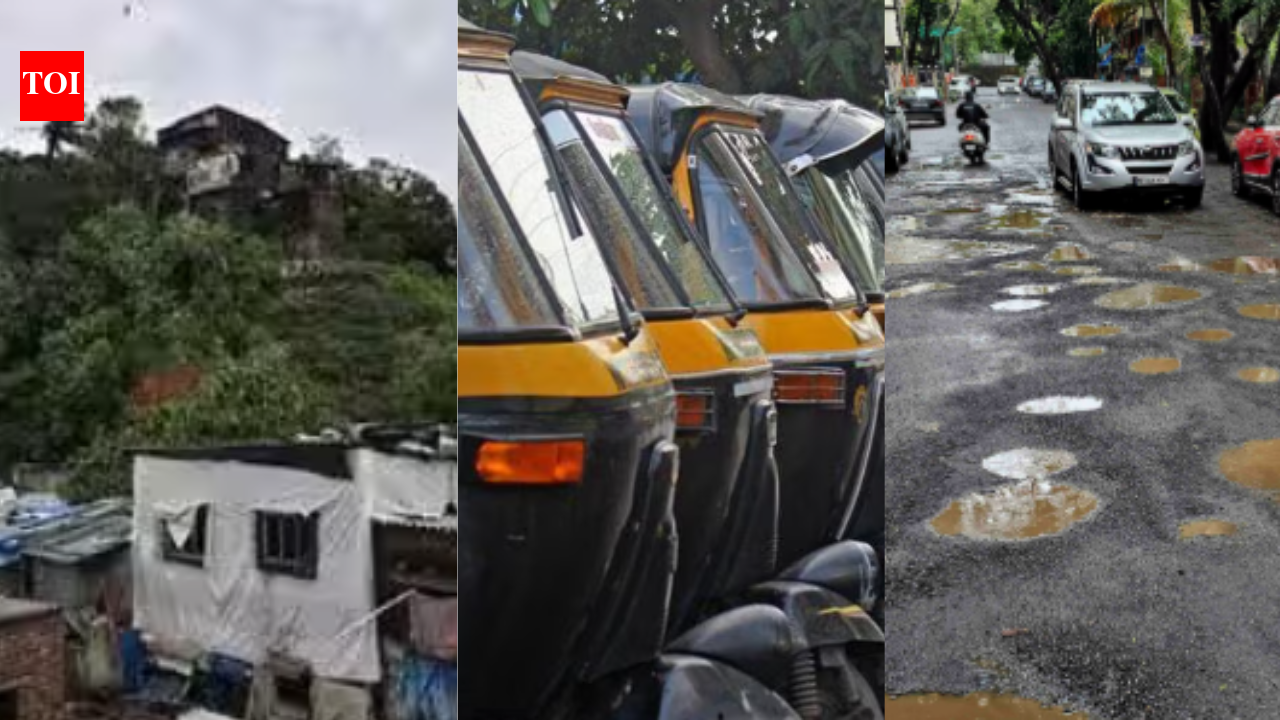
MUMBAI: The city is stuck between monsoon-related safety concerns and changes that could affect daily commuters. Two people have died and two have been injured in a landslide incident in Mumbai, which has brought renewed focus on the city’s vulnerability during the monsoon and the safety of people living or traveling near vulnerable slopes.Meanwhile, the impending language rule for auto-rickshaw and cab drivers in Maharashtra is creating talks among commuters and the transport sector, with the provision slated to come into force from August 18.The state government also is assembling a system to rate contractors on the quality of their work and their ability to meet deadlines, an issue that hits close to home in a city where road, drainage and infrastructure projects often overlap.For Mumbaikars, today’s city conversation is not about an isolated event, but about safety, accountability and how civic infrastructure performs in the monsoon.
Landslide reignites monsoon safety focus
The deaths in the landslide have brought out the dangers of unstable ground in heavy rains. With the monsoon active across Mumbai region, the incident is likely to fuel questions over vulnerable locations, preventive inspections and emergency response.Such risks are particularly challenging to manage in the dense development of the city, where homes, roads and public infrastructure are often built close to slopes and retaining structures.
New language rules for auto and cab drivers
Auto-rickshaw, cab drivers must know Marathi: The shift could impact thousands of drivers and be a major talking point for transport workers, passengers and app-based mobility platforms.For commuters, the question is immediate: How will the requirement be enforced, and what documentation or testing mechanism will be used?
Contractors under scrutiny
The Maharashtra government is also planning to have a system to grade the contractors on quality and time bound delivery.The contractor’s performance is critical in Mumbai, where the monsoon exposes the weaknesses of roads and public infrastructure.The proposed system could shift focus from contract award to the monitoring of proper completion and continued functionality of projects post-handover.
