


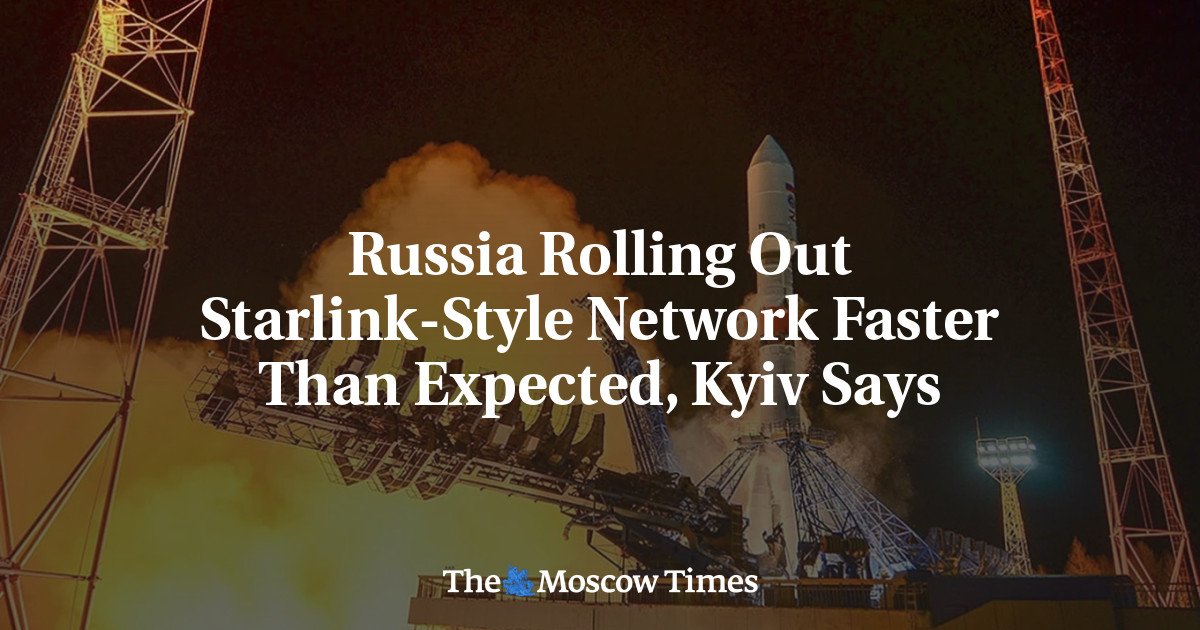
Russia is rolling out its own version of the Starlink satellite internet system faster than expected and plans to have nearly 300 satellites in orbit by 2027, according to a Ukrainian intelligence official.
SpaceX’s Starlink network, which operates in Ukraine but not Russia, has given Kyiv a major advantage in drone operations and battlefield communications.
Russian forces had been using gray-market Starlink terminals in Ukraine until Kyiv successfully lobbied SpaceX to disable them earlier this year, one of several factors that shifted battlefield momentum in Ukraine’s favor.
In an interview with Ukrainian media outlet RBC-Ukraine, Major General Vadym Skibitskyi said Russia currently has 16 satellites in its Rassvet system.
“They have already begun launching it much faster than originally planned,” said Skibitskyi, who is the deputy head of Ukraine’s GUR military intelligence service.
The system can currently operate only intermittently when one of the satellites passes over Ukrainian territory, he said. However, Russia plans to create a constellation of 292 satellites by 2027 and 924 by 2035, he added.
“Once Russia deploys a full satellite constellation, the system will operate like Starlink. Discussions are already underway on how to counter it,” he said.
Increased missile capacity
Russia has been pounding Ukraine with an array of supersonic missiles as Kyiv has depleted its stock of interceptor missiles.
Skibitskyi said Moscow had already met its annual production targets for Zircon and Oniks missiles in the first seven months of the year and was exceeding its 2026 missile production goals by 10% to 20%.
He said Ukraine’s emerging ballistic missile industry, along with drone production facilities, had become a priority target for Russia’s missile campaign.
Skibitskyi added that Russia’s stockpile of Iskander-M ballistic missiles, the mainstay of its supersonic strikes, was estimated at around 130, with 65 new ones made in July.
A Message from The Moscow Times:
Dear readers,
We are facing unprecedented challenges. Russia’s Prosecutor General’s Office has designated The Moscow Times as an “undesirable” organization, criminalizing our work and putting our staff at risk of prosecution. This follows our earlier unjust labeling as a “foreign agent.”
These actions are direct attempts to silence independent journalism in Russia. The authorities claim our work “discredits the decisions of the Russian leadership.” We see things differently: we strive to provide accurate, unbiased reporting on Russia.
We, the journalists of The Moscow Times, refuse to be silenced. But to continue our work, we need your help.
Your support, no matter how small, makes a world of difference. If you can, please support us monthly starting from just $2. It’s quick to set up, and every contribution makes a significant impact.
By supporting The Moscow Times, you’re defending open, independent journalism in the face of repression. Thank you for standing with us.
Continue
Not ready to support today?
Remind me later.
×
Remind me next month
Thank you! Your reminder is set.
