


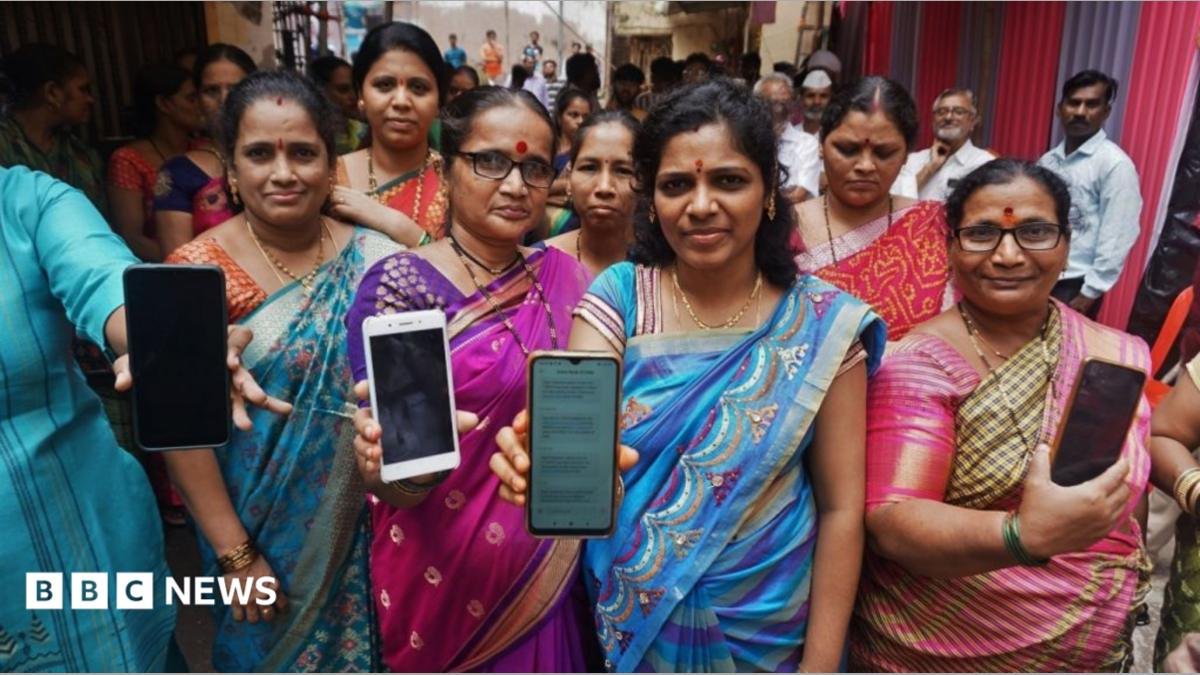
Others were excluded because they exceeded the income or age limits, belonged to families with government employees, were already receiving money through another welfare scheme or came from households where more than one person was claiming the benefit.
Government data also showed nearly 29,000 men and about 8,000 government employees had received payments. Tatkare said the state was recovering this money but did not say how much had been repaid.
The scrutiny has renewed questions about the benefits – and long-term costs – of cash-transfer programmes.
Neeraj Hatekar, a welfare economist, says Ladki Bahin has made a real difference to women with low and irregular incomes.
Drawing on labour-force data, he says women in Maharashtra earn about 300 rupees a day on average. Even if they get work for 20 days a month, they earn only 6,000-7,000 rupees. Against that, he says, the scheme’s 1,500-rupee monthly payment “is a big amount”.
But he argues the same needs could be addressed by investing more in stronger public services such as healthcare, education, childcare centres and transport, so that women do not have to spend as much on them.
Economist Ajit Ranade says governments must also weigh the fiscal costs. “You might divert funds to these schemes and win an election,” he says. “But what about the long-term damage [to the state’s finances]? That is never audited.”
The audit may shape how the scheme is run in future. For women like Bawaskar, however, the Ladki Bahin scheme has already changed their lives.
The money has not lifted her family out of poverty. But it has given her something she never had before: money deposited into an account in her own name.
“It’s money of my own,” she says. “That’s what matters to me.”
