


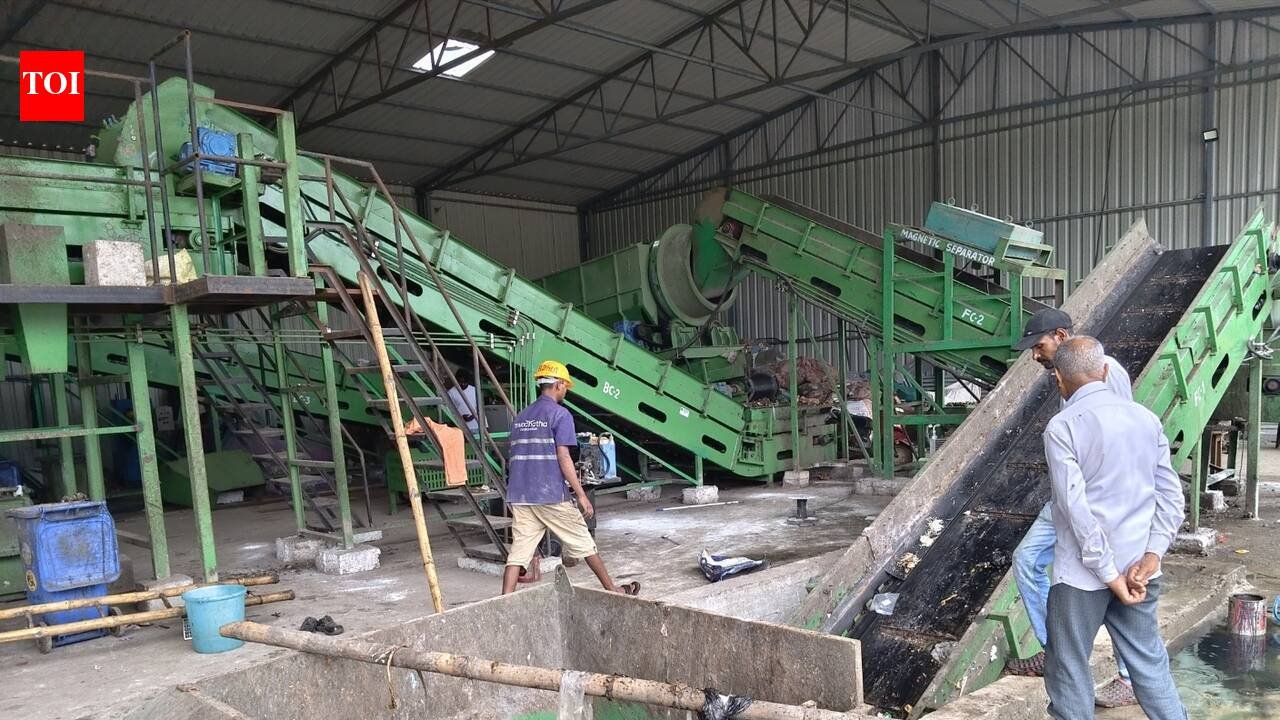
Ranchi: The Ranchi Municipal Corporation (RMC) is setting up seven material recovery facilities (MRFs) to increase recycling and strengthen solid waste management in the city. The new facilities will take the total number of MRFs in Ranchi to 12, with a combined processing capacity of 550 tonnes per day.“These centres assist in solid waste segregation, processing and scientific disposal, thereby strengthening the city’s overall solid waste management framework,” additional municipal commissioner Sanjay Kumar said.MRFs segregate and process recyclable materials such as paper, plastic, glass, metals, rubber scrap and batteries. Five centres are already operational at Harmu, Madhukam, Karbala, Naga Baba Khatal and Trucker Stand. Each can process between 40 and 60 tonnes of waste daily.Construction of facilities at Khelgaon and Hatia is nearing completion, and both are expected to become operational soon. Civil work is underway at ITI and Morabadi.Work at Khadgarha will begin after RMC removed encroachments from the proposed site earlier this week. Centres have also been proposed at Jagannathpur and Bada Ghaghra, completing the civic body’s 12-facility plan.Apart from reducing the amount of waste sent for disposal, the facilities are expected to generate revenue through the sale of recovered materials.Swachhata Corporation, which handles door-to-door garbage collection, manages two operational and two under-construction centres. RMC will retain the entire revenue earned from material sales at these sites. On Thursday, the civic body invited expressions of interest from authorised buyers for purchasing recovered materials.The other facilities are operated by TPS Infrastructure Ltd under an arrangement in which the company and RMC share the sales revenue equally.Two specialised plants are also being developed at Jhiri to process refuse-derived fuel and construction and demolition waste.RMC has also submitted a proposal to the urban development and housing department for approval of a dedicated non-recyclable plastic processing unit. Organic wet waste collected in the city is being sent to GAIL’s facility for conversion into biogas.
