


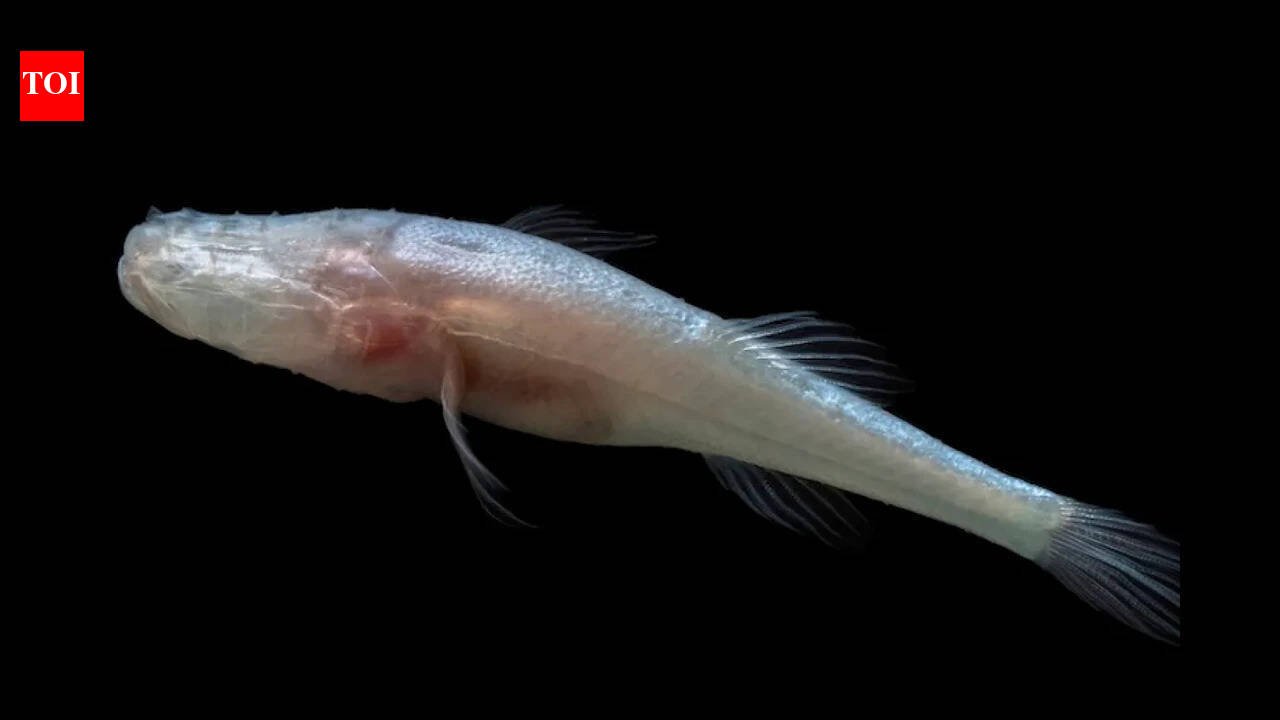
For more than three decades, biologists have carried out quarterly surveys of Bobcat Cave in northern Alabama, a site that sits beneath the secured grounds of the US Army’s Redstone Arsenal and is already home to a well-known endangered species, the Alabama cave shrimp. After 30 years of closely monitored fieldwork in one of the most thoroughly documented cave ecosystems in North America, researchers have now identified an entirely new genus of eyeless cavefish quietly living in the same pools the whole time, hiding not through concealment but through an almost perfect physical resemblance to a completely unrelated species that shares its habitat.
How a new genus went unnoticed inside a closely monitored cave
According to the University of Alabama in Huntsville, Bobcat Cave lies roughly eight miles from the university’s campus, within the secured perimeter of Redstone Arsenal, a location that has effectively shielded the site from suburban development and given researchers unusually consistent long-term access to study its aquatic life. The cave has been surveyed on a quarterly basis for more than 30 years specifically to track the endangered Alabama cave shrimp, making it one of the more intensively studied subterranean ecosystems in the country.Amblyopsid cavefishes, the broader family this new species belongs to, have served as important model organisms for studying underground biology since the 1800s, and the freshwater fauna of eastern North America ranks among the most thoroughly catalogued in the world. Given that level of existing scrutiny, researchers have compared the discovery of an entirely new genus at this particular site to finding a new land mammal inside a well-studied national park, a discovery few expected was still possible.
Why the fish’s appearance made it so easy to overlook
The reason this species escaped detection for so long comes down to a case of mistaken identity built on genuine biological convergence. According to Auburn University, the newly identified species, formally named Demogorgonichthys arcanus and commonly referred to as the Demon Cavefish, shares its pools with a previously known and well-documented neighbour, the Southern Cavefish, Typhlichthys subterraneus. Comparative genetic mapping confirmed that although both species have adapted to identical cave conditions, their genetic lineages actually branched apart from one another long ago, evolving independently rather than sharing a recent common ancestor.Through a process known as convergent evolution, in which unrelated species independently develop similar physical traits in response to similar environmental pressures, both fish separately evolved pale, colourless skin and lost functional eyesight, adaptations well suited to a life spent entirely in complete darkness. Because the underground environment shaped both species into such closely matching outward appearances, generations of field surveyors had simply grouped the two lookalike fish together during routine population counts, never suspecting that two genetically distinct genera were swimming in the same pools all along.
What finally revealed the fish’s true identity
Uncovering the truth required moving well beyond a simple visual identification in the field. According to the University of Alabama in Huntsville, researchers turned to detailed anatomical examination, high-resolution CT scanning and genetic sequencing to properly characterise the newly noticed specimens. This deeper analysis revealed distinct skeletal structures separating the Demon Cavefish from its Southern Cavefish neighbour, along with a telling genetic clue: a nonfunctional, or vestigial, light-sensing rhodopsin gene, evidence of a fish whose ancestors once relied on eyesight before evolving in complete darkness, eventually rendering that gene obsolete.Researchers also suspect the Demon Cavefish spends much of its life in deeper, largely inaccessible aquifer channels beneath the cave, surfacing into the more visible and regularly surveyed pools of Bobcat Cave only occasionally, a pattern that would help explain why it remained so difficult to reliably distinguish from its more commonly documented neighbour across three decades of quarterly monitoring.
Why cave ecosystems remain vulnerable despite being hard to reach
Even though Bobcat Cave’s location within a secured military installation has helped protect it from direct human disturbance, researchers note that cave pools like these remain closely linked to the surface through groundwater systems. This connection means agricultural runoff, surface sediment and chemical contaminants originating miles away can still make their way into these subterranean pools, posing an ongoing threat to species that, in many cases, exist nowhere else on Earth.According to thestudy Surprising cryptic cavefish diversity in a long-studied karst cave ecosystem of northern Alabama, protecting cryptic, highly specialised cave species like the Demon Cavefish ultimately requires safeguarding entire surface recharge basins rather than simply restricting physical access to a cave entrance, since the health of these hidden ecosystems depends heavily on water quality far beyond the cave’s own boundaries.
Why this discovery matters for how scientists study biodiversity
The discovery of Demogorgonichthys arcanus stands as a reminder that even ecosystems studied intensively for decades can still conceal entirely unknown branches of the evolutionary tree, particularly when convergent evolution produces close physical lookalikes that easily fool visual identification in the field. For researchers working to protect North Alabama’s cave systems, the finding underscores that thorough, long-running monitoring programmes remain essential, not only for tracking known species but for eventually revealing biodiversity that has been quietly present, and quietly overlooked, the entire time.
