


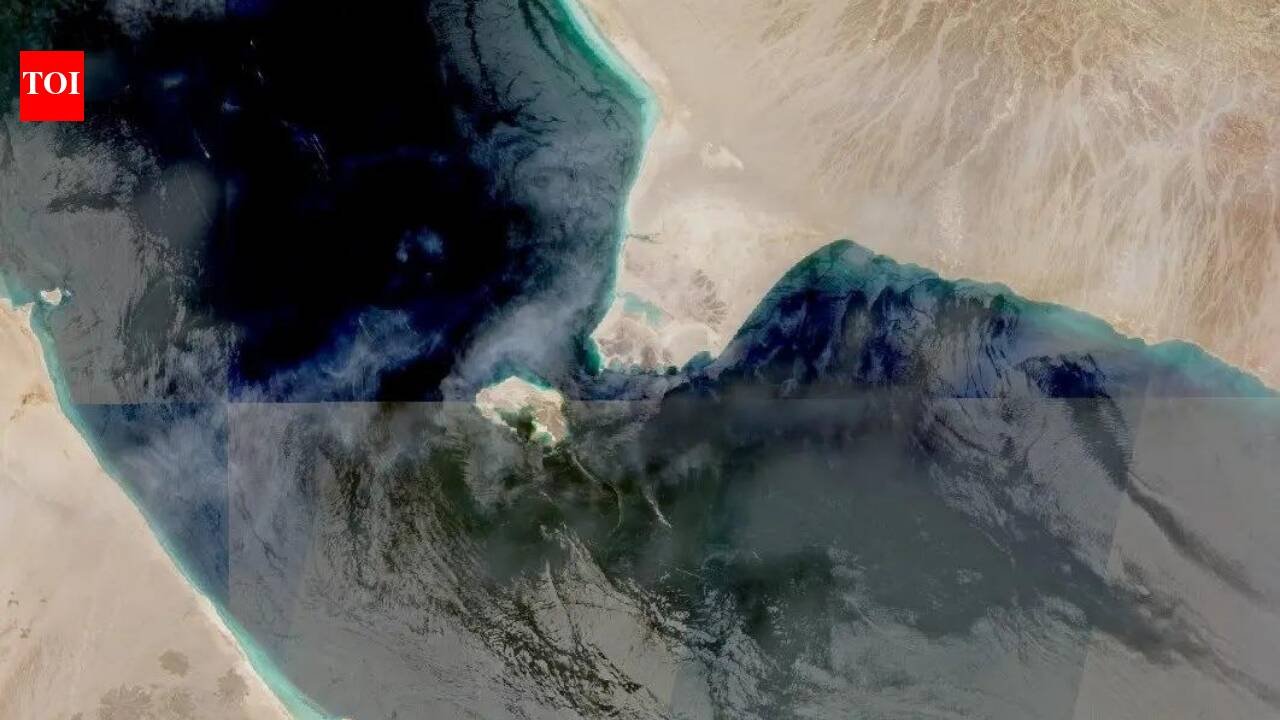
Saudi Arabia’s key Red Sea export terminal at Yanbu appeared to witness its busiest day since Houthi threats disrupted regional shipping, while additional vessels continued transiting the Bab el-Mandeb Strait with their tracking systems switched off.While some tankers, including those carrying Russian crude, continue to transit the Bab el-Mandeb Strait with their tracking systems active, the Houthi threat has compelled a number of Saudi crude shipments to take alternative routes. Some vessels are now sailing around Africa, while Saudi Arabia has redirected part of its Asia-bound exports from the Red Sea to Egypt’s Sidi Kerir terminal on the Mediterranean coast.
Saudi Crude Tankers Going Dark
Satellite imagery captured by the European Union’s Sentinel-2 mission showed five Very Large Crude Carriers (VLCCs) docked at Yanbu’s oil-loading terminals on Saturday, potentially marking the port’s busiest day since Iran-backed Houthi rebels announced a blockade on Saudi ports two weeks ago. The satellite passes over the area only once every few days.According to a Bloomberg report, Yanbu has become a critical export hub for Saudi Arabia after the Iran war disrupted shipping through the Strait of Hormuz. To maintain crude exports, the kingdom has been transporting millions of barrels of oil each day via pipeline to the Red Sea port before shipping cargoes to international buyers. A single VLCC can carry around 2 million barrels of crude.Separately, the Greek-owned Suezmax tanker Lesvos and the India-flagged VLCC Desh Vaibhav passed through the Bab el-Mandeb Strait over the weekend carrying Saudi crude loaded at Yanbu while keeping their transponders switched off, according to analytics firms Vortexa and Kpler quoted in the Bloomberg report. Ship-tracking data showed that both vessels later reappeared in waters off Oman after transmitting their positions near the Red Sea export terminal.Security concerns in the region intensified late last week after a liquefied natural gas (LNG) tanker carrying Qatari cargo was struck by a projectile while passing through the Strait of Hormuz, highlighting the risks facing shipowners. Observable shipping traffic through the strategic waterway remained limited on Monday.Despite these disruptions, crude exports from the Persian Gulf have continued, largely on tankers operating with their transponders switched off. Ship-tracking data showed that more than 8.4 million barrels of crude exited the Gulf on Friday, making it one of the highest daily export volumes since the Iran war began at the end of February.
