


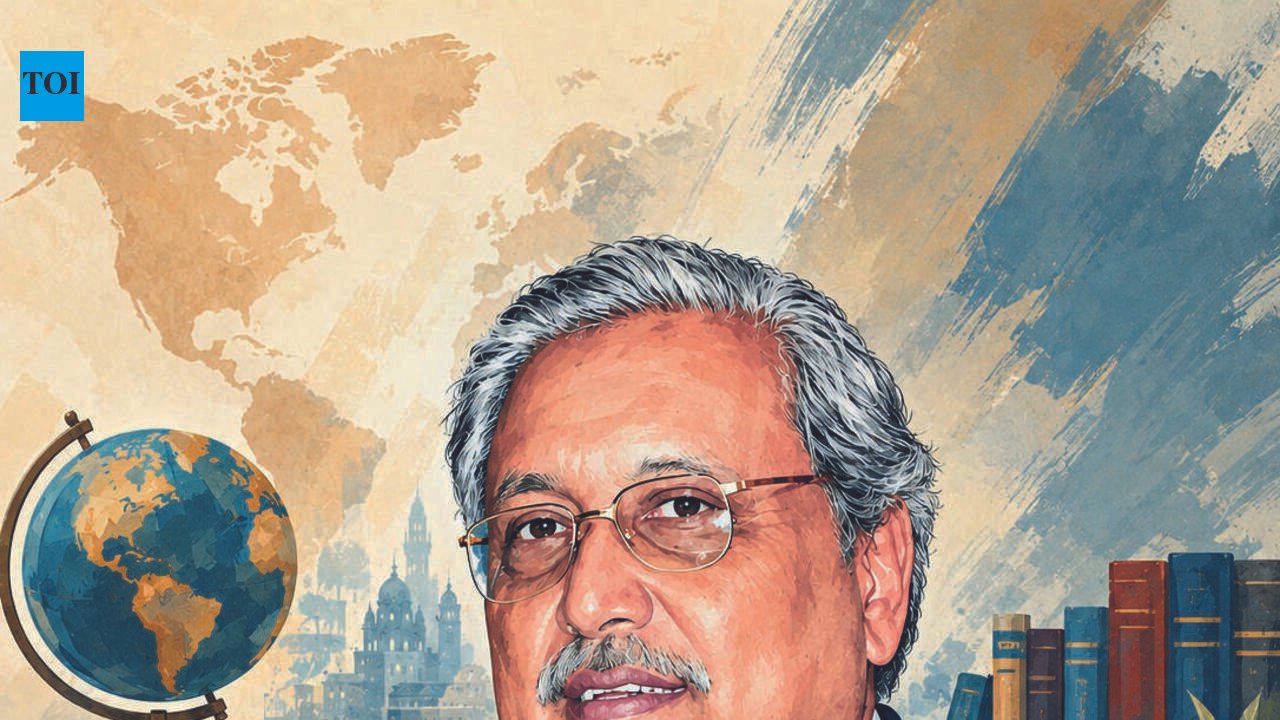
Corleigh StixrudFrank Jayasinghe, a great influence of mine, indeed of many in the field of international education, passed away on Friday, July 31, in Colombo, Sri Lanka. He was 93.He will deservedly be remembered and celebrated for his role in bringing the International Baccalaureate curriculum to India as the principal of Kodai School (now Kodaikanal International School, or KIS, in Tamil Nadu), a pioneering accomplishment that began in the early 1970s and culminated in the first cohort of IB diploma students in India (and in fact one of the first cohorts in all of Asia) graduating from KIS in 1976. In 1992, Frank also founded the United World Colleges’ National Committee in Sri Lanka, which continues to support international education for Sri Lankan students to this day.Fifty years on, at KIS and in 264 schools across India, thousands of IB diploma students matriculate and go on to study in universities and colleges across the world, steeped in an educational philosophy that, at least in part, was created to explore the concept of “international mindedness” as an alternative or antidote to regional and nationalist systems and agendas in education. The ambitious opening phrase of KIS’s current vision statement, that it “strives to be a school the world needs”, is a direct result of his legacy and belief that education is among the best vehicles to pursue world peace and improve humanity’s common lot.The son of a Methodist pastor, Frank instilled a humanist and internationalist perspective into KIS’s guiding ethos. As he put it (although I paraphrase), students of all religions should be able to practice and hone their faith while studying there — “Christians should become better Christians; Hindus, better Hindus; and Muslims, better Muslims.”Frank was certainly an accomplished academic and intellectual (having earned a PhD in Mathematics from Columbia University in New York), and often a prototypically stern and serious school administrator, and yet, much to his credit, I remember him fondly as a family friend more than as a principal. He possessed an affable, warm social presence, and he was equally comfortable at a local Rotary Club meeting, a golf tournament at the Kodai Golf Course, a dinner party, or a school assembly. An early indelible memory: Frank sporting colourful bell-bottom polyester trousers (popular at the time, one hopes) while briskly walking around Kodai Lake.My parents, Neal and Annette Stixrud, who joined staff at Kodai School in 1977, quickly became good friends with Frank and his wife, Loretta. My father, after a year in the classroom, was promoted to an administrative position. We travelled by bus through Tamil Nadu and Kerala with the Jayasinghe family over a winter vacation, and spent more than a few fun family evenings at Benderloch, the principal’s residence in Kodaikanal. Several years after the Jayasinghes’ dramatic departure from India, and following Loretta’s tragic death after a long struggle with cancer, my parents and I spent a memorable two weeks traversing Sri Lanka by car with Frank and his eldest son, Sanjeev.In a story I’ve shared with generations of KIS students, it was the circumstances surrounding his precipitous last few days in India that most speak to Frank’s enduring vision and spirit, and to his remarkable gift for understanding the true potential of an international education.In 1983, Sri Lanka was consumed by what became known as Black July—an eruption of anti-Tamil violence, largely in Colombo, that killed an estimated 3,000 or more Tamil civilians, and is widely regarded as the spark that ignited a 26-year civil war. As news of the killings spread, and well over a hundred thousand Tamil refugees crossed into Tamil Nadu, anger and grief in the state ran high, and it was no longer safe for Sinhalese students to remain there. The Jayasinghes, along with 20 other Sri Lankan students and staff, had to flee Kodai in the night, down a seldom-used ghat road, through Kerala, and on to Sri Lanka. At Kodai School, however, in a culture that Frank helped create, it was the Tamil students who were present in the early hours of the morning, standing by the bus, weeping as they said goodbye to their Sri Lankan friends and schoolmates. Surely this is a testament to Frank’s faith in the power of education to bring young people together, even amid war and cultural rupture.I remain grateful for Frank’s courage, wisdom, and sacrifice — as would be, I suspect, the thousands of students across India and Sri Lanka who never knew him personally but who inherited, without knowing its source, his stubborn belief that the world is smaller and kinder than fear would have us think.(The writer is a former principal of Kodaikanal International School; Inputs by Ian Lockwood, educator andalumnus of Kodai International School)
