


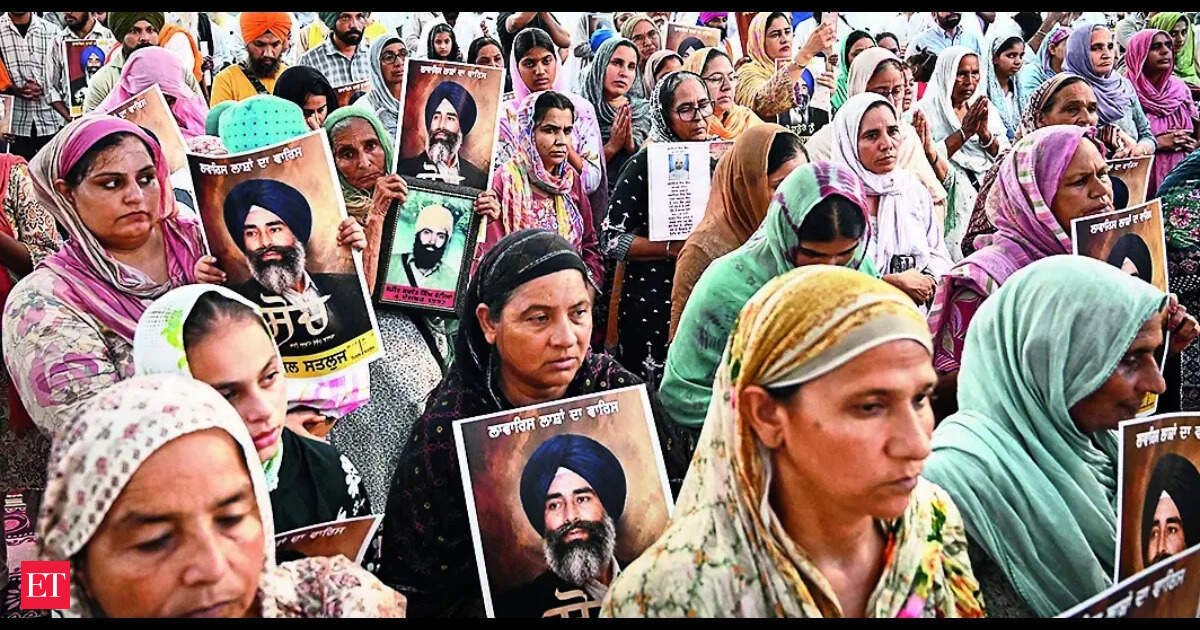
If governance shapes electoral performance, identity often shapes political momentum. The controversy surrounding Satluj, a film based on slain human rights activist Jaswant Singh Khalra, and the subsequent mobilisation demanding the release of jailed MP Amritpal Singh have once again shown how quickly emotive Panthic issues can reshape Punjab’s political narrative.
The Satluj row has gone beyond a debate over a film. Khalra’s wife, Paramjit Kaur Khalra, unsuccessfully contested elections twice, but the issue has acquired fresh political traction, with the Sukhbir Singh Badal-led Shiromani Akali Dal (SAD) organising screenings across Punjab in an attempt to reclaim the Panthic space it has steadily lost over the past decade. The controversy has reopened unresolved questions about Punjab’s turbulent past, with Amritpal Singh’s Shiromani Akali Dal (Waris Punjab De) emerging among its strongest backers.
Days later, thousands of Amritpal supporters marched to Chandigarh seeking the Khadoor Sahib MP’s release, bringing the city to a standstill.
The protest highlighted the outfit’s organisational strength despite its leader remaining in jail. Whether that mobilisation translates into votes remains uncertain, but it has strengthened the possibility of Waris Punjab De emerging as an X-factor in the assembly polls.
Even as Panthic politics regains traction, the ruling Aam Aadmi Party has already shifted into election mode. Chief minister Bhagwant Mann has intensified rural outreach through grants to panchayats, while the government has begun disbursing promised financial assistance to women. Alongside its welfare agenda, the AAP has expanded religious outreach through programmes such as Ek Shaam Bhagwan Shiv Ke Naam and state-supported pilgrimages.The political landscape, however, has become more layered after the Akal Takht declared Mann ‘Guru Dokhi’ and summoned all Punjab MLAs over the anti-sacrilege law passed by the assembly.
Congress, projected as AAP’s principal challenger, continues to grapple with factionalism. Since the 1990s, Punjab has largely voted out incumbents, with the Akali Dal’s re-election in 2012 being lone exception. Whether 2027 is shaped by welfare or identity remains uncertain, but the battle for Punjab’s political momentum is increasingly centred on who commands the Panthic narrative.
