


France too has struggled to maintain warm relations with the two bitterly opposed Maghreb rivals. But it is Spain that finds itself particularly vulnerable because of Ceuta and Melilla.
Both towns have origins dating back millennia to the Phoenician era, then later fell under Arab rule before being seized by Spain in the 16th Century, in the aftermath of the Christian reconquest of the Iberian peninsula.
But in practical modern terms, both are outposts of EU terrain on the southern shore of the Mediterranean, bounded on the landward side only by Morocco.
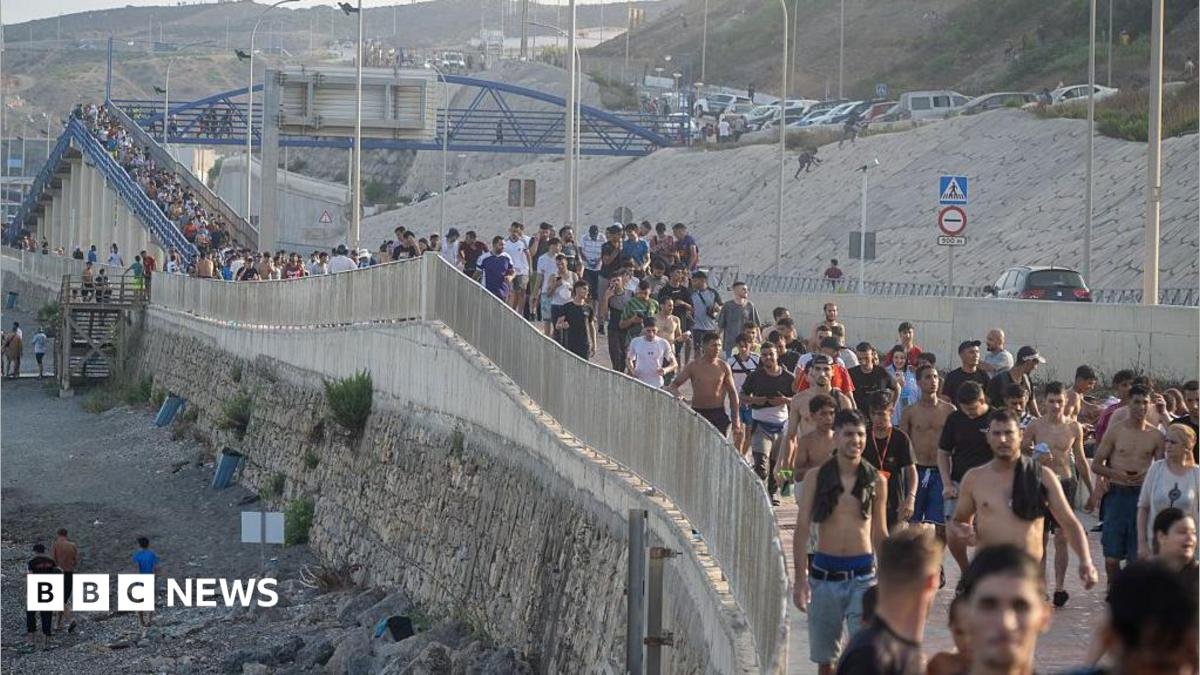
So yesterday’s influx of migrants, however temporary, is a practical challenge for Sánchez and a political and diplomatic headache. Spain’s mainstream conservatives – the Partido Popular – and hard right Vox have seized on the issue, while several other European governments have raised concerns, with Italy talking of suspending Spanish membership of the Schengen open borders regime.
But actually, because of the distinctive geographical position of Ceuta and Melilla, Spain operates a strict internal border on flights and ferries from these two cities to the mainland, thus controlling travellers’ access to the rest of Schengen Europe.
Behind the fuss over yesterday’s dramatic influx of people lies a deeper difference in outlook and policy.
Sanchez has pursued an “immigration positive” agenda starkly contrasting with the more restrictive attitudes of most EU states or the UK, even instigating a programme to bring Senegalese to Spain on a temporary basis as seasonal workers, mainly for the horticultural sector.
The long term political and economic sustainability of that approach remains to be tested. But it sends out a public messaging that some other European governments perhaps find unsettling and may explain their reaction to events in Ceuta.
Paul Melly is a consulting fellow with the Africa Programme at Chatham House in London
