


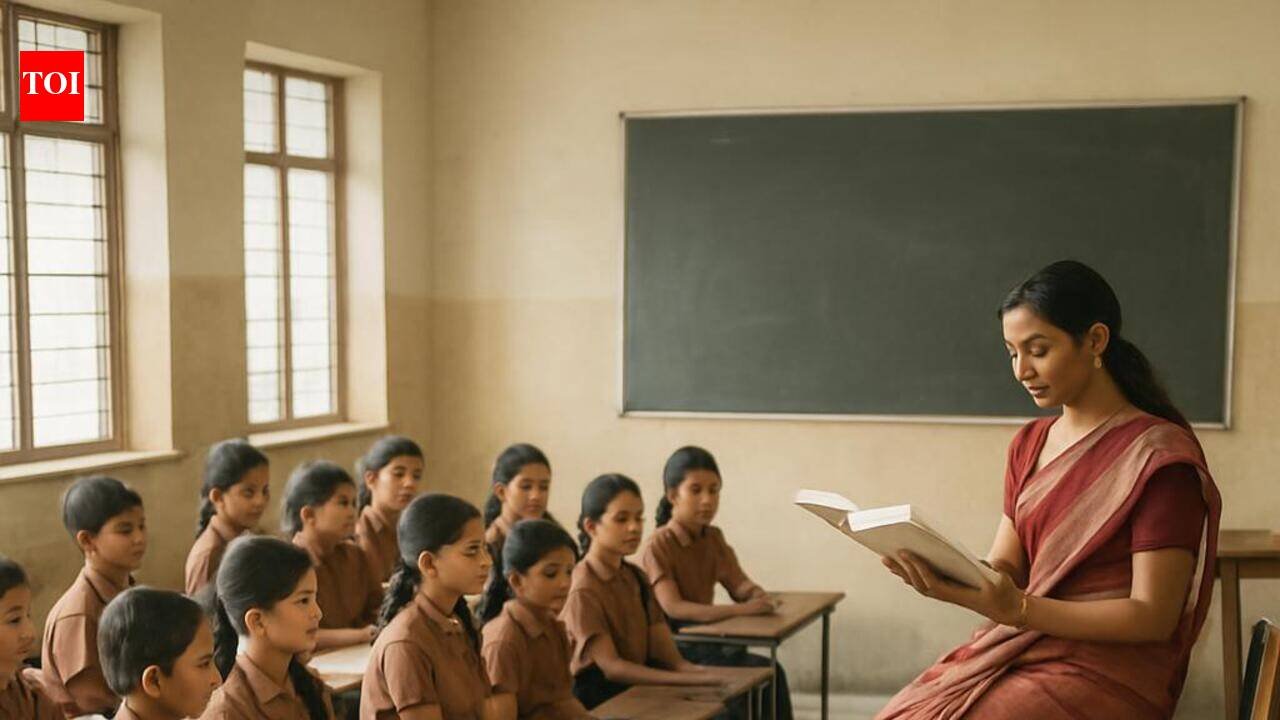
Panaji: Goa has the highest percentage of female teachers among all states and Union Territories, at 82.3%, far above the national average of 54%, according to the Union education ministry’s Unified District Information System for Education (UDISE+) report for 2025-26. The state is also among those with the highest share of professionally trained teachers, with 95-97% of educators trained, compared to the national average of 88-90% across levels.The report suggests that neither a predominantly female teaching workforce nor near-universal professional training is the norm elsewhere. While states such as Maharashtra and Andhra Pradesh have an almost equal number of male and female teachers, in Assam and West Bengal, male teachers outnumber female teachers.Educationists said Goa’s foundations were laid in the years immediately after Liberation, with more learning opportunities for girls early on and an emphasis on appointing only qualified teachers.National award-winning teacher Maria Murena Miranda said Goa provided better access to education for girls from the early years, enabling more women to pursue teaching careers. “Women also prefer teaching jobs as they can balance their home and professional duties better,” she said. Miranda, a former headmistress of Govt High School, Morpirla, Quepem, added that girls often feel safer expressing themselves with female teachers. “Female teachers exhibit more patience, kindness and understanding,” she said.Goa Board of Secondary and Higher Secondary Education chairperson Bhagirath Shetye said the state ensures that, at the recruitment stage, only qualified teachers are appointed. In contrast, other states may have to relax norms due to shortages. “In Goa, you see that those who wish to pursue careers as teachers join integrated programmes like BA and BEd right after Class XII. Even the contract teachers we appoint are fully qualified, which is not the case in states like Maharashtra, where the supply of qualified teachers may be short,” he said.On the high proportion of women in the profession, Shetye pointed to higher female participation in postgraduate education and recruitment trends. “As for female teachers, Goa has more females pursuing education at the post-graduation level, and this is seen at the time of recruitment, with 80% of those who turn up being female as against males,” he said.Shetye also cited a survey focused on western states indicating that Goa provides equal opportunities, with near-identical enrolment for boys and girls across school levels, supporting stronger educational pathways for girls from the outset.Former Goa Board chairperson P R Nadkarni said the focus on trained teachers began soon after Liberation and was reinforced over time. “Other than the state teacher training institute, several private institutes began offering teacher training certificate courses. Govt was very particular at the time of recruitment about appointing qualified teachers, and it became a norm after the Goa Education Rules, 1986, came into force,” he said. He contrasted Goa with larger states where staffing rural and remote regions can be difficult. “In bigger states, they have extreme rural areas, so availability of trained teachers is an issue. We do not have such conditions here,” he said.Nadkarni added that women in Goa began pursuing higher education from remote villages earlier than in some neighbouring states. “But in states like Maharashtra, higher education opportunities were concentrated only in areas like Mumbai, Pune and Kolhapur earlier. This was not the case with Goa, which saw more opportunities for higher education for women early on,” he said. He also noted that in earlier years, boys more often opted for engineering, while fewer women entered such professional programmes, making teaching a preferred choice. “They felt working conditions and vacations as teachers helped females balance home and professional life better,” said Nadkarni.
