


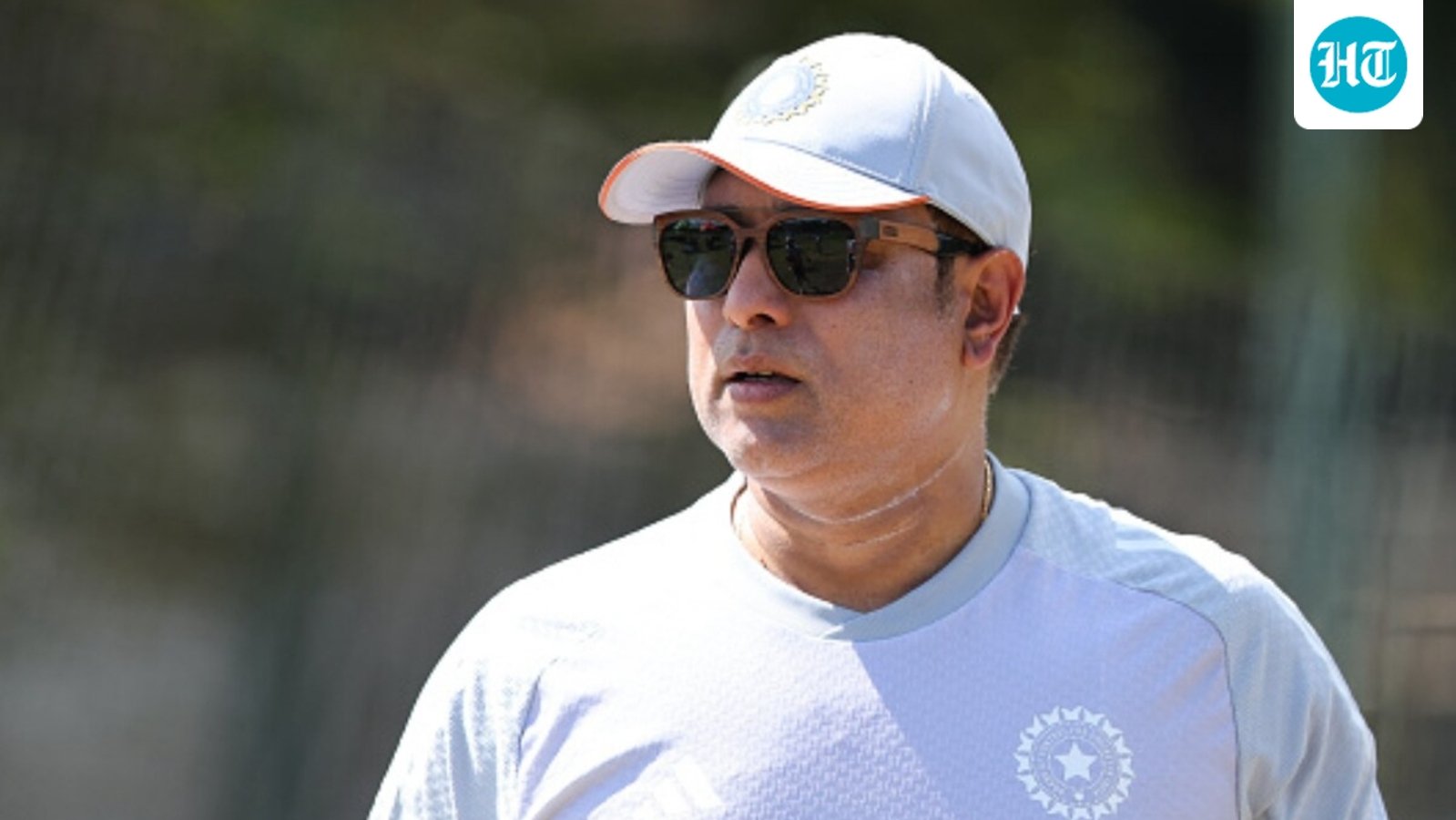
VVS Laxman made it clear that he wasn’t here to replace Gautam Gambhir. Perhaps not in as many words, but the former India batting great ensured he conveyed that his priority lay elsewhere – serving as the head of the BCCI Centre of Excellence (formerly the National Cricket Academy). Laxman signed off from his temporary stint as India’s head coach with an expected result and will now return to the Centre of Excellence before taking charge again for the Asian Games in September. After a string of defeats under Gautam Gambhir in England and Ireland, Laxman’s young Indian side restored order. They could easily have unravelled as they did against Ireland, but the little things Laxman did during his brief stay in Zimbabwe ensured those mistakes weren’t repeated.
Every time Laxman takes charge of an Indian team, there is renewed public clamour for him to take the role permanently. And understandably so. Gambhir does not quite enjoy the popularity of his predecessor, Rahul Dravid. His press conferences are often explosive, occasionally edgy, and at times veer off the point. Phrases such as “It’s not about one player” and “Country comes first” have become clichés. The more often they are used, the harder they become to sell.
Also Read: VVS Laxman urges Vaibhav Sooryavanshi to ‘improve fitness’ after first Player of the Series win
That’s where Laxman’s press conference came as a breath of fresh air. The atmosphere felt much more relaxed, the questions were broader, and the answers were direct and polite. The more relaxed environment he has fostered was also evident from the glowing praise both Shreyas Iyer and Vaibhav Sooryavanshi had for him. By contrast, Gambhir has largely been mentioned by players only when specifically asked about him.
Laxman’s undeniable impact
In just three matches, Laxman has already shown where he differs from Gambhir. For starters, he is far less confrontational. You would rarely see him getting into a public face-off. A player of immense stature in Indian cricket, Laxman has also worked his way through almost every level of the BCCI ecosystem – from player to broadcaster, IPL mentor, and eventually Head of the Centre of Excellence. He has observed and nurtured cricketers from the grassroots level, an opportunity Gambhir never really had. The difference in experience reflects in their contrasting approaches.
If Laxman’s blueprint is anything to go by, he doesn’t believe in making wholesale changes. The sample size isn’t too big, and the tweaks to the Indian team in Zimbabwe were purposeful. Yash Thakur replaced Ashok Sharma for the second T20I before Suryansh Shedge came in for Shivam Dube in the third game, with the series already wrapped up. Even though the venue remained the same, Laxman recognised the need to give Shedge a game after he had featured only once each in Ireland and England.
Laxman is revered
While there were changes throughout the series, they appeared far less forced than some of the rotation seen in England, such as handing Sooryavanshi three games only to bring Sanju Samson straight back into the XI. Of course, the quality of these two teams is like chalk and cheese, and the fact that India never looked troubled against Zimbabwe, unlike in 2024, made rotation much easier to manage.
The one thing that didn’t change, however, was the catching. India put down five catches in the third T20I in Harare, an area that needs immediate attention. The hope will be that the incoming Subhadeep Ghosh can make a difference.
Gambhir is contracted until the 2027 World Cup, and if all goes well, he could even earn an extension through to the 2028 Olympics. Then again, the very reason he landed the India head coach’s job was that the BCCI had run out of options. Laxman, the man many believed was the ideal candidate, turned down the role to prioritise his family. But two years on, the landscape has changed. Despite guiding India to back-to-back ICC titles, Gambhir has ruffled a few feathers, and reports of disagreements with a couple of senior players haven’t exactly enhanced his popularity among fans.
The big ‘what-if’
And that’s where the Laxman experiment has prompted many to wonder: what if? Would a split-coaching role appeal to him? Perhaps. It wouldn’t require Laxman to spend the entire year on the road, and with India’s Test team in need of a rebuild, the idea isn’t as far-fetched as it once seemed.
India’s squad for next month’s two-Test tour of Sri Lanka featured a maiden call-up for 33-year-old Saransh Jain, once again underlining Gambhir’s preference for multi-dimensional cricketers. It’s clear that all-rounders are non-negotiable. A series win in Sri Lanka would go a long way towards strengthening Gambhir’s standing, while a defeat would increase scrutiny.
Barring Laxman, there aren’t too many obvious candidates to take over as India’s head coach. Sourav Ganguly has slowly begun crafting his coaching resume, having led the Pretoria Capitals to the SA20 final, while Yuvraj Singh has taken his first step with a stint as a batting coach with the Delhi Capitals. As it takes them time to find their feet, Laxman could gain considerable ground. If Zimbabwe were the trailer, the Asian Games in Japan could significantly boost Laxman’s prospects with a successful title defence, provided there’s space for separate red-ball, white-ball coaches in the Indian team.
