


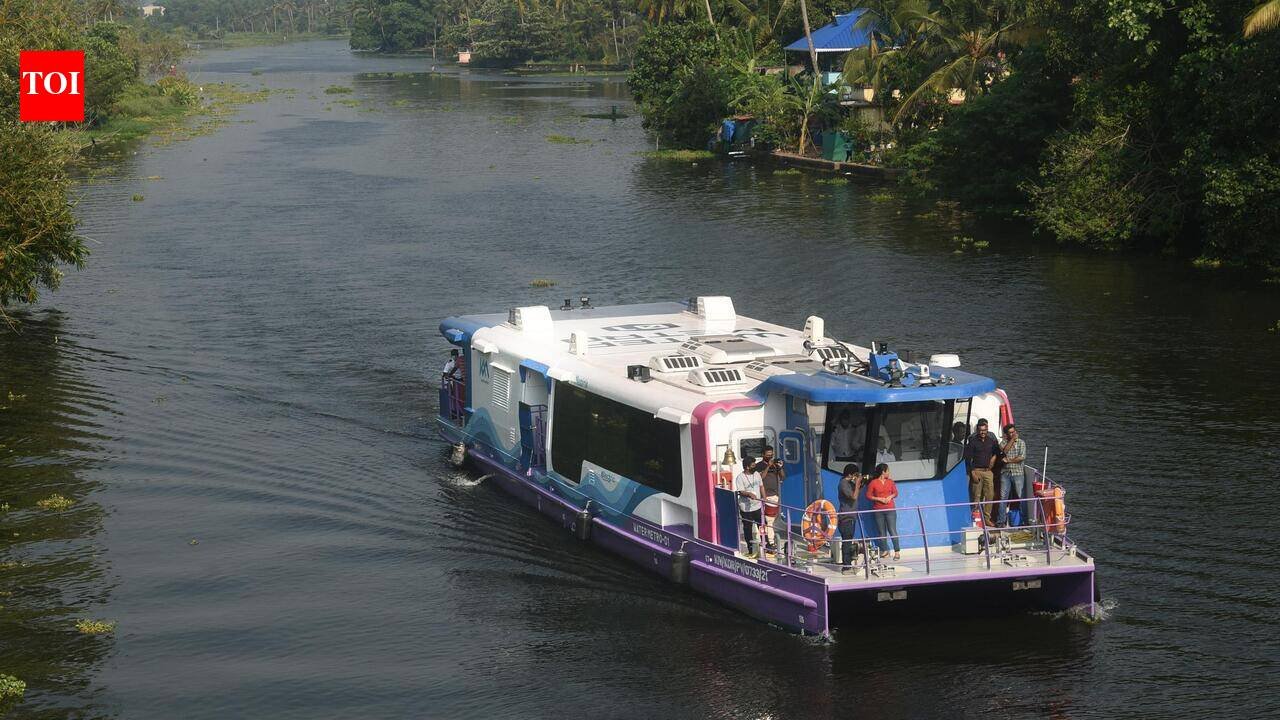
Panaji: River navigation minister Subhash Phal Dessai on Tuesday rejected concerns that the proposed water metro project is being designed to serve the state’s offshore casinos, asserting that the passenger transport system is intended for the public and tourists.“We are not providing transport to casinos. Casinos have their own vehicles. We may drop passengers at the nearest identified points such as Betim or Panaji, and they will use their own mode of transport to reach the casinos,” Phal Dessai said.He also clarified that the service would be exclusively for passengers and would not carry cargo.Addressing concerns raised around fishing communities and residents along the water metro routes, he said that govt would ensure that the project does not disrupt existing livelihoods. “Local people will be taken into confidence before any work begins, The complete feasibility study had already examined areas where fishing activities take place. We will never disturb fishing or any other activity,” the minister said.Speaking on the project, managing director of Kochi Metro Rail Limited Loknath Behera, said vessels are likely to be built using lightweight materials such as aluminium instead of steel to reduce water displacement and minimise turbulence, thereby lowering their impact on the river ecosystem.Govt is now awaiting the preparation of a detailed project report (DPR), expected to be completed in four months, which will finalise the routes, implementation model and financing structure.According to officials, the DPR will examine different funding options, including full central govt funding, a joint Centre-state model or other financial structures for the approximately Rs 3,200 crore project.“Existing ferry and water transport services in Goa currently carry between 30,000 and 35,000 passengers every day. The recently introduced RoRo ferry service at Chorao saw daily passenger numbers increase from around 4,000-5,000 to nearly 8,000. Based on these trends, we expect the water metro to serve more than one lakh commuters daily during its initial phase,” Phal Dessai said.Envisioned as both a commuter transport system and a tourism product, officials said it would connect destinations along the river, allowing visitors to disembark at heritage sites and tourist attractions before continuing their journey. A central control room will monitor vessel movements, issue warnings and safely manage crossings involving fishing boats, tourism vessels and other river traffic. They also indicated that, in the future, ticketing could be integrated with other modes of public transport to provide seamless travel across the network.
