


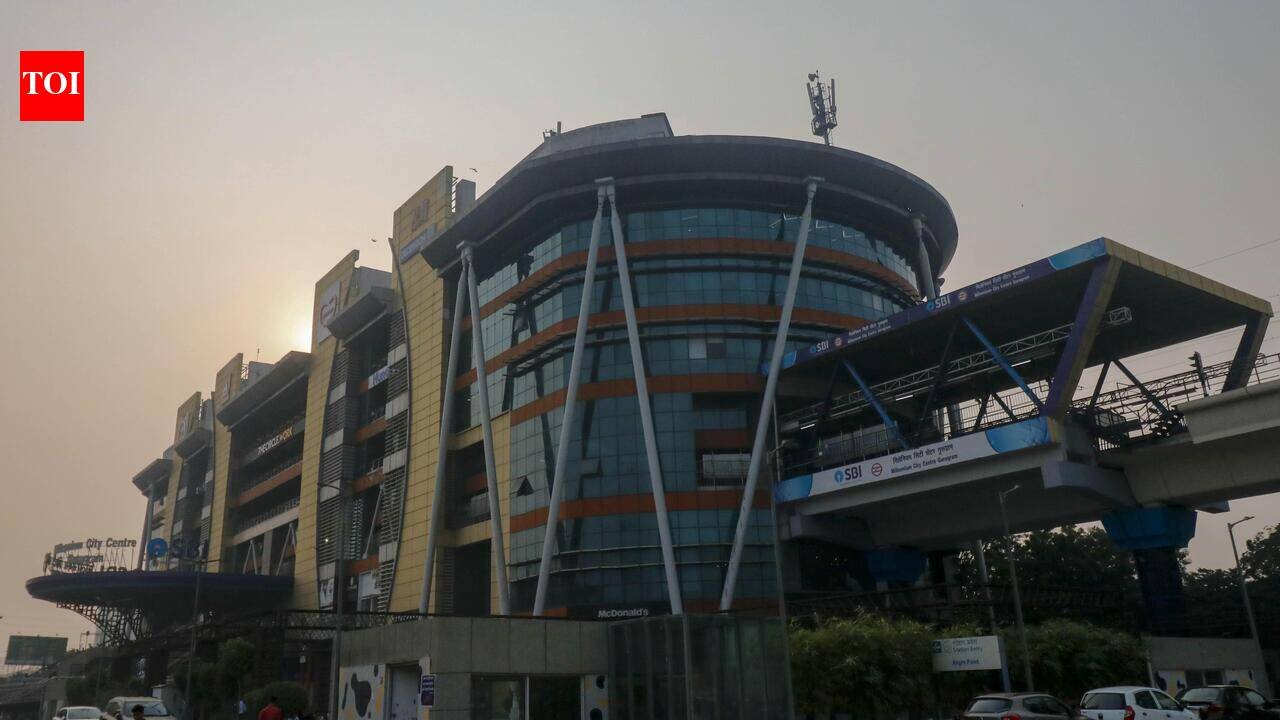
Gurgaon: The integration plan to connect the upcoming metro line with Delhi Metro’s Yellow Line at Millennium City Centre has been finalised.GMRL officials said the Millennium City Centre station has been designed to provide direct connectivity between the existing DMRC Yellow Line and the new GMRL corridor through both platform-level and concourse-level links.Commuters using the upcoming metro line will be able to switch to Yellow Line “with minimal walking”, with GMRL having designed it to make transfers quicker and more convenient.Unlike interchanges where passengers have to exit one station and walk a considerable distance before entering another, the proposed design aims to keep the transfer distance to a minimum.The interchange plan was reviewed by GMRL managing director Chander Shekhar Khare during his inspection of the 28.5-km Gurgaon Metro corridor from Millennium City Centre to Cyber City, including the Dwarka Expressway spur. The inspection covered all 27 proposed stations, construction sites and key interchange locations.The 28.5-km-long metro corridor, once operational, will integrate with the Yellow Line, Rapid Metro, RRTS, railway network and city bus services, creating an interconnected public transport network across Gurgaon.A senior GMRL official said, “The idea is to make the interchange as seamless as possible. A passenger getting off the Yellow Line will be able to reach the GMRL concourse and platform through dedicated connecting structures, while passengers from the GMRL side will similarly have easy access to the Yellow Line. The stations are barely about 100 metres apart, so the walking distance will be minimal and the inconvenience to commuters will be significantly reduced.”Officials explained that while passengers may still need to change levels depending on the direction of travel, the movement between the two systems has been planned to ensure smooth and convenient transfers, similar to other major metro interchanges but with a shorter walking distance.During the inspection, Khare also reviewed plans for the proposed Cyber City interchange, which will integrate the GMRL corridor with the Rapid Metro and the Delhi-Gurgaon-Bawal RRTS corridor. Officials said the station is being planned as a major multimodal hub with multiple entry and exit points to cater to the large volume of commuters expected from Cyber City, Cyber Hub and adjoining commercial area.“Since Shankar Chowk is expected to witness a very high passenger footfall, the idea is that there should be adequate entry and exit points so that commuters do not have to walk a kilometre or more just to access the station. The RRTS entry locations have already been planned, but we also need to carefully plan the metro station entries to ensure convenient access for people living and working nearby. These aspects will be examined further during the planning process,” the official said.Besides, the new metro corridor will have interchanges at Subhash Chowk with planned Railway station and Bhondsi metro line, Hero Honda Chowk with RRTS corridor. It will have an integrated bus terminal at sector 10, while Gurgaon Railway station will also be connected with the metro network.During the inspection of the Dwarka Expressway spur, officials highlighted the area’s potential as a transit-oriented development zone, with several residential and commercial projects coming up along the corridor.“Metro connectivity to Dwarka Expressway would serve as a major catalyst for planned urban growth by integrating emerging residential and commercial developments with the city’s mass transit network,” noted Khare.The inspection also covered the Phase 2 corridor between Sector 9 and Cyber City, where GMRL is evaluating the feasibility of developing double-decker stations at Bajghera Road and Sector 21.The proposal is aimed at optimising limited road space by accommodating metro infrastructure and road facilities within the same corridor. While the decision to adopt the concept has been taken in principle, the station design is still being finalised.Khare also reviewed ongoing construction on the Phase 1 corridor, including piling, pile cap construction and pier erection, and directed officials to maintain construction momentum while ensuring quality and safety.He instructed agencies to resolve engineering constraints through close coordination, particularly near Vyapar Kendra Road, where the metro alignment intersects with the proposed GMDA underpass, widened carriageway and high-voltage electricity pylons.
