


Ludhiana: With two persons having been mauled to death by stray dogs in less than a month in Ludhiana district, official data from govt hospitals shows that there has been no let-up in bite cases.Records from the dog bite department at Civil Hospital, Ludhiana, reveal that 7,053 dog bite cases were reported in the first six months of 2026, which is 151 more than the 6,902 cases reported during the corresponding period last year.Data indicates a 2.2% increase in dog bite cases from Jan to June this year, as compared with the corresponding period in 2025. However, the number is lower than the 7,619 cases recorded in the first six months of 2024.
CJP Jantar Mantar Protest Updates
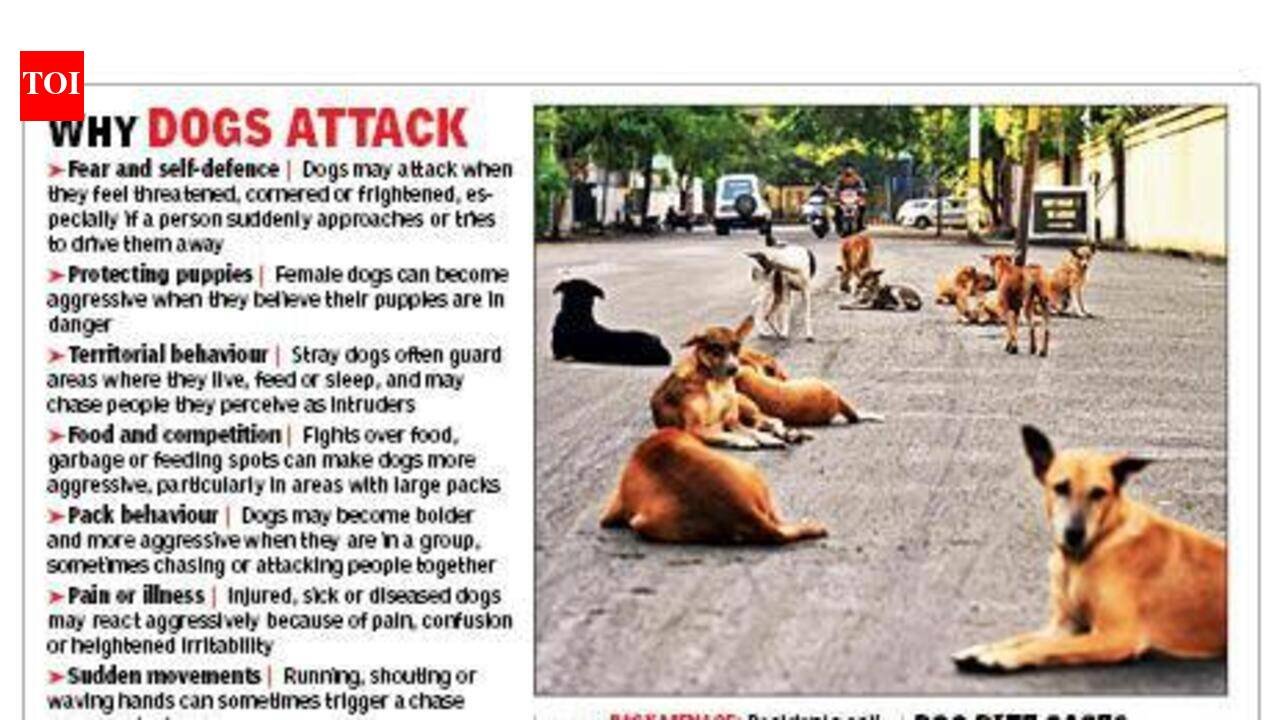
Month-wise figures for 2026 show that the highest number of dog bite cases at the civil hospital was reported in Jan, when 1,350 cases were recorded. The lowest number, 953, was reported in June. In 2025, the highest number of dog bite cases during the first six months was reported in March at 1,283.The trend is not restricted to Ludhiana city alone. Data from sub-divisional hospital, Khanna, which caters to a sizeable rural population, shows a sharper rise in dog bite cases. According to hospital records, 2,290 dog bite cases were reported between Jan and June this year, compared with 2,004 cases during the same period in 2025. The increase works out to be 14.3%.In comparison, the first six months of 2024 recorded 1,762 dog bite cases in the hospital, lowest among the last three years. Month-wise data for 2026 shows that Jan registered the highest number of cases at 411, while May recorded the lowest at 341. In 2025, Jan witnessed the highest number of cases at 393.Officials say the figures underline the continuing challenge posed by stray dogs in both urban and rural areas of the district. A source in the dog bite department at the civil hospital said that with more than 7,000 dog bite cases reported in the first six months of this year, the department receives around 40 to 45 such cases daily. The source added that some dog bite victims are also treated in the emergency department of the hospital.Fatalities cause alarmThe issue has come into sharper focus following two recent deaths in Pabbian village of Jagraon. On the intervening night of June 30 and July 1, a migrant labourer, Ramesh Mandal from Bihar, was allegedly mauled to death by stray dogs. Less than a month later, on the intervening night of July 15 and 16, 80 year old Jagdish Singh, a former village sarpanch, was allegedly mauled to death by a pack of stray dogs near a carcass disposal site in the same village.Residents of villages affected by the stray dog menace have demanded stronger intervention by the govt. Gurmail Singh, husband of the woman sarpanch from Pabbian village, said two persons had been killed by stray dogs in the village while a child required hospitalisation after a dog attack. He said the govt should construct more dog shelters and ensure maximum sterilisation of stray dogs, among other measures, to address the problem.Meanwhile, health authorities have urged people bitten by dogs to seek medical treatment immediately. SMO Civil Hospital Dr Akhil Sareen said the hospital currently has around 5,000 vials of anti-rabies vaccine in stock. He advised all dog bite victims to come forward and get the required vaccination without delay.Need for sterilisationAnimal welfare groups have also stressed the importance of sterilisation and vaccination. Mani Singh, state president of Help for Animals and associated with People for Animals, said sterilisation of stray dogs and vaccination programmes are important. He said that just as all humans are not the same, stray dogs also differ in behaviour.He said some dogs may attack because they are not getting food, are under stress or are affected by hot weather.He added that managing all stray dogs in shelters is not a practical solution as dogs are territorial animals and dogs from different areas often do not tolerate one another.Why Dogs AttackFear and self-defence: Dogs may attack when they feel threatened, cornered or frightened, especially if a person suddenly approaches or tries to drive them awayProtecting puppies: Female dogs can become aggressive when they believe their puppies are in dangerTerritorial behaviour: Stray dogs often guard areas where they live, feed or sleep, and may chase people they perceive as intrudersFood and competition: Fights over food, garbage or feeding spots can make dogs more aggressive, particularly in areas with large packsPack behaviour: Dogs may become bolder and more aggressive when they are in a group, sometimes chasing or attacking people togetherPain or illness: Injured, sick or diseased dogs may react aggressively because of pain, confusion or heightened irritabilitySudden movements: Running, shouting or waving hands can sometimes trigger a chase response in dogsLack of sterilisation and vaccination: Uncontrolled breeding can lead to larger dog populations and packs, while unvaccinated animals also raise concerns over rabies after a biteNot all dogs are the same: Like humans, dogs also have distinct personalities. Some are aggressive, some docile, some shy and some friendlyThe Man-Animal conflictExpansion of cities, shrinking of green spaces, the problem of pervasive and indiscriminate garbage dumping are all bringing the human-animal conflict to a head. As cities grow, dogs increasingly live alongside people and depend on food generated by them for survival. This can lead to territorial behaviour, competition for food and fear on both sides, sometimes resulting in attacks.Dog Bite Cases2020: 6,239 cases2021: 6,115 cases2022: 8,601 cases2023: 9,461 cases2024: 13,488 cases2025: 13,363 cases2026: 7,755 cases**Till July 22, 2026
