


When we think about life-saving interventions in the Intensive Care Unit (ICU), ventilators, advanced monitoring systems, antibiotics, and organ support therapies often come to mind. Yet, one of the most powerful interventions available to critically ill patients remain underutilized: adequate nutrition.
Critical illness places the body under extreme metabolic stress. Within hours of admission to the ICU, patients experience accelerated muscle breakdown, increased energy expenditure, inflammation, and a heightened need for nutrients to support recovery. Nutrition, therefore, is not merely supportive care—it is an integral component of treatment. However, despite strong clinical evidence and established international guidelines, achieving nutrition adequacy continues to be a challenge across ICUs globally, including in India.
Nutrition adequacy refers to the extent to which patients receive their prescribed calorie and protein requirements. Numerous studies have demonstrated that inadequate nutrition is associated with increased complications, prolonged mechanical ventilation, longer ICU and hospital stays, higher healthcare costs, and poorer functional recovery.
Feeding interruptions for diagnostic procedures, concerns regarding gastrointestinal intolerance, delayed initiation of enteral nutrition, lack of standardized feeding protocols, and inadequate monitoring of nutritional delivery all contribute to a significant gap between nutritional targets and actual intake.
In India, the challenge is even more complex. Critical care services are expanding rapidly, but variability in practices remains significant. Many hospitals lack dedicated critical care dietitians, while nutrition monitoring often receives less attention than other clinical parameters. As a result, nutrition delivery frequently becomes a missed opportunity in patient management.
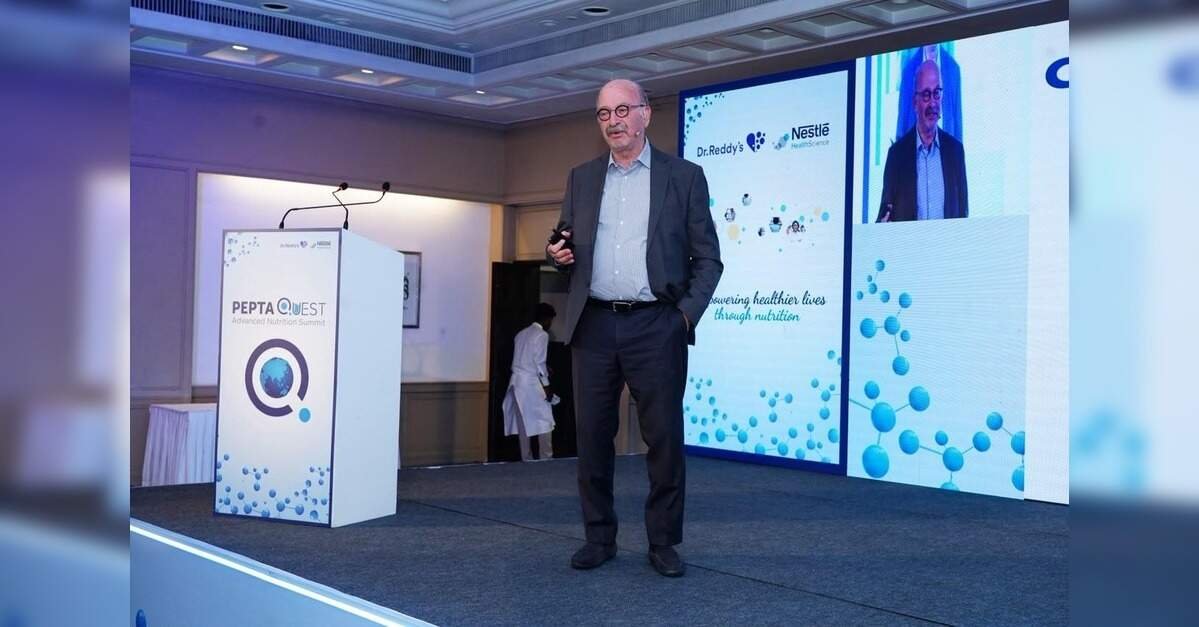
Recognizing the need to bridge the gap between evidence and practice, Dr. Reddy’s Laboratories and Nestlé Health Science recently concluded a multi-city International Speaker Program across India focused on improving nutrition adequacy in critically ill patients. The initiative brought together intensivists, and dietitians from leading hospitals to discuss practical approaches to enhancing nutritional care in everyday ICU settings.
A highlight of the program was the participation of internationally renowned critical care nutrition expert Prof. Dr. Pierre Singer, whose work has helped shape contemporary ICU nutrition practices globally.
“Nutrition should be viewed as a therapeutic intervention, just like any other organ support strategy in the ICU,” said Prof. Singer. “Across the world, we continue to see a significant gap between prescribed and delivered nutrition in critically ill patients. Improving nutrition adequacy does not necessarily require sophisticated technology; it requires awareness, protocols, monitoring, and multidisciplinary collaboration. By prioritizing nutrition early, ICUs can improve outcomes, shorten recovery times, and reduce the overall burden on healthcare systems.”
The discussions across cities focused not only on scientific evidence but also on practical implementation. Topics included early enteral nutrition initiation, minimizing feeding interruptions, improving calorie & protein delivery, managing feed intolerance, proactive use of semi-elemental formula in high-risk patients and establishing multidisciplinary protocols that enable healthcare teams to consistently meet nutritional goals.
Commenting on the initiative, Dr. Nandan Joshi, the Head- Scientific & Medical Affairs Dr. Reddy’s & Nestlé Health Science said, “Improving nutrition adequacy represents one of the most actionable opportunities to enhance outcomes in critical care. Through this educational initiative, our objective was to facilitate knowledge exchange between global experts and Indian clinicians, while encouraging the adoption of practical strategies that help critically ill patients receive the nutrition they need at the right time.”
As India continues to strengthen its critical care infrastructure, nutrition must become a core quality indicator rather than an afterthought. Hospitals routinely monitor infection rates, ventilator-associated complications, and mortality outcomes. Nutrition adequacy deserves similar attention.
The path forward does not necessarily require major investments or sophisticated technology. What it requires is commitment—commitment to measuring nutritional delivery, identifying gaps, implementing protocols, and recognizing nutrition as an essential component of patient care. The evidence is compelling, the solutions are achievable, and the time to act is now.
References:
- Villet S, Chiole ro RL, Bollmann MD, et al. Negative impact of hypocaloric feeding and energy balance on clinical outcome in ICU patients. Clin Nutr. 2005;24:502–509.
- Stoian, M.; Andone, A.; Bândilă, S.R.; Onișor, D.; Babă, D.-F.; Niculescu, R.; Stoian, A.; Azamfirei, L. Personalized Nutrition Strategies for Patients in the Intensive Care Unit: A Narrative Review on the Future of Critical Care Nutrition. Nutrients 2025, 17, 1659.
- He Q, Qian J, Miao M, Liu X, Ni W and Ma Y (2026) Interruptions of enteral nutrition in intensive care units: mechanisms, clinical impacts, and precision nursing interventions–a scoping review. Front. Nutr. 13:1768983.
Disclaimer: The above content is non-editorial, and TIL hereby disclaims any and all warranties, expressed or implied, relating to it, and does not guarantee, vouch for or necessarily endorse any of the content.
