


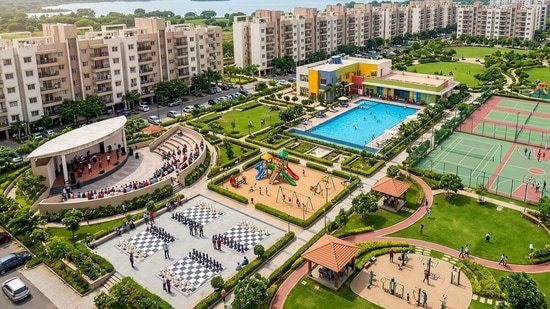
An Instagram reel has reignited the debate over whether features such as reflexology paths, amphitheatres and outdoor chess boards are genuine value additions or simply marketing tools that help projects stand out.
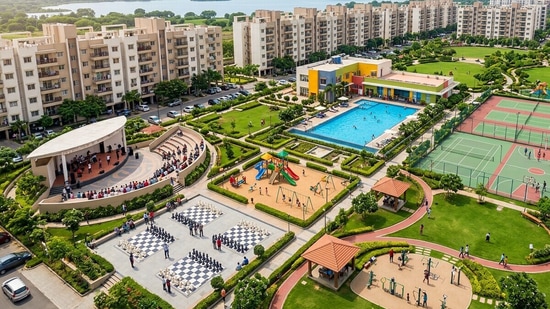
The viral reel argues that several amenities commonly highlighted in project brochures see little use after residents move in. According to the creator, many of these facilities are inexpensive to build but help developers advertise a higher number of amenities. While many social media users agreed with the observations, others defended these features, saying their utility depends on the community, age profile of residents and how actively the housing society uses shared spaces.
Amenities highlighted in the reel
1. Amphitheatre
The creator describes the amphitheatre as the ‘king of fake amenities,’ arguing that in many housing societies it ends up as little more than a series of concrete steps where children occasionally play, rather than a venue for cultural performances or community events.
2. Reflexology walkway
Pebble-lined reflexology paths are frequently promoted as wellness amenities. However, the reel claims they are inexpensive to construct and are rarely used regularly by residents.
3. Jacuzzi
The video also questions the inclusion of jacuzzis, suggesting they are sometimes installed in projects that lack space for a full-sized swimming pool. It also raises the issue of whether residents are comfortable sharing such facilities with neighbours.
Also Read: Can a housing society restrict tenants’ or guests’ access to the clubhouse? MahaRERA clarifies
4. Meditation zone
According to the creator, many meditation zones consist of little more than a gazebo or pergola with landscaped surroundings and often remain unused for most of the day.
5. Outdoor chess board
Oversized outdoor chess boards, the reel says, generate curiosity during the initial months after possession but eventually become decorative installations with limited practical use.
Other amenities mentioned include open-air gyms, rock-climbing walls, and dedicated senior-citizen corners.
Residents are divided
Not everyone agreed with the reel. Several users pointed out that the usefulness of an amenity depends on the residents and how the community chooses to utilise it. Amphitheatres, they said, can double as spaces for yoga sessions, skating classes and society events, while senior-citizen corners offer quieter seating areas and climbing walls remain popular among children.
‘Usefulness is subjective’
Real estate consultants say there is no universal list of ‘useful’ or ‘useless’ amenities.
“While some amenities may be widely perceived as underutilised, their usefulness ultimately depends on the preferences and lifestyle of individual homebuyers. What one resident considers unnecessary may be valued by another. For developers, amenities are also an important part of a project’s marketing and positioning strategy,” said Krishna Nair, a real estate consultant based in Mumbai.
Nair said that developers working with limited land parcels often differentiate projects through location, pricing or product design rather than by offering an extensive list of amenities.
“Ultimately, it is homebuyers who decide which amenities add value. No developer or broker would deliberately market a project by describing its amenities as useless,” he said.
A real estate expert pointed out that a few developers have started incorporating practical amenities that buyers may actually use, such as co-working spaces, pet parks, EV charging stations and sports facilities.
According to the FICCI-ANAROCK Homebuyer Sentiment Survey published earlier, homebuyers are looking beyond four walls and prioritising homes that support their evolving lifestyles. Rising disposable incomes, the post-pandemic shift in housing preferences, and hybrid work have increased demand for larger homes with wellness-focused amenities. The survey found that 75% of prospective buyers prefer homes with balconies to create a greater sense of openness, while 74% want better construction quality. Meanwhile, 31% of respondents said they want a dedicated home office or study room, reflecting the continued influence of hybrid working. The findings suggest that buyers are increasingly valuing practical, lifestyle-oriented features over purely decorative amenities.
(Disclaimer: This report is based on user-generated content from social media. Hindustantimes.com has not independently verified the claims and does not endorse them.)
