


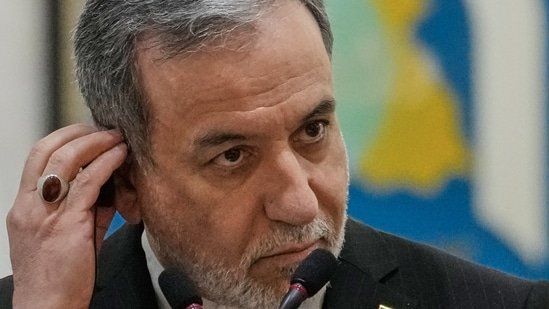
Iran’s foreign minister Abbas Araghchi has spoken of how hostile the environment was even when he and other officials from Tehran were holding talks with US President Donald Trump’s envoy Steve Witkoff. He said he asked Witkoff during the talks whether he had ever sat in talks with “a chance of being bombed at any moment”. It was not clear which part or location of the talks he was referring to.
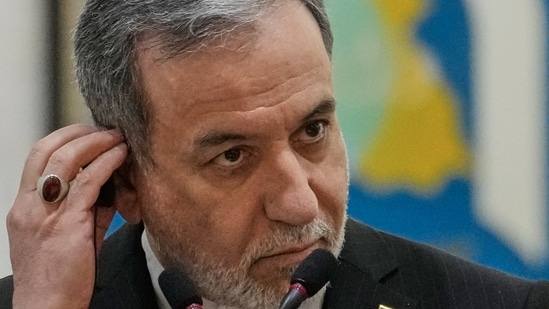
Araghchi’s exchanges with Witkoff have continued intermittently since the two began communicating during last year’s nuclear talks, persisting even till the February war, though Tehran has insisted the contact does not amount to formal negotiation.
In an interview to Iranian outlet Mehr News shared by a Russian news channel, Araghchi also said Tehran would not fold the way Venezuela did — referring to the US military operation of regime change in the South American nation.
The Araghchi-Witkoff channel has moved across several capitals since talks began last year. The first round was held indirectly in Muscat on February 6, with Omani intermediaries shuttling between the two delegations before a brief in-person meeting at day’s end. Three further rounds followed in Muscat and Rome. A fifth round was set for Europe, and the two men later met in Geneva. Then came the war.
In April, Araghchi travelled to Islamabad, Muscat and Moscow for a planned sitdown with Witkoff and Jared Kushner mediated by Pakistani officials. Beyond these formal rounds, the two have kept up a parallel channel of direct text messages.
Timing matters
Araghchi’s remarks land at a moment when he is fending off pressure both from Washington and from hardliners at home who accuse him of betraying Iran’s slain supreme leader.
Araghchi told Mehr that Iran was “not Venezuela”, where the US could seize “one person” and expect the rest of the leadership to buckle. The reference is to the January 3 US operation that captured President Nicolas Maduro from Caracas and flew him to New York for trial — an episode Tehran has cited repeatedly to argue that its political structure would not crumble under similar pressure.
The interview surfaces also as the ceasefire framework brokered between Washington and Tehran in June is, in practice, defunct.
The US has reimposed a naval blockade on Iranian ports and Iran has declared the Strait of Hormuz shut, though both sides say strikes remain less intense than at the conflict’s peak in February and March, according to news agency Bloomberg.
The US has reportedly struck Iran on eight consecutive nights, with the American military death toll reaching 16 after an Iranian missile attack on a base in Jordan killed two service members and left a third missing.
Trump has threatened further escalation unless Iran reopens Hormuz Strait to shipping,
Tehran has vowed expanded retaliation across the region.
Domestically, Araghchi’s position has grown more precarious. Some reports said he was forced to flee the funeral procession for former Supreme Leader Ayatollah Ali Khamenei — killed in the February 28 strikes by the US and Israel that started the war — after being targeted with rocks by mourners chanting slogans against “the compromiser”.
Hardline factions have accused Araghchi, Parliament Speaker Mohammad Bagher Ghalibaf and President Masoud Pezeshkian of engineering a “soft coup” by signing the June accord without the explicit backing of the new supreme leader, Khamenei’s son Mojtaba, who has not appeared publicly since taking office and communicates only through written statements.
Ghalibaf pushed back against that charge in a state television address, arguing that negotiation “is not tantamount to compromise” and instead forms part of what he called the strategy of resistance, Bloomberg further reported.
