


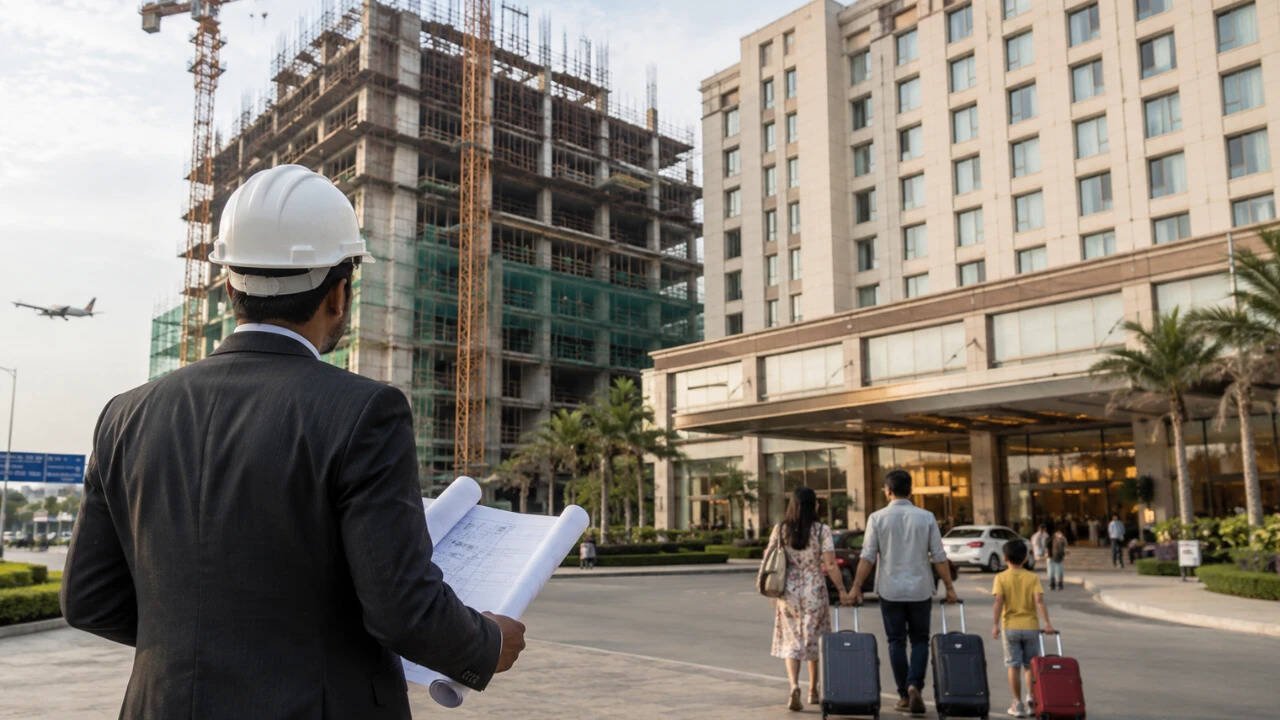
MUMBAI: Setting up a hotel in India takes 36 to 48 months from approval to commissioning, up to three times longer than the 12 to 18 months required in competing ASEAN countries, creating a bottleneck that is limiting room supply, driving up project costs and ultimately making travel more expensive for tourists, according to a new NITI Aayog report released on Wednesday.Prepared jointly with the Union ministry of tourism, the report, Unlocking Growth in Tourism and Hospitality Sector, recommends a series of non-financial regulatory reforms aimed at accelerating investment in hotels, restaurants, transport and tourism infrastructure while improving India’s competitiveness as a global destination.The Atithi Foundation provided research and drafting support for the report.Among its key recommendations are scrapping project-stage approvals by the ministry of tourism for hotels, replacing multiple permissions with a single Health Trade Licence and a single liquor licence for hotels operating several restaurants within the same premises, doing away with the separate Eating House Licence, extending the validity of liquor licences and FSSAI registrations, and expanding digital single-window clearances.The report also proposes liberalising construction norms by increasing permissible Floor Area Ratio (FAR), easing ground coverage, parking and minimum road-width requirements, and raising high-rise thresholds so that hotel projects can be completed faster and at lower cost.The study notes that India currently has only about 2 lakh branded hotel rooms, accounting for less than 8% of the country’s estimated lodging capacity of 24.8 lakh rooms.Although investor interest remains strong, prolonged approvals and regulatory complexity delay projects and increase financing costs, reducing the pace of capacity creation.For Maharashtra, the recommendations assume significance as the state seeks to expand tourism beyond Mumbai into destinations such as the Konkan coast, Tadoba, Mahabaleshwar, Ajanta-Ellora, Nashik and Sindhudurg.Industry experts said regulatory reforms must be accompanied by destination-level planning and infrastructure upgrades.“Tourism has significant potential to drive growth because every additional visitor creates demand for hotels, transport, restaurants, retail, guides and local experiences, generating employment, attracting private investment and strengthening local economies,” said Hemant Joshi, CEO of Atithi Foundation.However, he said attractions alone were not enough.“Strong destinations also need seamless connectivity, quality accommodation, clean public spaces and reliable civic services. Maharashtra illustrates this gap clearly. Tarkarli remains difficult to reach, Tadoba lacks global visibility, while Mahabaleshwar continues to grapple with congestion, parking shortages and waste management pressures.”Joshi said the next phase of tourism growth should focus on increasing the value generated from every visitor rather than merely boosting footfalls.“Destination-specific plans supported by professionally governed destination management organisations can improve coordination, attract investment and encourage longer stays, higher visitor spending and stronger economic outcomes.”The report says India’s tourism sector contributed Rs 15.73 lakh crore, or 5.22% of GDP, in 2023-24 and supported 84.6 million jobs, while domestic tourism reached a record 2.9 billion visits in 2024.Yet, despite its rich natural and cultural assets, India attracts less than 1.5% of global international tourist arrivals, indicating that regulatory and infrastructure bottlenecks continue to constrain its tourism potential.The report concludes that improving ease of doing business through simpler regulations, faster approvals and coordinated destination development can accelerate investment, expand tourism infrastructure and help India move towards its long-term goal of becoming a globally competitive tourism destination.
