


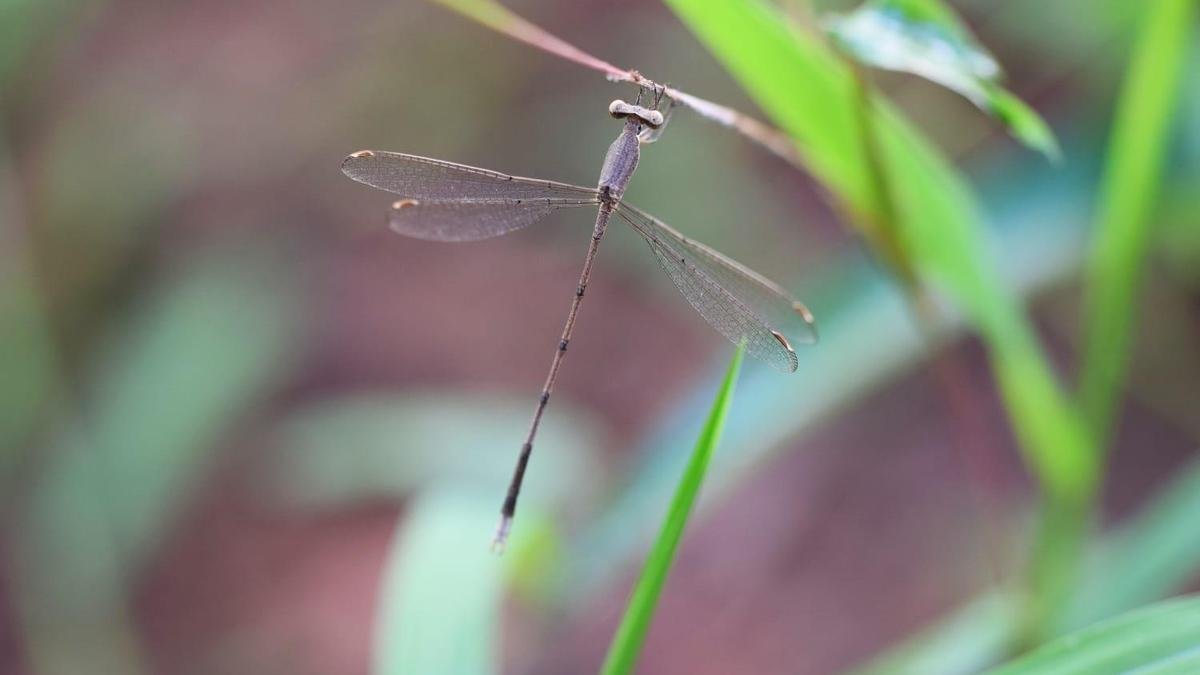
Lestes paloti, the newly described spreadwing damselfly from the Western Ghats of Kerala.
| Photo Credit: Special Arrangement
A team of odonatologists has discovered a new species of spreadwing damselfly, Lestes paloti, from the Western Ghats in Kerala. The discovery has been published in the International Journal of Odonatology, an internationally reputed peer-reviewed journal dedicated to research on dragonflies and damselflies.
The discovery marks a significant addition to odonate taxonomy. Lestes paloti is the first new species described in the genus Lestes from India since Lestes garoensis was described by Lahiri in 1987, ending a gap of nearly four decades. It is also the first new Lestes species discovered from the Western Ghats since Lestes malabaricus was described in 1929, making it the first addition to the region’s spreadwing fauna in almost a century. Such long intervals between discoveries are uncommon in insect taxonomy and highlight the scientific importance of this finding, according to researchers.
The new species is named Lestes paloti in honour of Muhamed Jafer Palot, a scientist at the Zoological Survey of India, Kozhikode, in recognition of his outstanding contributions to Indian odonatology, taxonomy, biodiversity documentation, and the study of the fauna of the Western Ghats.
The research was carried out by Vinayan P. Nair and Maya George of the Postgraduate and Research Department of Zoology, Alphonsa College, Pala; Abraham Samuel of the Tropical Institute of Ecological Sciences, Kottayam; and Kalesh Sadasivan of the Odonate Research Group, Travancore Nature History Society.
Although it resembles the northeastern Indian spreadwing species Lestes nodalis and Lestes garoensis, examination of the male anal appendages and secondary genitalia confirmed it as a distinct, previously undescribed species. The study also resolves a long-standing taxonomic error by showing that earlier records of Lestes nodalis from southern India were misidentifications and actually represent Lestes paloti, refining the known distribution of the genus in India.
The species has been recorded in the districts of Kannur, Kozhikode, Wayanad, Malappuram, Palakkad, and Ernakulam in Kerala. Unlike many related species, it inhabits scrub vegetation around homesteads and on laterite hillocks, often away from open water bodies. It changes from brown during the dry season to bluish during the monsoon. Researchers believe its cryptic habits and close resemblance to related species kept it undiscovered for decades.
With this discovery, Kerala’s odonate fauna now comprises 192 species in 87 genera and 14 families, including 81 species endemic to the Western Ghats. The finding highlights the region’s exceptional dragonfly and damselfly diversity and shows that its biodiversity remains incompletely documented despite more than a century of research. It underscores the need for continued taxonomic studies and conservation of the Western Ghats’ freshwater and forest ecosystems, the researchers added.
Published – July 16, 2026 02:16 pm IST
