


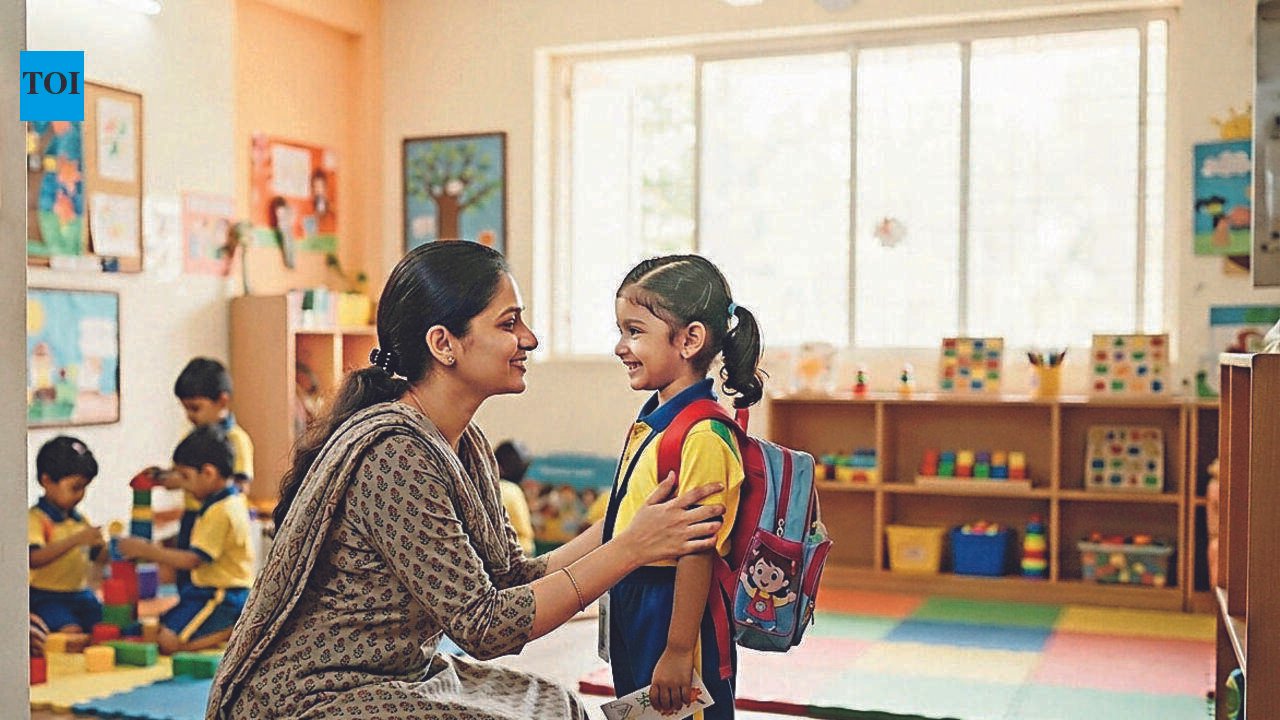
Every morning, thousands of parents leave their children at workplace creches with a kiss, a wave and an act of faith. When that trust is betrayed, the injury extends far beyond a child or a family. It strikes at the moral legitimacy of every institution that promised safety.The recent allegations emerging from a corporate creche in Bengaluru, if established through due process, are not merely about abusive caregivers. The law cannot stop with identifying the hand that struck the child. It must ask who recruited that hand, who supervised it, who ignored warning signs, who failed to inspect, and who mistook contractual outsourcing for legal absolution. A corporation may outsource housekeeping. It may outsource catering. It may outsource transport. It cannot outsource its duty of care. The Maternity Benefit (Amendment) Act, 2017 requires qualifying establishments to provide creche facilities. That duty is not discharged by constructing a room, purchasing toys or signing a contract with a third-party operator. It carries an obligation to ensure that the facility is safe, professionally managed and worthy of the trust that working parents repose in it. The Constitution demands no less.Article 21 guarantees dignity, while Articles 39(e) and 39(f) require the state to protect children against abuse and exploitation. These constitutional values are reinforced by the doctrine of parens patriae, under which the state bears the ultimate responsibility to protect those who cannot protect themselves. Its duty is not merely to prosecute after tragedy, but to prevent it through vigilant regulation, effective supervision and meaningful accountability.In Sheela Barse vs Union of India, the court emphasised the state’s continuing obligation to protect children in institutional care. Likewise, in Laxmi Kant Pandey vs Union of India, it held that whenever children are placed under institutional supervision, the highest standards of vigilance and accountability are indispensable.Corporate India has mastered the language of the ESG (environmental, social, and governance) framework. Environmental responsibility is measured. Governance is documented. Sustainability reports are polished. Yet a board that monitors quarterly earnings to the last decimal place cannot plead helplessness when governance disappears within its own creche. The regulators, too, must answer difficult questions. Where were the inspections? Were caregiver credentials independently verified? Were complaints acted upon? Were CCTV systems monitored or merely installed? Regulation that awakens only after a viral video is regulation that has already failed.Nor is this a problem confined to one corporate campus. Tamil Nadu, despite its admirable record in social welfare, has also witnessed failures in institutions entrusted with children. Recent scrutiny of a govt-aided children’s home in Trichy and earlier action against childcare institutions in Chennai underscore a larger truth: whether the institution is a corporate creche, an anganwadi, a children’s home or a residential care facility, systems too often awaken only after a child has suffered.The experience of Sweden, Norway, Denmark and Finland is instructive. They do not claim perfection. They reduce risk through rigorous licensing, background verification, prescribed staff-child ratios, continuous training and independent inspections. Child safety is treated not as an act of trust but as a system of accountability. India has enacted the law. It must now build the institutions that give the law meaning. The law is not honoured by constructing a creche. It is honoured only when every child entrusted to it returns home unharmed.The time has come to recognise workplace childcare not as a statutory formality or a corporate benefit, but as a constitutional obligation. Every creche should be independently accredited. Caregivers should undergo rigorous background verification, structured training and periodic assessment. Surprise inspections should become routine. CCTV systems should be meaningfully monitored under clear legal safeguards. Boards should certify child-safety compliance with the same seriousness as financial disclosures. Institutional failure should attract legal accountability, not merely contractual consequences.Tamil Nadu now has an opportunity to lead. Just as it pioneered the nutritious noon meal scheme and transformative public health initiatives, it can once again set a national benchmark by enacting a comprehensive childcare institutions safety code governing every workplace creche, anganwadi, daycare centre and children’s home. Prevention, not post-tragedy inquiry, must become the organising principle of child protection.The Constitution is tested in the silent spaces where the weakest depend entirely on the vigilance of others. The doctrine of parens patriae casts the state in the role of the ultimate guardian of children, imposing a continuing duty to protect those who are incapable of protecting themselves. Its obligation extends beyond punishment after tragedy to prevention through effective regulation, vigilant supervision and meaningful accountability.(The writer is an advocate in Madras high court)
