


India has long understood energy insecurity through the familiar prism of fuel dependence. For decades, the national conversation centred on oil imports, coal shortages, gas availability, and the volatility of global commodity markets. Even today, India imports nearly 85 percent of its crude oil and around half of its natural gas requirements, leaving the economy vulnerable to external shocks. Energy security, in this traditional sense, meant securing sufficient fuel to keep the wheels of growth turning. That understanding, though still relevant, is no longer adequate.
India’s next great energy challenge is taking a different shape. The central question is no longer merely whether the country can secure enough fuel; it is whether it can generate, transmit, and reliably deliver enough electricity to power the next phase of national transformation.
This distinction is not semantic, but strategic. Electricity is becoming the foundational infrastructure of modern economic life, as industrial expansion, urbanisation, rising household consumption, transport electrification, digital infrastructure, and climate adaptation converge on a single pressure point: power demand. India’s looming energy challenge is, therefore, less about the scarcity of primary resources and more about the adequacy, reliability, and resilience of electricity itself. The contours of this shift are already visible.
India is the world’s fastest-growing major economy and aspires to become a developed nation by 2047. Such ambition demands a dramatic expansion of productive capacity. Manufacturing under Make in India, semiconductor fabrication, logistics modernisation, rail and port expansion, electric mobility, and digital infrastructure all depend on reliable electricity at scale. Economic transformation is increasingly electrified.
India’s installed power generation capacity has crossed 470 GW, with non-fossil sources accounting for over half of that capacity. But installed capacity and reliable dispatchable supply are not the same. Capacity on paper does not always translate into power at the plug.
The rising power demand is driven not only by industry but also by profound social transformation. Rising incomes are reshaping household consumption, with millions of families that once used electricity sparingly now relying on fans, refrigerators, washing machines, water pumps, air coolers, and increasingly air conditioners—reflecting not luxury but a structural improvement in living standards. The climate crisis is accelerating this trend, as rising temperatures and more frequent, prolonged heatwaves turn cooling from a seasonal comfort into an economic and public health necessity, making it one of the most powerful drivers of electricity demand. This creates a troubling feedback loop. Rising temperatures increase power demand, particularly during peak hours. Peak demand places extraordinary stress on generation, transmission, and distribution systems. When the grid falters during heat waves, the consequences are immediate and severe: Productivity declines, industrial operations slow, and health risks rise. India’s electricity challenge is thus increasingly a resilience challenge.
Recent demand patterns highlight the scale of the challenge. India’s peak power demand crossed 250 GW in 2025 and, according to the Central Electricity Authority, it could exceed 450 GW by 2035 under high-growth scenarios. The issue is not just rising demand but increasingly difficult and costly peak loads, as a system may generate sufficient electricity annually yet still struggle during short periods of intense consumption. The real challenge, therefore, is not merely producing more power but ensuring reliable supply when demand surges.
This exposes one of the central contradictions in India’s energy transition.
India has made remarkable progress in renewable energy, emerging as a global leader in solar expansion and targeting 500 GW of non-fossil fuel capacity by 2030, with roughly half of installed electricity capacity from non-fossil sources. Yet renewable generation remains inherently variable: solar output declines after sunset just as evening demand peaks, while wind generation fluctuates with weather conditions. This intermittency complicates grid management and poses significant operational challenges.
The real issue, therefore, is not simply how much renewable capacity India installs, but how effectively it integrates renewable energy into a stable electricity system. This is where storage becomes indispensable. Battery storage, pumped hydro, smart grids, flexible thermal generation, and transmission upgrades will determine whether renewable expansion translates into reliable supply. Without large-scale storage and grid modernisation, capacity additions alone will not solve the issue. India’s battery energy storage requirement is expected to exceed 200 GWh by 2030 to manage renewable intermittency and peak-load variability effectively.
Coal, meanwhile, remains central to India’s electricity system, providing dependable baseload and dispatchable power despite global decarbonisation pressures, and still accounts for roughly 70–75% of actual generation. This creates an unavoidable dilemma: India must decarbonise while preserving reliability; moving too slowly raises climate and pollution costs, while moving too quickly away from thermal power risks grid instability. Managing this transition needs pragmatism, especially as new electricity demand sources continue to emerge.
Electric vehicles (EVs) are often framed as a climate solution, but large-scale transport electrification shifts energy dependence from oil markets to power grids. The more successful India becomes in EV adoption, the greater the pressure on electricity systems. The same logic applies to industrial electrification and green hydrogen ambitions. Rapid EV penetration across two-wheelers, three-wheelers, buses, and commercial fleets could significantly alter load curves, particularly in urban centres.
Then comes the digital layer.
India’s digital economy has expanded rapidly. Cloud infrastructure, data centres, fintech platforms, telecom networks, and AI-driven computing systems are creating a new category of energy-intensive demand. Data centres represent a structural shift in electricity consumption. India’s data centre capacity is expected to more than double by the end of the decade, with major clusters emerging in Mumbai, Chennai, Hyderabad, Noida, and Bengaluru. These facilities require uninterrupted, high-quality power and enormous cooling capacity. In a tropical country, cooling itself becomes a major energy burden. The digital economy, in other words, is inseparable from power availability.
This is where Artificial Intelligence (AI) enters the picture—as one part of a much larger story.
AI is not the cause of India’s power challenge; it is an accelerant. Advanced computing systems, GPU clusters, and hyperscale infrastructure consume immense amounts of energy. The International Energy Agency estimates that electricity demand from data centres, AI, and crypto-related infrastructure could more than double by 2030. As AI adoption deepens, demand from digital infrastructure will rise substantially. Yet focusing too heavily on AI risks missing the broader reality: India’s power challenge is fundamentally about economic transformation.
Electricity is becoming the master resource of the 21st century. It powers mobility, industry, cooling, communication, commerce, and increasingly, intelligence. Energy security, therefore, can no longer be defined solely by import dependence or fuel procurement. It must be understood as systemic capability—the ability to sustain reliable electricity for a rapidly modernising economy. This demands a strategic shift in policy thinking.
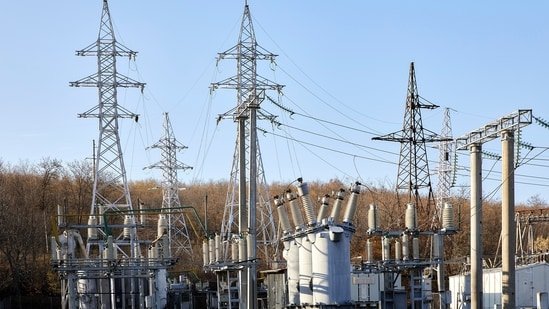
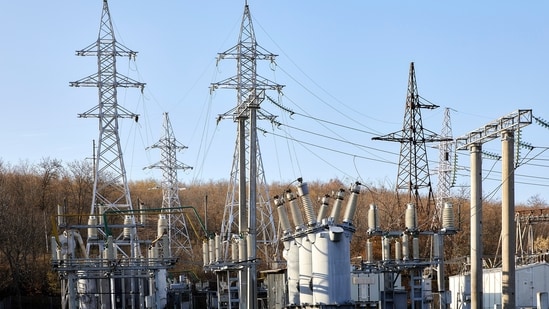
Power generation alone is not enough. India must invest with equal urgency in transmission corridors, distribution reforms, smart grids, storage systems, and peak-load management. Distribution companies remain a structural weakness, burdened by financial stress and operational inefficiencies. Transmission bottlenecks continue to constrain efficient power flows. Grid modernisation cannot remain an afterthought if India seeks long-term resilience. Aggregate technical and commercial losses in several states remain far above desirable levels, imposing persistent financial strain on distribution companies despite repeated reforms.
There is also a geopolitical dimension to this transformation. Historically, strategic power was associated with control over hydrocarbons. Today, national power increasingly depends on who can build resilient electricity systems. Countries capable of generating cheap, reliable, scalable electricity will attract manufacturing, digital infrastructure, and industrial investment. In the age of semiconductor fabs, green hydrogen, AI infrastructure, and advanced manufacturing, electricity reliability is becoming a decisive determinant of geo-economic competitiveness. India now stands at a critical inflection point.
Its developmental ambitions are vast and achievable, but only if the power sector evolves at a matching pace. The country does not merely need more electricity; it needs better electricity: cleaner, more reliable, more flexible, and more resilient.
The coming decade may force India to confront a major truth: Economic ambition can outpace infrastructure readiness, with the gap between aspiration and execution increasingly measured in megawatts. Whether India becomes a manufacturing hub, digital superpower, or developed economy will depend on one foundational question—can it keep the grid ahead of demand?
The answer will shape every pillar of India’s rise. No factory runs without power, no metro moves without power, and no data centre computes without power. The next chapter of India’s growth may therefore be written less in policy slogans than in substations, transformers, storage systems, and transmission corridors.
Global experience offers a clear lesson. China built industrial competitiveness on massive grid expansion and ultra-high-voltage transmission, while Germany paired renewable growth with grid modernisation and storage investments to enhance resilience. India must draw similar lessons by accelerating grid upgrades, storage deployment, demand-side management, and distribution reforms. In the final analysis, India’s future prosperity may hinge on a simple proposition: National power will increasingly depend on electric power.
(The views expressed are personal)
This article is authored by Amal Chandra, senior advisor and director, Centre for Public Policy and Governance, INSIGHTS, Delhi.
