


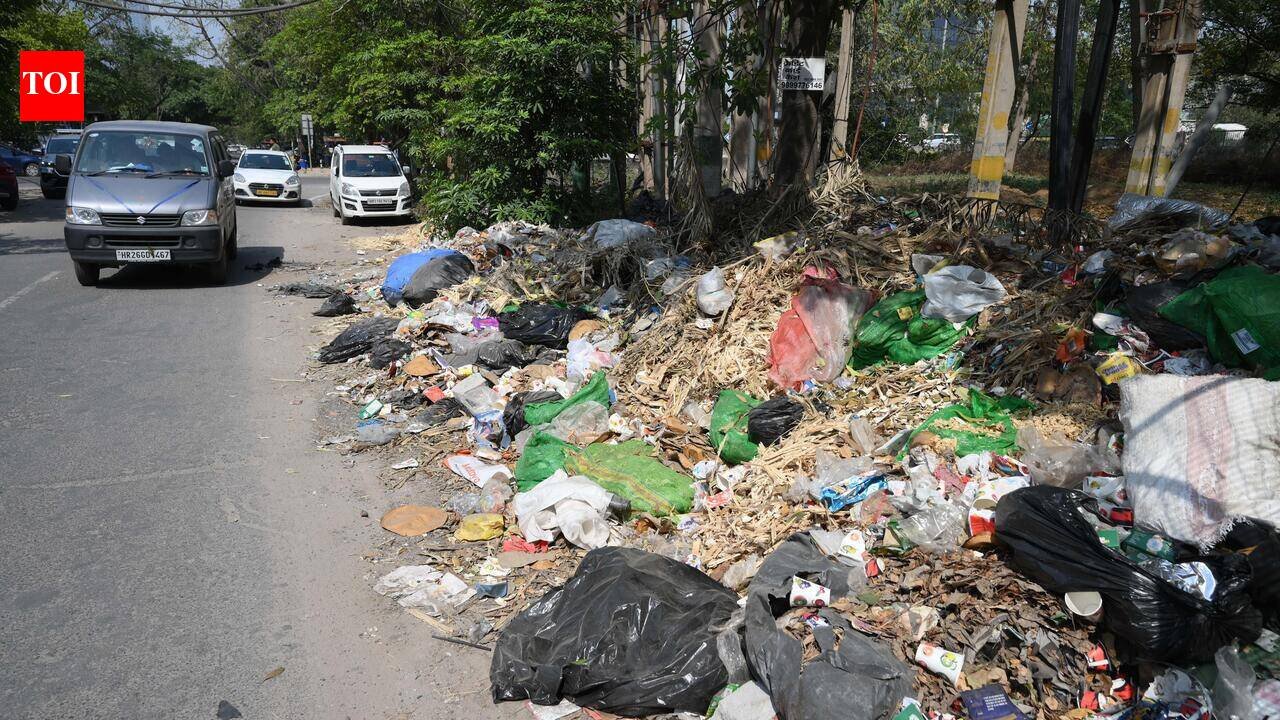
Gurgaon: Only around 15% of the city’s daily waste ultimately requires landfill disposal, while the rest can instead be composted, recycled or converted into fuel and energy, according to an MCG study.Gurgaon generates around 1,100 metric tonnes of municipal waste every day. Of this, around 402 tonnes can be composted, 313 tonnes recycled, 220 tonnes converted into refuse-derived fuel (RDF) and only 165 tonnes require landfill disposal, says the first-of-its-kind municipal solid waste characterisation study, commissioned by the civic body.Suggesting that only a relatively small fraction needs to be buried, the study says the biodegradable fraction alone could produce 38,200 cubic metres of biogas every day, enough to generate 6.8-7.5 MW of electricity. Alternatively, it could produce 13-15 tonnes of compressed biogas (CBG) every day.The findings are based on fresh waste samples collected from 24 municipal wards across all eight zones using “internationally accepted waste characterisation” methods. Each ward contributed around 100kg of municipal waste, which was scientifically sorted and analysed to establish citywide averages, MCG officials told TOI.Laboratory analysis found relatively low concentrations of heavy metals, indicating that the organic fraction is suitable for composting and biomethanation if properly segregated. The report concludes that Gurgaon’s waste possesses “strong suitability for integrated waste processing” rather than simple dumping.The study challenges Gurgaon’s long-standing waste management strategy. The findings suggest that the city’s biggest sanitation crisis is not the amount of waste it generates, but a system built around disposal rather than resource recovery. The study found that organic or biodegradable waste makes up 47.8% of Gurgaon’s municipal waste stream, indicating substantial potential for composting and biomethanation.Recyclable dry materials — including plastics, paper, cardboard, glass and metals — account for around 28%, while the combustible fraction exceeds one-third (33%) of the waste stream, making it suitable for RDF production. Plastic alone accounts for 14.4% of the city’s waste, paper 7.9%, cardboard 3%, while inert material constitutes just 11.1%.MCG additional commissioner Yash Jaluka told TOI, “We need to know components of the waste that the city is producing so that we can formulate tenders and processing strategies accordingly. We are now looking for a fresh site to simultaneously start fresh waste processing. We are also focusing on compliance from the bulk waste generators that would significantly reduce the burden on Bandhwari if they manage their wet waste.”MCG additional commissioner Ravinder Yadav said, “The objective of this study is to determine the kind of waste the city is producing and then modify our approach accordingly to effectively deal with the solid waste management. We will formulate our strategy on the basis of this study to improve the city’s waste management.”However, the report also identifies why the city continues to struggle despite this potential. It indicates poor source segregation, mixing of wet and dry waste, contamination of recyclables, inadequate processing infrastructure and continued dependence on centralised disposal as the principal bottlenecks preventing resource recovery.The city’s residents and waste management experts have been consistently raising the demand for decentralised waste processing and waste segregation to reduce the burden on the landfill in Bandhwari.City-based environmentalist Vaishali Rana says, “MCG needs to take consultation from waste management experts who know the solid waste management rules and help MCG implement these rules. It will ensure that wet waste is composted and dry is recycled and these streams of waste don’t reach the landfill. Moreover, bulk waste generators should be made accountable. Another area of concern is why Gurgaon is hunting for a new landfill when the waste characterisation study clearly indicates that decentralised waste processing should be done to recover 85% of waste generated as a resource.”The study’s recommendations include mandatory three-bin segregation at source, GPS tracking of waste collection vehicles, expansion of material recovery facilities (MRFs) to 350 tonnes per day, creation of 400 TPD composting capacity, establishment of 100-150 TPD biomethanation plants, development of a 250 TPD RDF facility and restricting landfill disposal exclusively to residual inert waste.The analysis also revealed sharp differences in waste composition across the city’s eight municipal zones. Zone 3 recorded the highest biodegradable content, exceeding 50%, indicating the strongest potential for decentralised composting and biomethanation. Zones 1, 5 and 7 also had high organic waste (around 48%-50%), reflecting predominantly residential neighbourhoods. In contrast, Zones 4 and 8, which have greater commercial activity, contained the highest proportion of plastics (up to 16%-17%) as well as higher paper and cardboard content, making them better suited for recycling and refuse-derived fuel (RDF) production. Zone 2 also recorded elevated paper and plastic fractions because of its mixed residential-commercial character, while Zone 6 showed a balanced mix of biodegradable and dry recyclable waste.
