


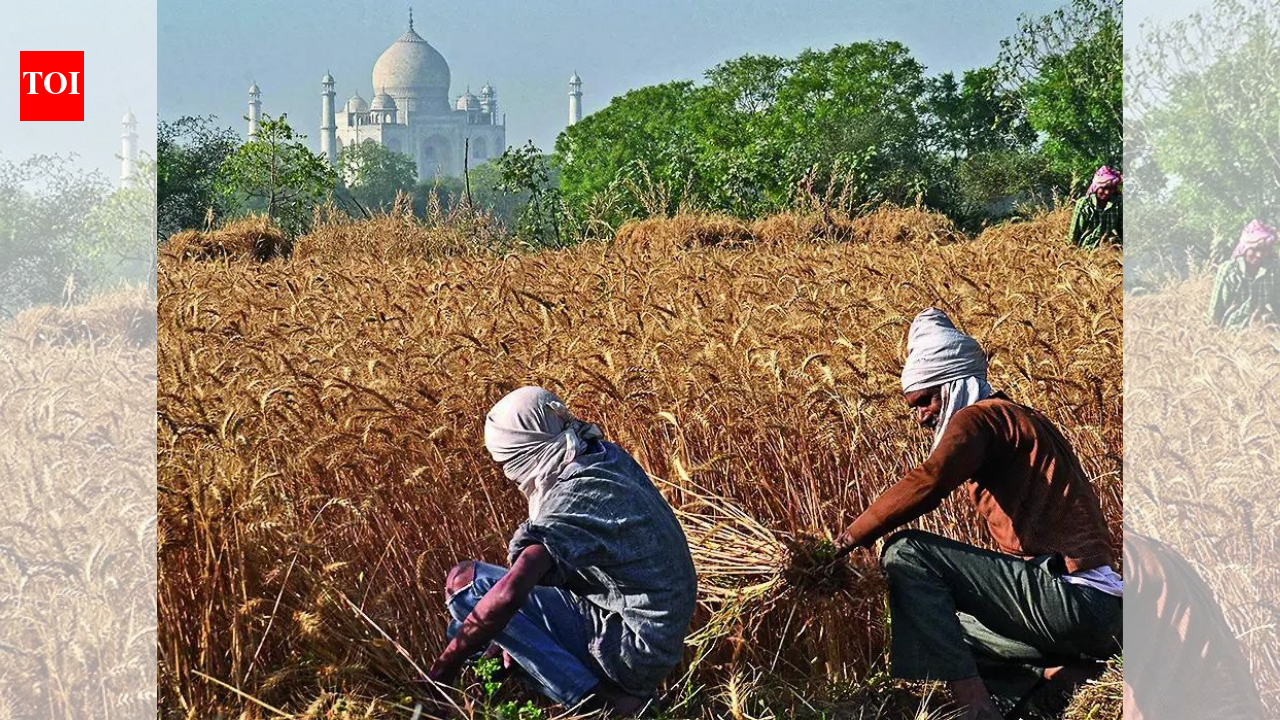
NEW DELHI: With deficit monsoon causing worry among policymakers over kharif sowing, the latest report by the statistics ministry has revealed severe gaps in the agriculture data collection system tracking crop acreage and food production.The grassroots field data is used by Commission for Agriculture Costs and Prices (CACP) to calculate production costs and shape national advance estimates, which govt uses to decide critical food security interventions, such as imposing export bans, adjusting import duties or releasing emergency buffer stocks to curb inflation.At the national level, the report shows that “girdawari”, which is the foundational block of crop statistics and refers to official crop enumeration inspections conducted by village revenue officers, was completed on time in less than half of the country.Instances of non-completion of “girdawari” in 2023-24 in Andhra Pradesh, Assam, Bihar, Gujarat, Haryana, Jharkhand, Karnataka, Maharashtra, Punjab, Telangana, Uttar Pradesh and West Bengal were “alarmingly high”, resulting in timely completion in only 43% sample villages during early kharif, 46% during late kharif, 48% during rabi and 33% during summer, the report said.“Suitable action needs to be taken by the respective state authorities to ensure timely completion of ‘girdawari’ in all the states,” said the report titled Review of Crop Statistics System released last week.Besides, it noted that 63% of village maps, which are essential to trace altered plots and land-use boundaries are 20 years old, indicating they may not accurately represent the changes that would have taken place due to construction and urbanisation. “Use of outdated maps leads to problems of identification of survey numbers… regular updation of maps is essential,” said the report.In West Bengal and Puducherry, all villages had maps that were last updated more than two decades ago, while it was 99% in Odisha, 98% in Uttarakhand, 94% in Assam, 93% each in Tamil Nadu and Jharkhand. In contrast, merely 5% villages in Gujarat had maps updated more than 20 years old.The report also found that the crop-cutting experiments (CCEs), which are the scientific foundation used to evaluate average yields and calculate final food output, were being conducted by untrained staff, who were assigned this task by the revenue officers. The overall number of CCE was estimated at around 1.2 million in 2023-24As much as 40% CCEs in Jharkhand and Uttar Pradesh were carried out by untrained personnel, while in Madhya Pradesh, Maharashtra and West Bengal more than 10% CCEs were conducted by junior staff, the report said.
