


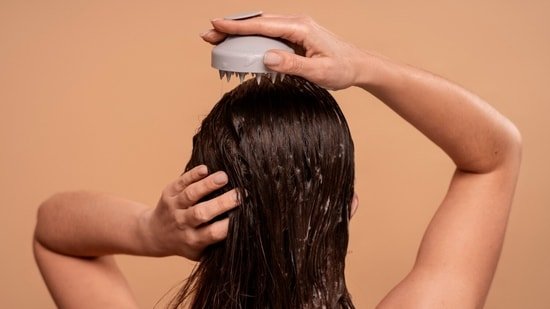
Many people are in the habit of taking night showers after a rigorous workout session at the gym or a long day at work. To feel fresh and get rid of the sticky, sweaty feeling, a full shower may seem like a good idea. However, if you are unable to dry your hair completely afterwards, you may end up going to bed with wet hair.
While a complete shower can feel rejuvenating and may even help you sleep better, is sleeping with wet hair healthy? How safe is this practice, and what are its possible ramifications for your scalp health?
Dr Sowmya Nachukuri, specialist in dermatology, KIMS Hospitals (Krishna Institute of Medical Sciences), Electronic City, Bengaluru, shared with HT Lifestyle why she believed this habit needs to be avoided and not made a routine.
Why should you not sleep with wet hair?
Aside from the discomfort of wet hair, there is an actual clinical reason why you should not be sleeping with wet hair. Your scalp is the first to bear the toll of this habit.
Dr Nachukuri warned that you may be at risk of fungal infection. “When sleeping with wet hair, your scalp continues to remain wet for a long duration. Since your scalp becomes warm and wet, it acts as an excellent medium for the growth of fungus and microbes. They naturally reside on the scalp, but with time, they can cause skin problems such as dryness and itching of the scalp.” The scalp also feels oilier when you continue this habit. The dermatologist observed this in her clinic, where some patients report this.
Other than scalp-related damage, your hair’s strength also goes down. Repeatedly sleeping with wet hair, the dermatologist reminded that you may cause your hair to become weaker because the wetness swells the hair shaft. Add to this, your involuntary movements during sleep, which aggravate the problem. “The tossing and turning that happens while sleeping will cause the hair to experience friction from the pillow; this can cause breakage, splits, and frizziness,” the dermatologist noted, emphasising common after-effects of sleeping with wet hair.
Does sleeping with wet hair cause hair loss?
With such an extensive list of consequences, including frizz, split ends and possible fungal infections of the scalp, it is natural to wonder whether the habit can also cause hair loss. Addressing this concern, the dermatologist responded, “Sleeping with wet hair alone is not expected to cause hair loss; the fact that there is always going to be some breakage causes the hair to become thinner.”
Although it may not directly cause hair loss, repeated breakage can affect hair quality and make the hair appear thinner over time.
But no need to panic if you mistakenly fell asleep with wet hair, as the doctor assured that occasionally it won’t cause any harm immediately, especially if you have a healthy scalp, but it should not become a practice, a regular part of a routine; then you may see the above-mentioned problems. Dr Nachukuri insisted it is better to dry the hair a bit or dry it with a hair dryer set on a cooler mode
More about the doctor
Dr Sowmya Nachukuri holds an MD in Dermatology, Venereology and Leprosy from Akash Institute of Medical Sciences, Bengaluru, affiliated with Rajiv Gandhi University of Health Sciences. Her areas of expertise include clinical dermatology, paediatric dermatology, dermatosurgery, cosmetology, aesthetic dermatology, tailored treatment protocols and the diagnosis and management of skin disorders.
Note to readers: This article is for informational purposes only and not a substitute for professional medical advice. Always seek the advice of your doctor with any questions about a medical condition.
