


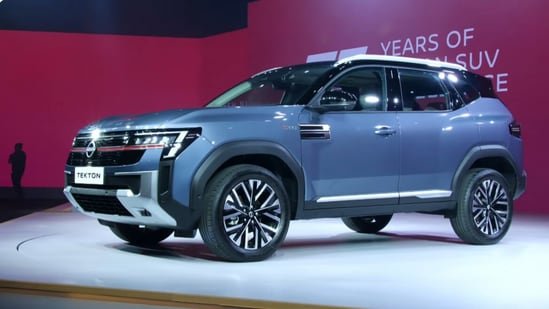
Nissan Tekton, the latest SUV from the Japanese carmaker in India, has been finally launched at an introductory starting price of ₹10.49 lakh (ex-showroom). The pricing goes up to ₹18.59 lakh (introductory, ex-showroom). The Nissan Tekton shares some key components with the third-generation Renault Duster, the most prominent launch from Renault in recent times, Nissan‘s alliance partner. With this launch, Nissan has marked its comeback to the Indian compact SUV market, as the automaker discontinued the Nissan Terrano in the country in 2020, which was again based on the erstwhile Duster.
If you are planning to buy the Nissan Tekton, here is a quick and comprehensive look at the top five facts about the SUV.
Nissan Tekton: Price, booking, delivery, warranty
Nissan Tekton is priced between ₹10.49 lakh and ₹18.59 lakh (introductory, ex-showroom). Available across 12 variants, including six for the T160 powertrain and six for the T280 powertrain, the SUV is open for booking now from July 9. Bookings can be done online and offline. Deliveries of the SUV will commence on July 20.
Nissan is offering five years of warranty for the Tekton, including three years of standard warranty and two years of extended warranty. For the first 10,000 customers, the carmaker is offering a special 5.55% interest rate through Nissan Finance, along with an exclusive exchange program
Nissan Tekton: Distinct design
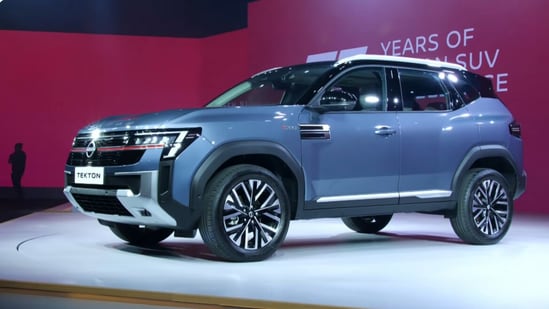
The Nissan Tekton might be based on the new-generation Renault Duster, but the DNA of the Patrol SUV makes it different. Nissan left no stone unturned to make the SUV distinctive from its French sibling. Tekton gets a traditional rectangular front grille with horizontal slats flanked by rectangular headlamps that sport L-shaped LED daytime running lights. There is a sleek LED light bar spanning the width of the grille, along the upper edge. The front bumper looks chunky and sports silver trim. There is Tekton nomenclature prominently scrawled across the leading edge of the bonnet.
Moving to the back, Nissan Tekton gets revised lighting elements with different internals, as compared to Duster. However, the lightbar design looks similar to the Renault SUV. The panel, housing the registration plate, is finished in body colour, as compared to the black one in the Duster. The rear bumper features a more squared-off design strategy compared to the Duster.
It is available in six different single-tone colour options: Pearl White, Blade Silver, Onyx Black, Moonbow Grey, Flare Garnet Red, and Indigo Blue. There are five dual-tone shades as well, taking the total number of exterior hues to 11.
Nissan Tekton: Interior boasts distinctiveness
Inside the cabin, the Tekton comes with some differences in terms of shape and styling of the dashboard, including the use of different trim inserts and colour palettes as compared to the Renault Duster. The dashboard features a contemporary cockpit layout with a neatly integrated screen setup that is slightly angled towards the driver, giving the cabin a more driver-focused feel. It gets quilted seats, door trims and upholstery. Other features include a panoramic sunroof, ventilated seats, dual-zone AC, adjustable seats with manual lumbar support, a large single screen combining the digital instrument cluster and touchscreen infotainment system, etc.
Nissan Tekton: 5-star BNCAP rating
The Nissan Tekton comes with a five-star Bharat NCAP safety rating. The SUV is built on a strong, crash-tested platform. It has received 30.49 out of 32 in Adult Occupant Protection (AOP) and 45 out of 49 in Child Occupant Protection (COP), to secure a five-star safety rating. The SUV comes loaded with safety features like six airbags, Level 2 ADAS suite, 360-degree surround-view camera, blind-spot monitor, ABS with EBD, Electronic Stability Control (ESC), Electronic Parking Brake (EPB), Tyre Pressure Monitoring System (TPMS), etc.
Nissan Tekton: Mechanically same as Duster
Mechanically, Nissan Tekton gets the same 1.0-litre turbocharged petrol and 1.3-litre turbocharged petrol engine options as the Renault Duster. The smaller one gets a 6-speed manual gearbox, while the latter gets a 6-speed manual and 6-speed DCT automatic gearbox options. The smaller engine churns out 100 bhp peak power and 166 Nm torque, while the bigger motor generates 163 bhp peak power and 280 Nm torque. The SUV offers fuel economy between 17.4 kmpl and 19.4 kmpl, depending on the powertrain combination.
