


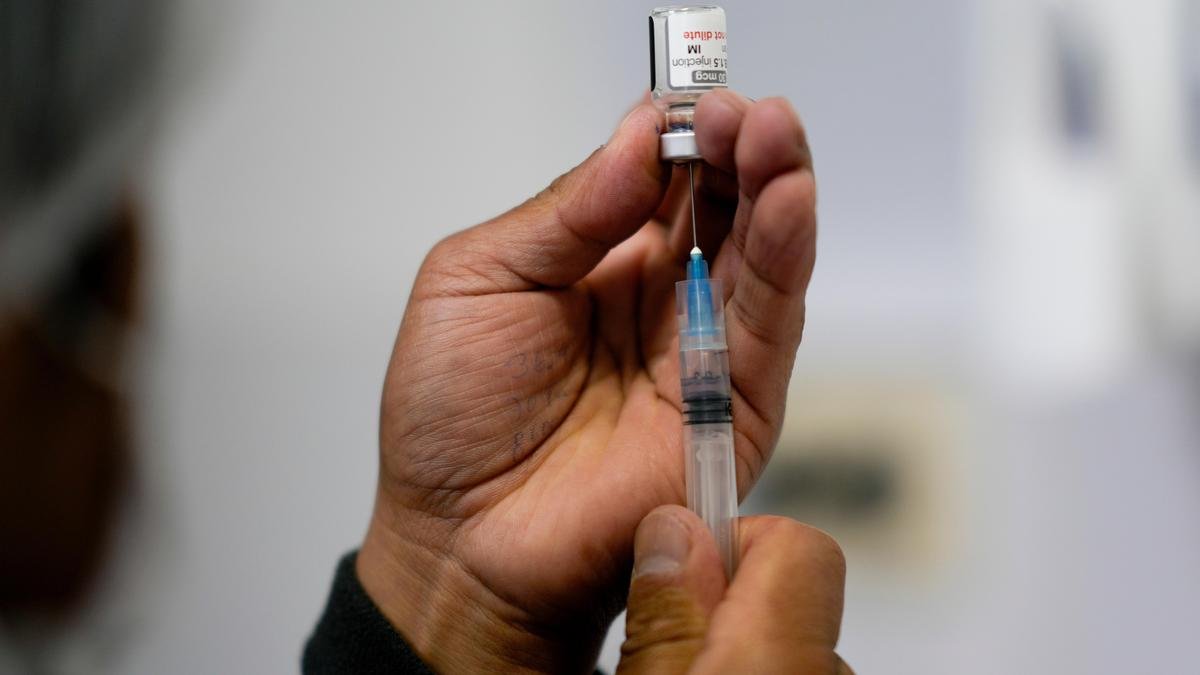
Image used for representational purposes only.
| Photo Credit: AP
Gujarat has begun the process of developing a region-specific antivenom using venom collected from snakes found within the State. Why are scientists calling for geographically representative antivenoms? How is India’s existing antivenom made? And will region-specific products improve snakebite treatment?
The story so far
Gujarat has moved a step closer to developing its first region-specific antivenom after the Snake Research Institute (SRI) at Dharampur handed over lyophilised (freeze-dried) venom from the four medically important venomous snakes found in the State to a licensed manufacturer for production. The first batch is expected within a year, according to State officials.
The move comes amid growing scientific interest in whether antivenoms should better reflect regional differences in snake venom. While India has relied on a single polyvalent antivenom for decades, researchers have reported that venom composition can vary across the geographical range of the same species. They argue that such heterogeneity in venom necessitates region-specific formulations and more geographically representative venom pools for antivenom production.
How are antivenoms currently made in India?
India records one of the world’s highest burdens of snakebite deaths and envenoming. To treat bites from the country’s four medically important venomous snakes — the Indian cobra, common krait, Russell’s viper and saw-scaled viper — manufacturers produce a polyvalent antivenom that targets all four species.
The process begins with collecting venom from healthy snakes. The venom is processed, purified and injected in carefully controlled doses into horses over several weeks. As the animals develop antibodies against the venom toxins, blood is collected and the antibodies are purified to produce antivenom for human use.
For decades, much of the venom used for commercial antivenom production has come from the Irula Snake Catchers’ Industrial Co-operative Society in Chengalpattu, which remains India’s principal supplier of venom for licensed manufacturers. Because the antivenom is produced using venom from the “Big Four”, it is designed to neutralise bites from all four species rather than a single snake.
Why are scientists questioning the ‘one-size-fits-all’ approach?
According to researchers, snake venom is a complex mixture of proteins, peptides and enzymes that has evolved over millions of years. The composition of these toxins can differ even among populations of the same species living in different parts of the country.
These differences arise from several factors, including local prey preferences, habitat, evolutionary history, and genetic divergence. Research over the past decade has documented substantial geographical variation in the venoms of several medically important Indian snakes, including cobras, kraits and Russell’s vipers.
One of the earliest studies demonstrating this was published in the journal International Immunopharmacology in 2007 by researchers from the University of Mysore. Comparing Indian cobra venoms from eastern, western and southern India, the researchers found marked regional differences in venom composition and showed that antibodies raised against eastern Indian cobra venom neutralised eastern venom more effectively than venom from the other two regions.
In a 2019 study published in PLOS Neglected Tropical Diseases, researchers led by Kartik Sunagar profiled the venoms of several medically important but neglected Indian snakes and found marked inter- and intra-species variation in venom composition. Using WHO-recommended preclinical assays, they reported that commercially available Indian antivenoms showed poor venom recognition and neutralisation against several of these snakes.
Does this mean the current antivenom does not work?
Not necessarily. India’s existing polyvalent antivenom has saved countless lives and remains the standard treatment recommended for venomous snakebites. Researchers say that laboratory studies demonstrating differences in venom neutralisation should not be interpreted to mean that existing polyvalent antivenoms are ineffective.
Clinical outcomes also depend on factors such as the amount of venom injected, the time taken to reach a healthcare facility, supportive care and intensive care facilities. A recent policy paper published in The Lancet Regional Health — Southeast Asia notes that while improving antivenom quality and developing region-specific products are important priorities, strengthening peripheral healthcare, referral systems and evidence-based treatment protocols remain equally critical.
What are region-specific antivenoms?
Region-specific antivenoms are produced using venom collected from snakes found within a particular geographical area. The idea is that antibodies generated against locally representative venom may more closely match the toxin profile of snakes responsible for bites in that region.
Gujarat’s initiative follows this principle. The SRI has supplied venom from the four medically important venomous snake species found in Gujarat for commercial production. Officials say the aim is to improve treatment outcomes for snakebite victims within the State. Whether future antivenoms should be region-specific or developed using a broader range of venoms collected across India remains an area of scientific discussion.
Why hasn’t India already adopted region-specific antivenoms?
Developing a new antivenom is considerably more complex than collecting venom from a different location. Researchers say that producing multiple formulations could also increase manufacturing complexity and costs. It would need generating robust clinical evidence through multicentric validation studies, and standardising manufacturing processes so that products remain consistent in quality and efficacy. Any new formulation would also need to undergo regulatory evaluation before it could be introduced into routine clinical practice.
Published – July 06, 2026 11:06 am IST
