


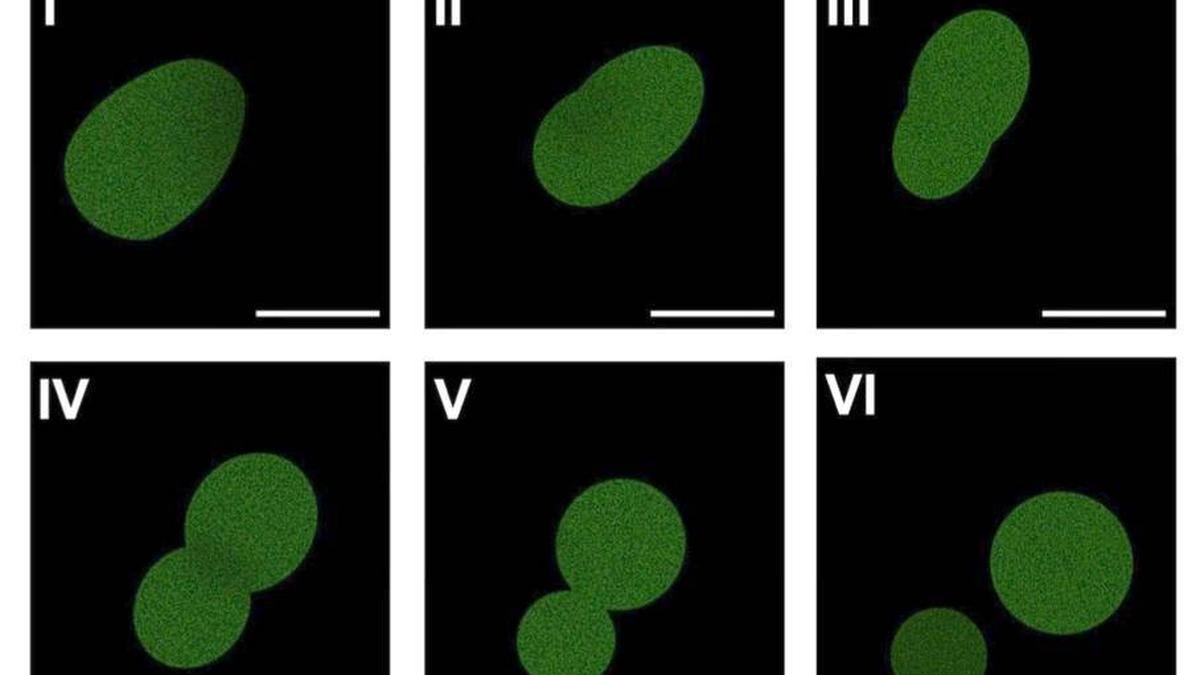
Once the cell had grown and copied its DNA, it divided into daughter cells.
| Photo Credit: Kate Adamala, Adamala Lab
Researchers from the University of Minnesota have developed a synthetic cell that can grow and divide.
The team ‘started’ the cell as a liposome, a small bubble made of fats. Inside was a protein-making system called PURE, which contained all the necessary ‘machinery’ for the cell to turn DNA into proteins. The DNA consisted of 90,000 base pairs.
The synthetic cells ate by fusing with smaller feeder liposomes. The cell’s DNA instructed it to produce a protein called alpha-hemolysin that becomes like a hook on the cell’s surface. The hook grabbed the feeder bubbles and pulled them in, providing the lipids and nutrients the cell needs to expand.
As the cell grew, it used an enzyme called Phi29 to copy its entire genome. Once the cell had grown and copied its DNA, it divided into daughter cells. While the researchers first used mechanical force to split the cells, they eventually engineered a biological way to do it. By making proteins crowd the surface of the cell, they created enough physical pressure to make the membrane pinch and split into two.
The researchers also proved these cells could undergo selection. They introduced a mutation that allowed some cells to eat more efficiently. These faster-growing cells produced more offspring than the others and eventually dominated the population.
“It will, perhaps, provide a compelling argument against those who think there is some immaterial substance in addition to the chemicals that breathes life into material stuff,” University of Exeter professor John Dupré told The Guardian. “But almost no scientist now believes this.”
Published – July 05, 2026 11:00 am IST
