


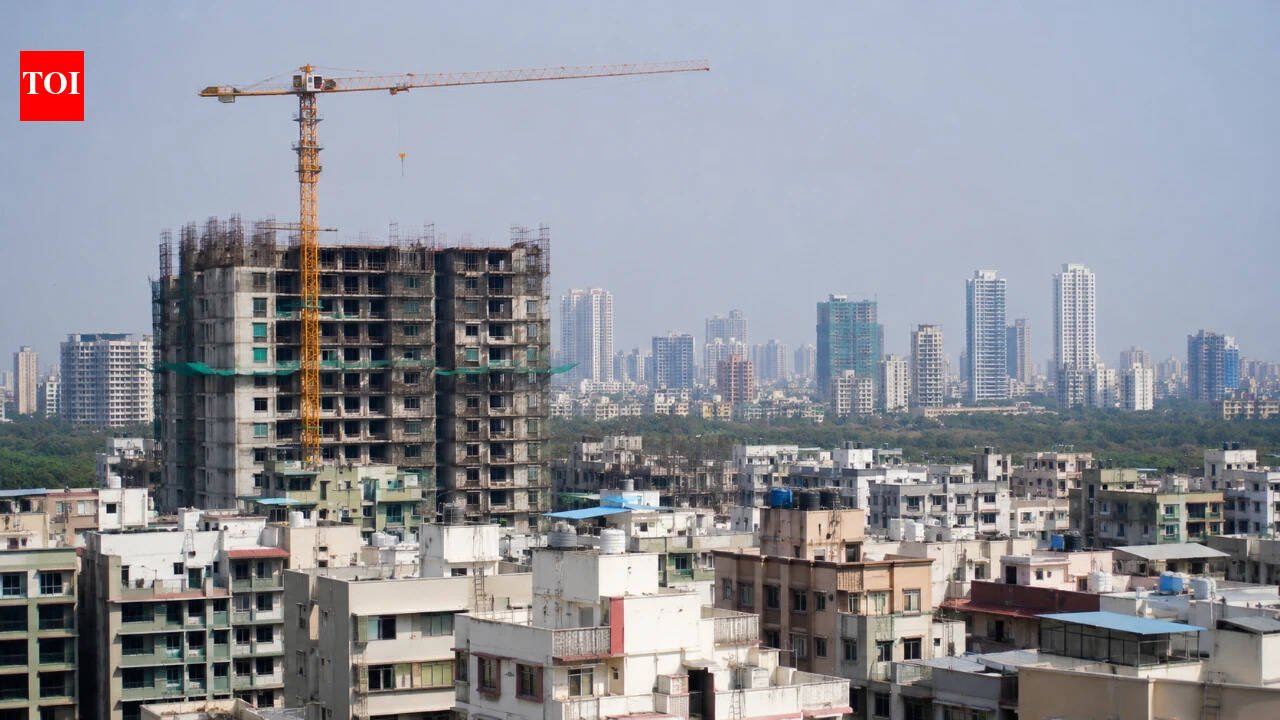
MUMBAI: Even after a cumulative 125 basis points of monetary easing and lower home loan rates, the Mumbai Metropolitan Region (MMR) has retained its position as India’s least affordable residential market, with a typical homebuyer required to spend 69% of household income on monthly loan repayments, according to Knight Frank India’s latest Affordability Index.The report shows that MMR remains well above the 50% affordability benchmark, the level beyond which banks are generally reluctant to underwrite housing loans. Among the country’s eight major residential markets, only MMR and the National Capital Region (NCR) continue to breach this threshold, while the remaining six cities remain within affordable limits.The findings highlight that, for Mumbai’s homebuyers, falling borrowing costs have not been enough to offset the impact of high property prices. Knight Frank said affordability gains achieved through lower interest rates have largely been neutralised by sustained price appreciation in the country’s costliest housing market.The index measures the proportion of a household’s monthly income required to pay equated monthly instalments (EMIs) on an average home. For H1 2026, MMR’s affordability ratio stood unchanged at 69%, while NCR worsened slightly to 67% from 66% in 2025.In contrast, Ahmedabad emerged as the country’s most affordable housing market, with an EMI-to-income ratio of 23%, followed by Kolkata (25%), Pune (28%) and Chennai (29%). Bengaluru stood at 35%, while Hyderabad recorded 41%, all comfortably within the affordability threshold.The report notes that affordability across India’s residential markets remains broadly supportive because of the cumulative benefit of lower borrowing costs following the Reserve Bank of India’s 125-basis-point rate cuts before the current pause in the easing cycle.However, rising residential prices have moderated those gains in several markets.Knight Frank’s affordability data also shows how sharply MMR differs from other cities. While Pune’s affordability improved from 57% in 2016 to 28% in H1 2026, and Chennai’s fell from 55% to 29% over the same period, Mumbai’s ratio has remained stubbornly high despite improving from 77% in 2016.
Which city do you think should be prioritized for affordable housing initiatives?
3k+ users shared opinion today
5k+ users already voted today
3k+ users shared opinion today
Shishir Baijal, Chairman and Managing Director, Knight Frank India, said housing affordability continues to be a key driver of residential demand.While lower interest rates have supported buyers, rising property prices have moderated affordability gains. He said healthy employment, stable incomes and supportive financing conditions continue to underpin demand, but sustained income growth would be crucial for improving affordability over the long term.The report said the RBI’s decision to keep the policy repo rate unchanged at 5.25% in its February and June 2026 monetary policy meetings indicates that rate stability is likely in the near term. Although geopolitical uncertainties and inflation risks remain, the cumulative impact of earlier rate cuts is expected to continue supporting housing demand across most major cities.
