


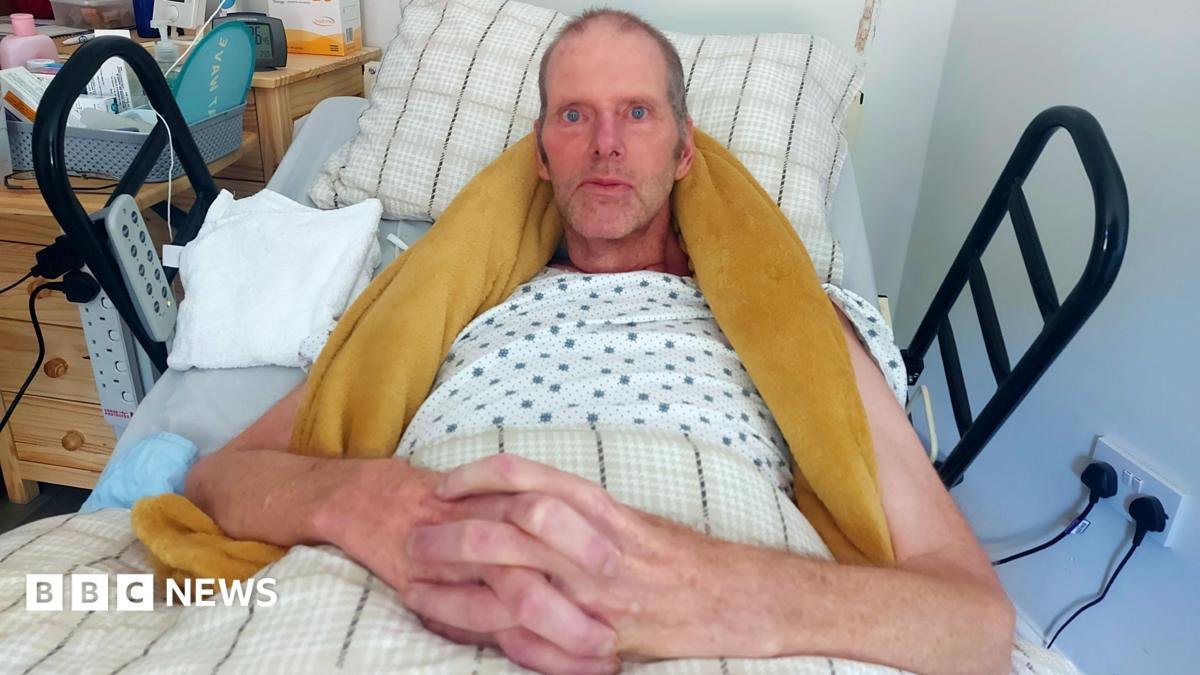
In July 2025, two months before his death, Hull, who previously ran his own handyman business and housed Ukrainian refugees for two years, told the BBC about the lengthy waits he faced for a hoist, a wheelchair and a bed that was big enough for him while living in his own home.
He had previously been in the Guinness Book of Records along with his brother as the tallest twins in Britain.
“Above a certain height, you don’t exist,” Hull told the BBC.
He also said his standard of living was “very, very low”.
He described the difficulties of trying to see the right doctors and getting the social care he needed.
The situation led to his decision to stop taking medication that was needed to ensure the continued functioning of a transplanted kidney his brother had donated to him.
Dying, he said, “would be a better option than lying in bed 24 hours a day”.
Hull had a rare neurological condition, Hereditary Spastic Paraplegia [HSP] , external– unrelated to his height – which causes spasms and muscle weakness. Pain, fatigue and depression are also common symptoms.
The inquest was told as a result of the BBC’s reporting, local community teams began working with the family to install a ceiling hoist – first discussed three months earlier – and an extension to Hull’s bed.
He had spent two years in a standard hospital bed, provided by the NHS, which he described as “hideously uncomfortable” and like “torture”.
An initial bed extension was eventually provided, but caused him to sit up in a position that presented a choking risk.
