


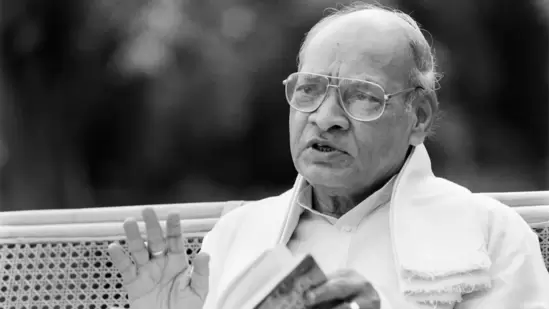
From steering India through one of its most transformative economic phases to being remembered as a scholar-politician, P. V. Narasimha Rao remains one of the most intellectually profound leaders in Indian political history. As we celebrate his 105th birth anniversary today on June 28, let’s take a look at one of his most thoughtful reflections on life and society.
In his book The Insider, Rao wrote, “I think the most sacred right of man is to be happy.”
At a glance, the statement sounds simple. But coming from a leader who witnessed political turbulence, economic crises, and the weight of national decision-making, it carries a deeper meaning, that beyond ideology, governance, or ambition, the core of human existence is the pursuit of happiness. (Also read: Quote of the day by Mithun Chakraborty: ‘There was a time when I thought I wouldn’t be able to achieve my goals…’ )
What Narasimha Rao’s quote means
At its heart, Rao’s words highlight a timeless idea: happiness is not a privilege, but a fundamental human aspiration. In a world often driven by power, competition, and survival, he reminds us that the ultimate measure of progress is whether people are able to live with dignity, peace, and contentment.
For Rao, who balanced political realism with intellectual depth, happiness was not a superficial emotion but a “sacred right” tied to human dignity and freedom of choice.
Why Narasimha Rao’s quote still resonates today
In today’s fast-paced world, where success is often measured by external achievements, Rao’s reflection feels especially relevant. It brings attention back to the simplest yet most overlooked truth, that well-being is as important as wealth, and peace of mind matters as much as progress.
Whether in personal struggles or professional ambitions, his words serve as a reminder that happiness is not something to postpone for the future, but something to protect and value in the present.
About P. V. Narasimha Rao
Pamulaparthi Venkata Narasimha Rao (28 June 1921 – 23 December 2004) was an Indian independence activist, lawyer, and statesman associated with the Indian National Congress who served as the Prime Minister of India from 1991 to 1996. He was the first Prime Minister from South India and the second from a non-Hindi speaking background. He is widely recognized for initiating India’s economic liberalisation in response to the 1991 economic crisis, a reform process that has continued under successive governments.
